
 HONG KONG SAUL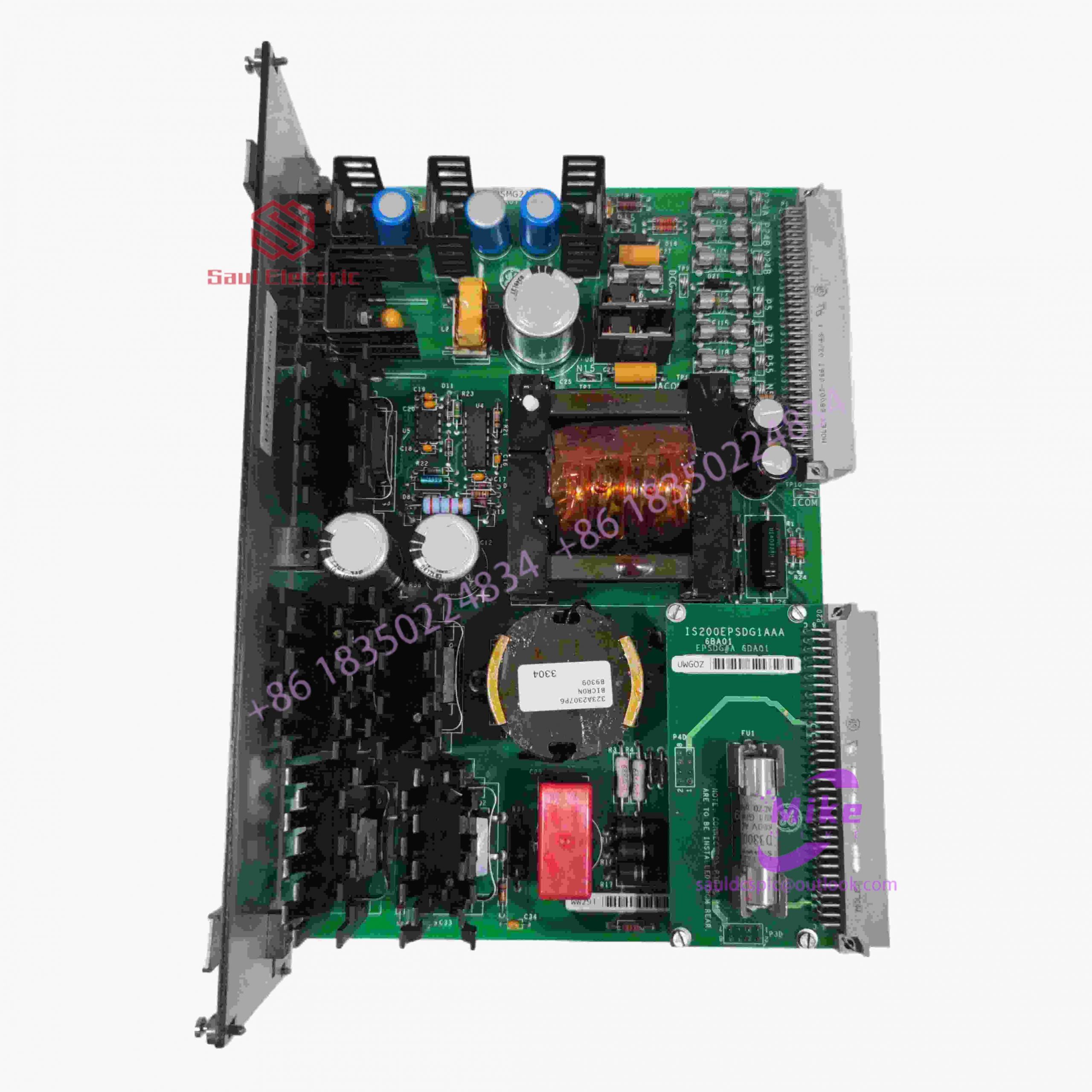

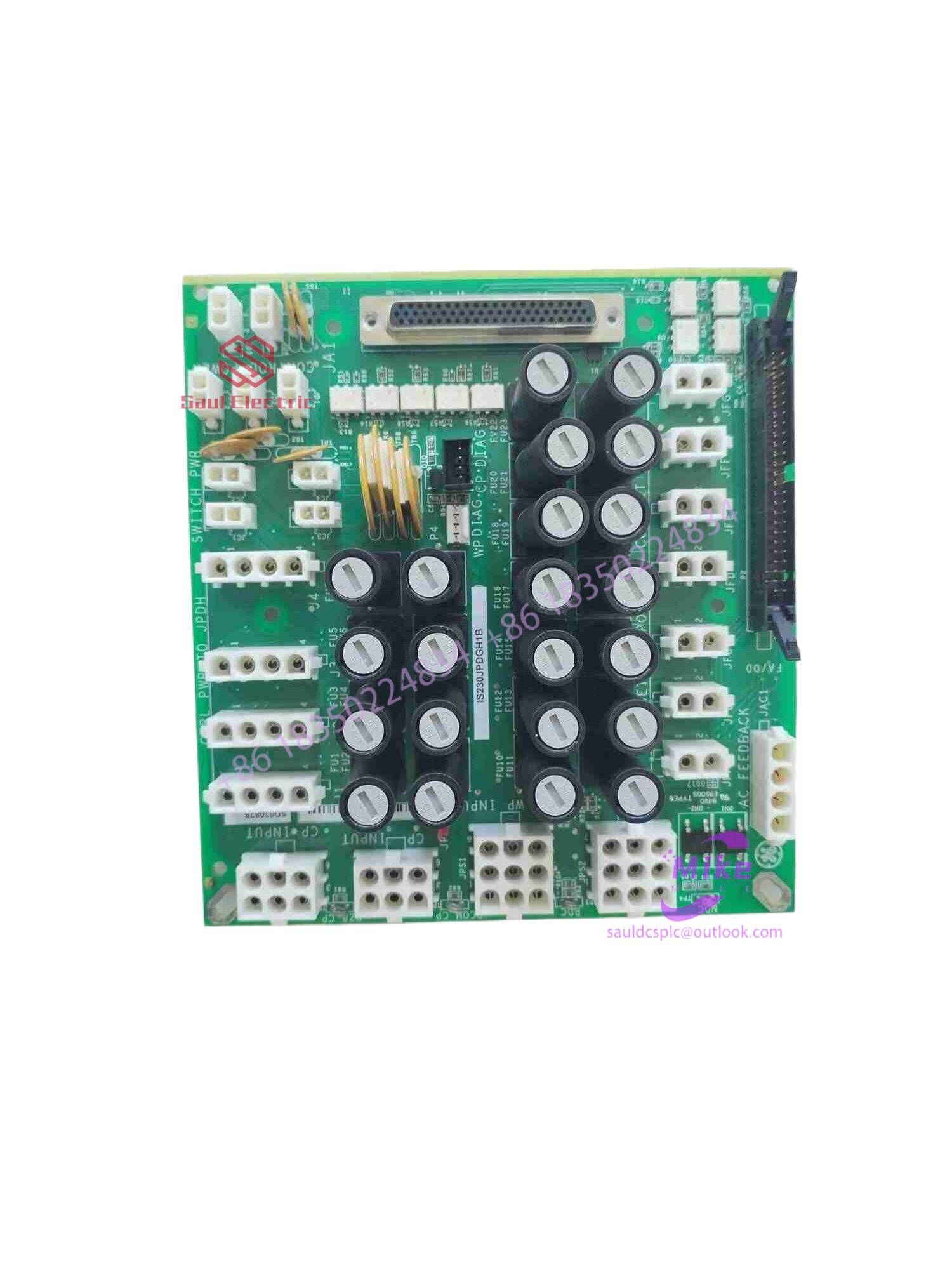
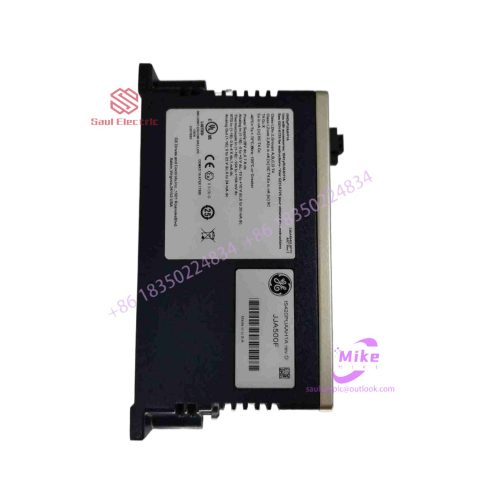
DS200CTBAG1ADD Turbine Control System
DS200CTBAG1ADD Product Introduction
Basic Information
Brand: GE (General Electric)
Model:DS200CTBAG1ADD
Part Number: DS200CTBAG1ADD
Series: Mark VIe Speedtronic Turbine Control System I/O Pack
Country of Origin: United States
Product Type: Discrete Input Module (Contact Input Module), also known as PDIA I/O Pack
 Functional Overview
The DS200CTBAG1ADD is a 24-channel discrete (digital) input module in the GE Mark VIe control system. Its primary function is to collect discrete signals (contact open/close signals) generated by field devices such as sensors,
switches, and relays, convert them into digital signals that can be recognized and processed by the PLC or control system CPU,
and transmit the processed data to the GE Speedtronic turbine control system or other control equipment, enabling automated control and monitoring. Key Technical Specifications
Rated Voltage: 24.0 VDC (Nominal)
Maximum Rated Voltage: 28.6 VDC
Maximum Rated Contact Input Voltage: 32 VDC
Number of Input Channels: 24 Discrete Inputs
Operating Temperature Range: -30°C to +65°C
Environmental Adaptability: Passes rigorous environmental testing, capable of long-term stable operation in harsh industrial environments Compatible Terminal Boards
The DS200CTBAG1ADD can be paired with a variety of GE terminal boards, including but not limited to:
IS200STCIH1A / IS200STCIH2A
IS200STCIH8A
IS200TBCIH2C / IS200TBCIH4C
IS400STCIH1A / IS400STCIH2A / IS400STCIH8A
IS400TBCIH2C Certifications and Safety
This module is UL certified and can be used in both hazardous and non-hazardous locations. The UL certification covers various classes and divisions, and relevant UL mark documents are available for reference.
In terms of regions, the decline in orders in Japan, the United States, and other Asian regions (except China and Japan) continued to expand in Q2. The growth rate of orders in Europe returned to positive levels, and the growth rate of orders in China was -22%, and the decline narrowed.
4. KUKA Q2 robot business situation
In 1986, KUKA entered the Chinese market and presented its first robot to FAW Trucks, which was the first industrial robot used in manufacturing in China at that time. Subsequently, domestic automobile companies such as Dongfeng and Changan became KUKA’s loyal customers.
Of KUKA’s overall revenue of 26.723 billion yuan in 2017, only the robot segment accounted for 38% of overall sales, of which the Chinese market accounted for approximately 20%. In terms of KUKA robot application fields, the proportion in the automotive field dropped from 46.4% in 2016 to 35.4%, while the proportion in other industrial fields increased from 36.6% to 45.3%, and the share in the service field increased from 17.0% to 19.3%. %. Due to the high proportion of robot business revenue in the field of automotive applications in overall revenue and the severe situation of China’s automobile production and sales in 2018-2019, KUKA’s industrial robot sales in China have also been affected.
The financial report shows that KUKA China’s new orders in Q1 totaled 173 million euros, a year-on-year increase of 121.5%. Affected by the macroeconomic environment, KUKA’s Q1 sales revenue in China fell 8.8% year-on-year to 94.2 million euros. However, operating profit was 5.1 million euros, a significant improvement from the loss of 1.4 million euros in the same period last year. In Q2, its operating income was 800 million euros, down 6% year-on-year; profit before interest and tax (EBIT) was 23.7 million euros, down 55% year-on-year. During the period, KUKA’s sales revenue in China was 130 million euros, a year-on-year increase of 1.9%; the order volume was 139 million euros, a 50% decrease from the same period last year.
3. The Japanese robot market continues to slow down in Q3, and the Chinese market leads Europe and the United States and accelerates to bottom out
1. Manufacturing fixed asset investment, automobile and mobile phone sales
From January to September, fixed asset investment in the electronics industry accumulated 11.6% year-on-year, continuing to pick up. From January to September, the cumulative fixed asset investment in my country’s manufacturing industry was 2.5% year-on-year, and the growth rate declined slightly. Among them, the fixed asset investment in the automobile manufacturing industry from January to September accumulated 1.8% year-on-year, and the growth rate has rebounded; the fixed asset investment in the electronics manufacturing industry from January to September accumulated 11.6% year-on-year, and the growth rate continued to pick up; the fixed assets in the electrical machinery manufacturing industry The cumulative investment amount from January to September was -7.6% year-on-year, and the rate of decline narrowed slightly.
Automobile production and sales: September car sales dropped to a narrow speed but increased the production speed. In September 2019, China ’s passenger car sales were 1.9306 million (6.3%year-on-year), and the cumulative sales of 15.24 million (12%year-on-year); the output in September was 1.8647 million Output 15.06 million (13%year -on -year).
The decline in the production and sales of new energy vehicles is amplified. Among them, the sales volume of new energy vehicles in September was 80,000 (34%year-on-year), and the cumulative sales volume of 873,000 (year-on-year increased by 22%) in January to September; Wan (increased by 22%year -on -year).
Mobile phone production and sales: September September smartphone sales decreased and increased, and the output decreased narrowing. In September 2019, China ’s smartphone shipments were 34.68 million, a year -on -year decrease of 5.7%, and the speed was reduced. From January to September, the cumulative shipment volume was 27.475 million, a decrease of 4%year-on-year; September smartphone output was 120.65 million, a decrease of 3.6%year-on-year, and the speed reduction was narrowed. The cumulative output from January to September was 906.33 million, a year-on-year decrease of 8.4%, and the speed was reduced.
2. Japan’s export of exports to China has narrowed sharply, and the market accelerates to bottom
Q3 Japan Industrial Machinery Robot Order Production and Selling Orders Speed Speed Speed Steady Steady Steady
According to statistics from the Japan Industrial Robotics Association, the reduction of the Japanese industry robot Q3 orders has narrowed significantly: 4,4275 units, the order value is 170.563 billion yen, a year-on-year decrease of 13.5%and 7.7%(Q2 is -23.4%year-on-year, -16.5 %); Production reduction significantly narrowed: output 4,5148 units, output value of 172.427 billion yen, decreased by 15%and 7.2%year-on-year (Q2 was -26.6%and -16.7%); Taiwan, sales of 175.931 billion yen, decreased by 10.6%and 5.5%year-on-year (Q2 was -25.1%, -16.1%year-on-year);
Japan’s export of exports to China has narrowed significantly to -2.18%.
2019Q3 Japan’s export industrial robots to Asia (including China), China, North America, and Europe are 805, 542.99, 217.83, and 17.301 billion yen, respectively, -4.04%,-2.18%, -16.43%, -34.99%year-on-year The year-on-year was -22.11%, -26.07%, -29.26%, -15.03%).
The significant narrowing of the 20PCT of China’s industrial robot exports in 2019Q3 has narrowed the speed of reduction in North American exports and greatly expanded European spee

There are no reviews yet.