
 HONG KONG SAUL

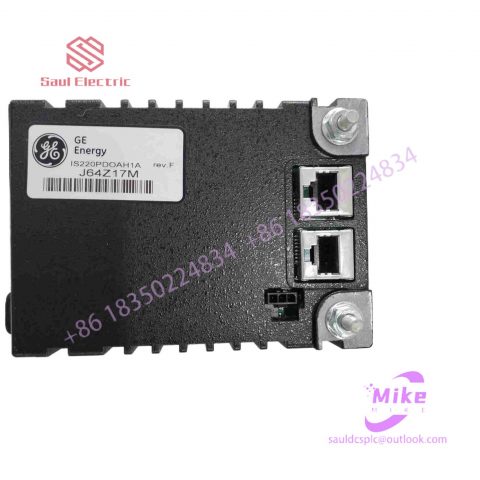
DS200DSPCF1AAF Mark VIe Speedtronic
DS200DSPCF1AAF Product Introduction
Basic Information
Brand: GE (General Electric)
Model:DS200DSPCF1AAF
Part Number: DS200DSPCF1AAF
Series: Mark VIe Speedtronic Turbine Control System I/O Pack
Country of Origin: United States
Product Type: Discrete Input Module (Contact Input Module), also known as PDIA I/O Pack
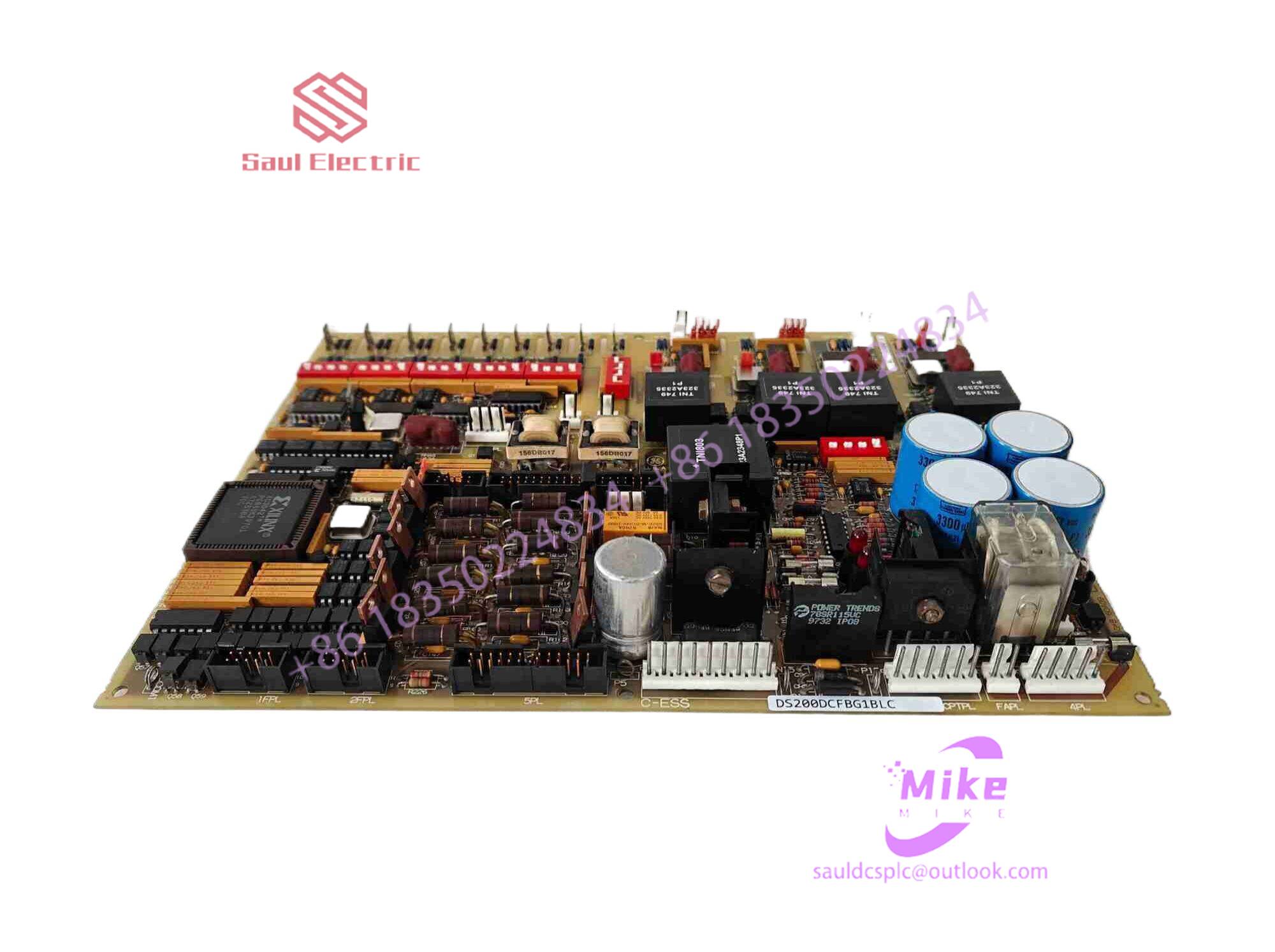 Functional Overview
The DS200DSPCF1AAF is a 24-channel discrete (digital) input module in the GE Mark VIe control system. Its primary function is to collect discrete signals (contact open/close signals) generated by field devices such as sensors,
switches, and relays, convert them into digital signals that can be recognized and processed by the PLC or control system CPU,
and transmit the processed data to the GE Speedtronic turbine control system or other control equipment, enabling automated control and monitoring. Key Technical Specifications
Rated Voltage: 24.0 VDC (Nominal)
Maximum Rated Voltage: 28.6 VDC
Maximum Rated Contact Input Voltage: 32 VDC
Number of Input Channels: 24 Discrete Inputs
Operating Temperature Range: -30°C to +65°C
Environmental Adaptability: Passes rigorous environmental testing, capable of long-term stable operation in harsh industrial environments Compatible Terminal Boards
The DS200DSPCF1AAF can be paired with a variety of GE terminal boards, including but not limited to:
IS200STCIH1A / IS200STCIH2A
IS200STCIH8A
IS200TBCIH2C / IS200TBCIH4C
IS400STCIH1A / IS400STCIH2A / IS400STCIH8A
IS400TBCIH2C Certifications and Safety
This module is UL certified and can be used in both hazardous and non-hazardous locations. The UL certification covers various classes and divisions, and relevant UL mark documents are available for reference.
KUKA has always been fond of “black technology”. Technical innovation is a daily topic, and continuous improvement is the daily routine of KUKA’s R&D. Andreas Bauer, Vice President of Marketing Strategy and Operations Department of KUKA and Chairman of the International Federation of Robotics ( IF R), once said that the detection error defined by KUKA is between plus and minus 0.01 mm.
“This error is thinner than a hair. Only with this arm swing deviation can a large robotic arm
This robotics giant from Germany uses a rigorous attitude to control the accuracy of its robotic arms to within millimeters, and is able to ensure that the error can still be controlled within a controllable range after tens of thousands of hours of operation. Ball also said, “If it fails, we will find the reasons and make a summary. Kuka will eliminate these mistakes 100%.”
2. Collaborate with users to grow and increase volume
As the hidden champion of Japan’s manufacturing industry, Fanuc’s growth has also faced obstacles from the United States. At that time, the United States had the right to speak in the industry, and Fanuc had been unable to enter the U.S. market.
However, Fanuc later entered the U.S. market through cooperation with General Motors. Although it was not smooth at the beginning, with the financial support of its partners, FANUC completed the “counterattack myth” and surpassed its competitors with technological iterations.
FANUC, which grew up in collaboration with its partners, became the world’s largest supplier of industrial robots in the late 1990s. It is reported that in June 2008, FANUC robot sales exceeded 200,000 units; in 2015, FANUC’s global installed base of robots exceeded 400,000 units, with its market share firmly at the forefront. Until now, FANUC’s industry status remains unshakable.
Similarly, ABB, another company from Switzerland among the four major families, has also been pursuing the strategy of “raise high and strike high” and attaches great importance to cooperation with major customers. In the Chinese market, ABB cooperates with Huawei , Changhong, Fotile and other benchmark companies in the 3C home appliance industry to customize products and solutions for customers.
Cooperation with industry representative companies means that ABB can grasp the development direction of the industry more quickly. While providing solutions to customers, ABB has more opportunities to go deep into the market and understand users.
For example, in 2008, ABB cooperated with BMW and provided it with industrial robot solutions many times. In the following years, after gaining a deep insight into user needs, ABB provided BMW with a package solution for the construction of a spray production line, providing it with 2,400 robots to mainly complete material handling, gluing, and welding .
It is understood that ABB currently has complete possession of the four major automotive manufacturing process technologies (stamping, welding, painting and final assembly), and has developed a flexible and fully automatic automotive production system.
These customized solutions have attracted more well-known users to cooperate with ABB, and multiple cooperation with industry benchmark companies have allowed ABB to better understand the needs and pain points of the industry, and develop products and solutions suitable for companies in more industries. It effectively improves the productivity and highly flexible production requirements of car companies.
The increase in KUKA’s market volume is inseparable from its integration experience in multiple fields. KUKA’s Bauer once made it clear that “cross-industry collisions can create new sparks.”
Whether it is the pursuit of top-notch technology, adhering to ingenuity and continuous improvement over the years, or in-depth cooperation with users in actual combat, accumulating a large amount of rich application experience, the respective advantages and areas of expertise of the four major families are being focused and extended. be perfected to become an important robot supplier in their respective fields over time.

There are no reviews yet.