
 HONG KONG SAUL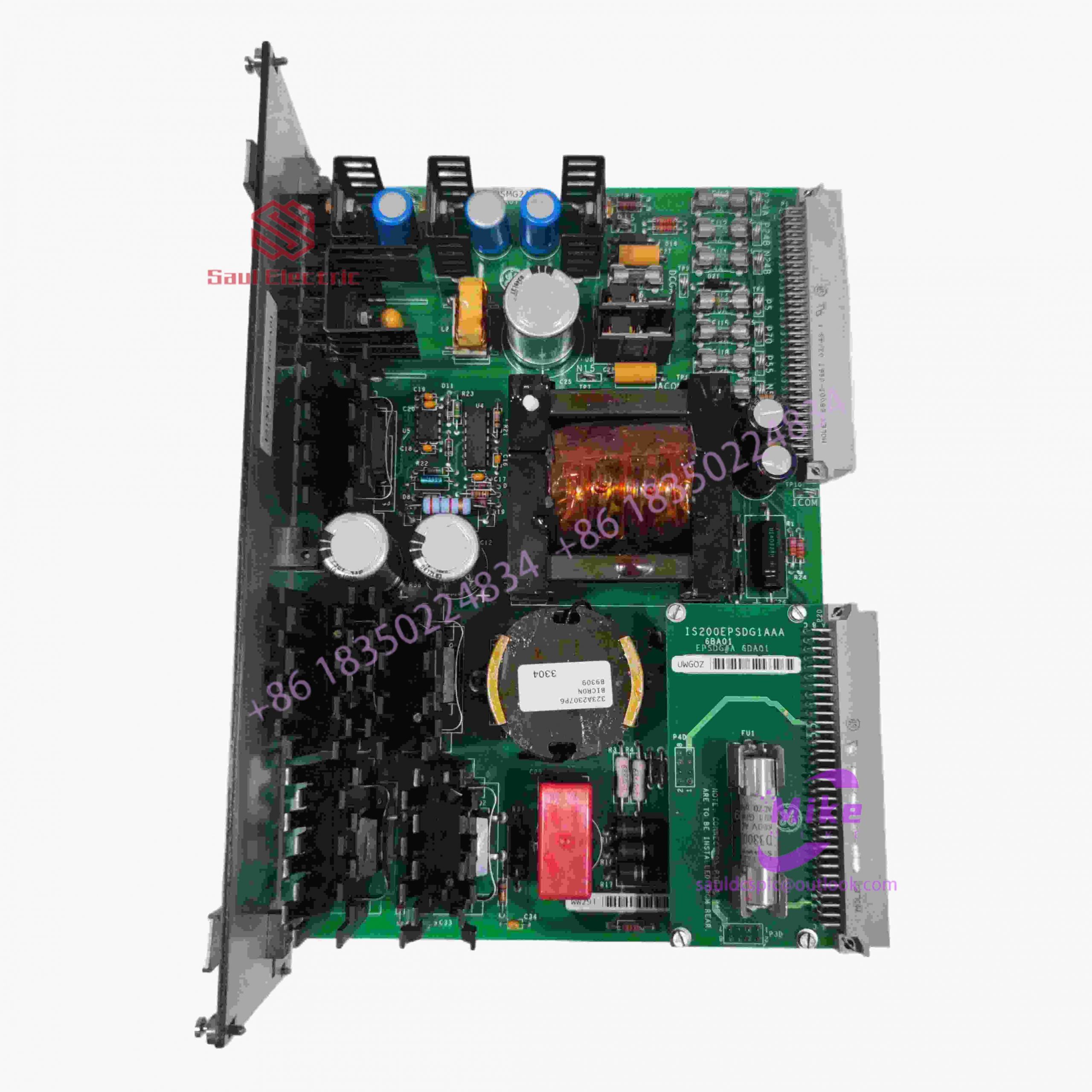

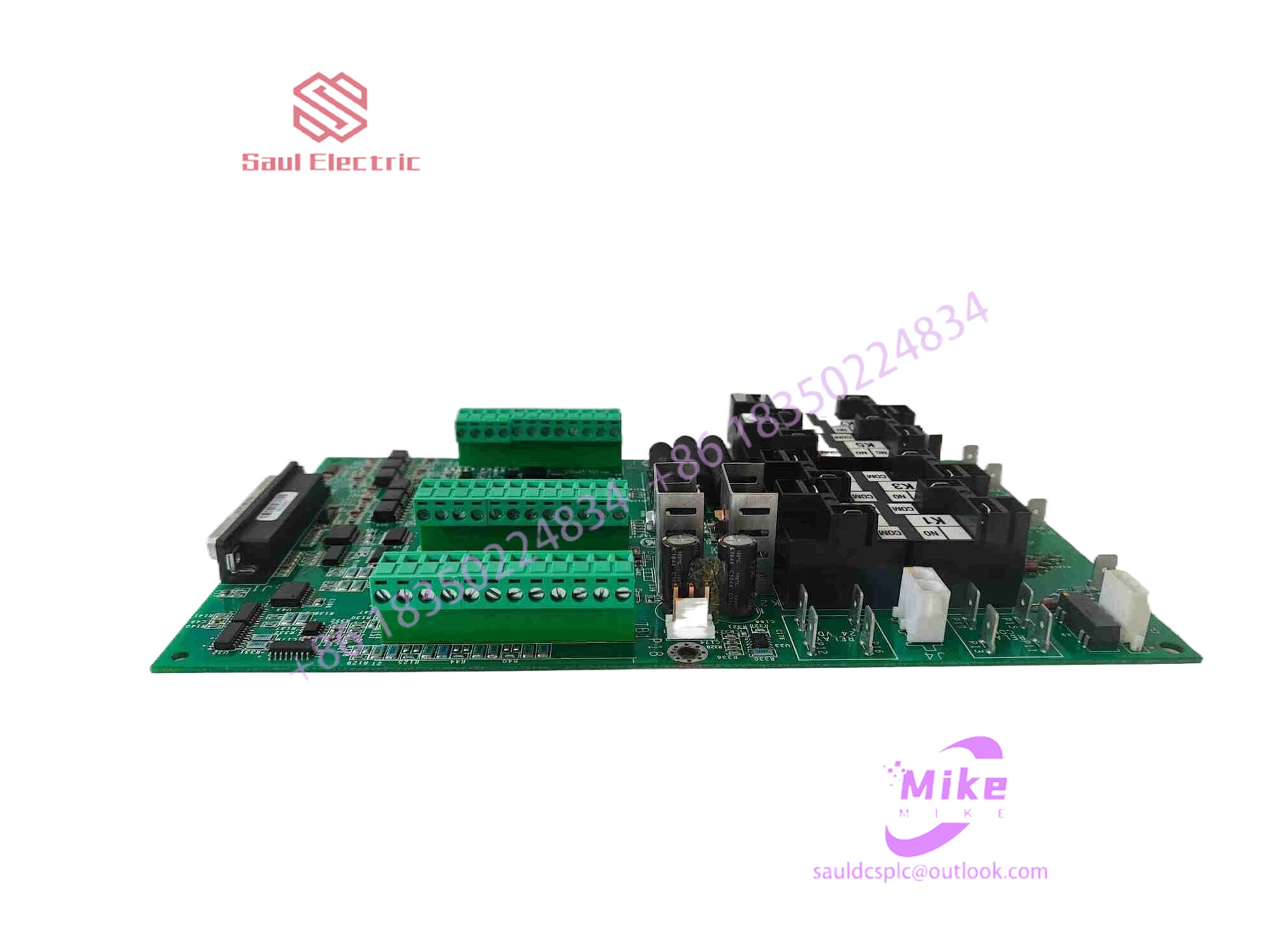
DS200KLDCF1AAB integrated circuit board
DS200KLDCF1AAB Product Introduction
Basic Information
Brand: GE (General Electric)
Model:DS200KLDCF1AAB
Part Number: DS200KLDCF1AAB
Series: Mark VIe Speedtronic Turbine Control System I/O Pack
Country of Origin: United States
Product Type: Discrete Input Module (Contact Input Module), also known as PDIA I/O Pack
contacts: Mike
+86 18350224834 (WeChat/WhatsApp)
Email:Mike18350224834@gmail.com
 Functional Overview
The DS200KLDCF1AAB is a 24-channel discrete (digital) input module in the GE Mark VIe control system. Its primary function is to collect discrete signals (contact open/close signals) generated by field devices such as sensors,
switches, and relays, convert them into digital signals that can be recognized and processed by the PLC or control system CPU,
and transmit the processed data to the GE Speedtronic turbine control system or other control equipment, enabling automated control and monitoring. Key Technical Specifications
Rated Voltage: 24.0 VDC (Nominal)
Maximum Rated Voltage: 28.6 VDC
Maximum Rated Contact Input Voltage: 32 VDC
Number of Input Channels: 24 Discrete Inputs
Operating Temperature Range: -30°C to +65°C
Environmental Adaptability: Passes rigorous environmental testing, capable of long-term stable operation in harsh industrial environments Compatible Terminal Boards
The DS200KLDCF1AAB can be paired with a variety of GE terminal boards, including but not limited to:
IS200STCIH1A / IS200STCIH2A
IS200STCIH8A
IS200TBCIH2C / IS200TBCIH4C
IS400STCIH1A / IS400STCIH2A / IS400STCIH8A
IS400TBCIH2C Certifications and Safety
This module is UL certified and can be used in both hazardous and non-hazardous locations. The UL certification covers various classes and divisions, and relevant UL mark documents are available for reference.
What are the common types of touch screens? What characteristics do they have?
Touch screens can be divided into five basic categories based on technical principles: vector pressure sensing technology touch screens, resistive technology touch screens, capacitive technology touch screens, infrared technology touch screens, and surface acoustic wave technology touch screens. According to the working principle of the touch screen and the medium for transmitting information, the touch screen is divided into four types, which are resistive type, capacitive induction type, infrared type and surface acoustic wave type. Below we introduce four types of touch screens classified according to their working principles and the media used to transmit information.
1. Resistive touch screen
The resistive touch screen is a sensor, which is basically a structure of film and glass. The adjacent sides of the film and glass are coated with ITO coating. ITO has good conductivity and transparency. When a touch operation is performed, the ITO on the lower layer of the film will contact the ITO on the upper layer of the glass, and the corresponding electrical signal is transmitted through the sensor, sent to the processor through the conversion circuit, and converted into X and Y values on the screen through calculation, and the point is completed. The selected action is displayed on the screen.
The advantages of the resistive touch screen are that its screen and control system are relatively cheap, have good response sensitivity, are not afraid of dust and water vapor, and can adapt to various harsh environments. It can be touched with any object and has good stability. The advantages of the resistive touch screen can be classified as: 1. The resistive touch screen has high accuracy, down to the pixel level, and the maximum applicable resolution can reach 4096×4096. 2. The screen is not affected by dust, water vapor and oil stains , can be used in lower or higher temperature environments. 3. The resistive touch screen uses pressure sensing and can be touched with any object, even with gloves, and can be used for handwriting recognition. 4. Resistive touch screens are relatively cheap due to mature technology and low threshold.
The disadvantage is that the outer film of the resistive touch screen is easily scratched, making the touch screen unusable. The multi-layer structure will cause a large light loss. For handheld devices, it is usually necessary to increase the backlight to make up for the problem of poor light transmittance, but this also Will increase battery consumption. The disadvantages of resistive touch screens can be classified as: 1. Resistive touch screens can be designed for multi-touch, but when two points are pressed at the same time, the pressure on the screen becomes unbalanced, resulting in touch errors and many The implementation of touch control is difficult. 2. Resistive touch screens are more likely to be damaged due to scratches, etc.
2. Capacitive touch screen
Capacitive technology touch screens work by utilizing the human body’s current induction. The capacitive touch screen is a four-layer composite glass screen. The inner surface and interlayer of the glass screen are each coated with a layer of ITO. The outermost layer is a thin layer of silica glass protective layer. The interlayer ITO coating serves as the working surface, and leads out from the four corners. Four electrodes, and the inner ITO layer is a shielding layer to ensure a good working environment. When a finger touches the metal layer, due to the electric field of the human body, a coupling capacitance is formed between the user and the touch screen surface. For high-frequency current, the capacitance is a direct conductor, so the finger draws a small current from the contact point. This current flows out from the electrodes on the four corners of the touch screen, and the current flowing through these four electrodes is proportional to the distance from the finger to the four corners. The controller obtains the position of the touch point by accurately calculating the ratio of these four currents. . Capacitive touch screens require only touch, not pressure, to generate a signal.

There are no reviews yet.