
 HONG KONG SAUL

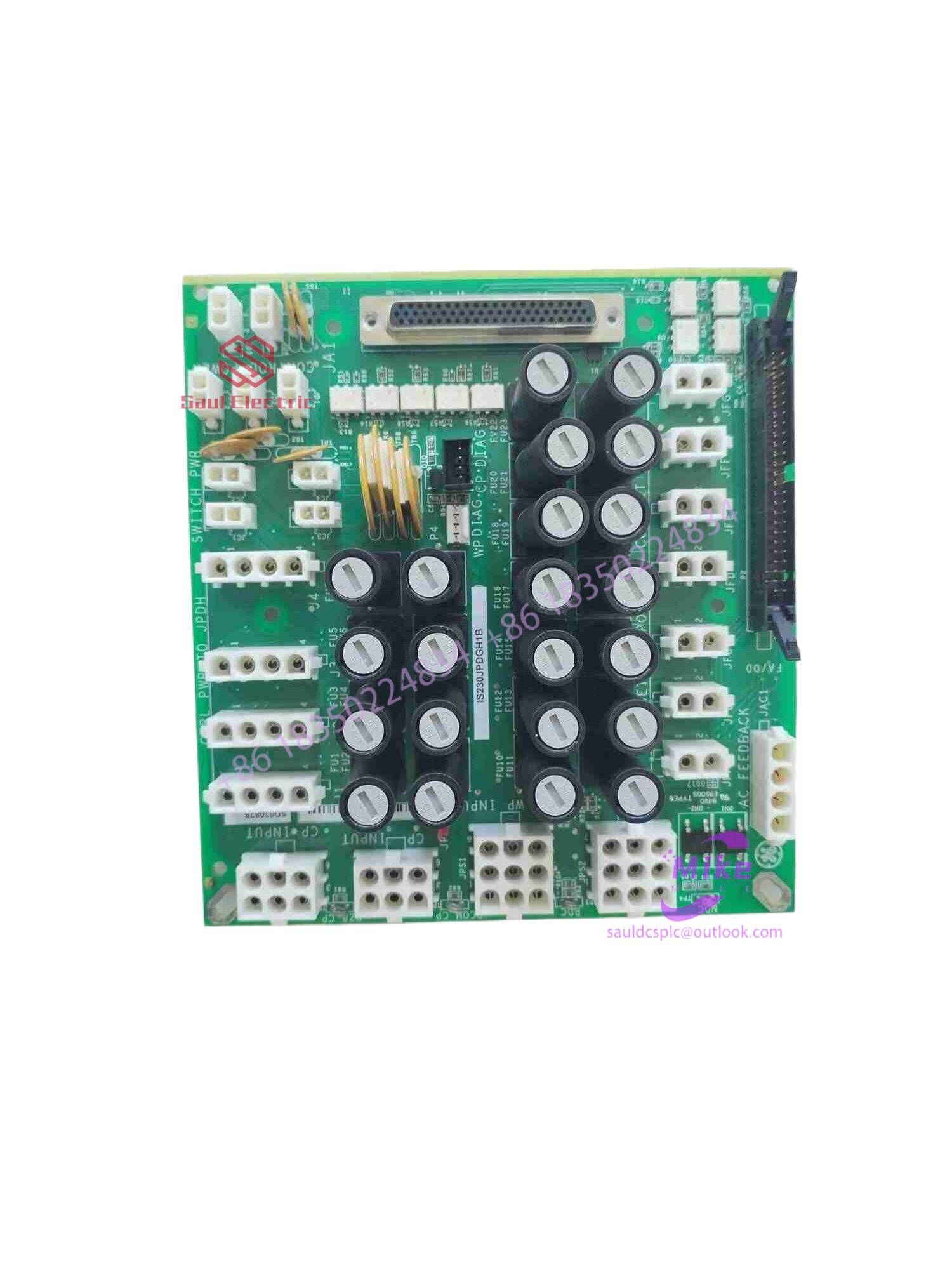
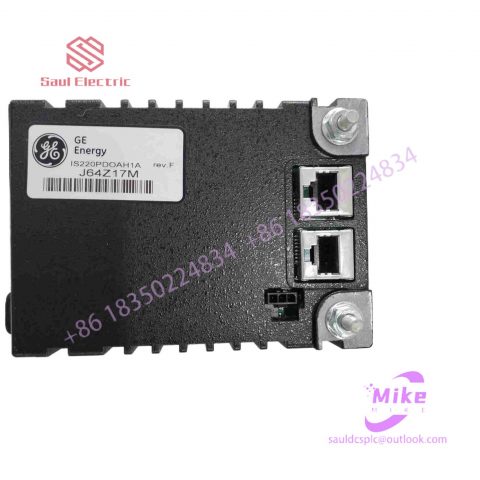
DS200LSTQF1ACE Mark VIe Control System
DS200LSTQF1ACE Product Introduction
Basic Information
Brand: GE (General Electric)
Model:DS200LSTQF1ACE
Part Number: DS200LSTQF1ACE
Series: Mark VIe Speedtronic Turbine Control System I/O Pack
Country of Origin: United States
Product Type: Discrete Input Module (Contact Input Module), also known as PDIA I/O Pack
 Functional Overview
The DS200LSTQF1ACE is a 24-channel discrete (digital) input module in the GE Mark VIe control system. Its primary function is to collect discrete signals (contact open/close signals) generated by field devices such as sensors,
switches, and relays, convert them into digital signals that can be recognized and processed by the PLC or control system CPU,
and transmit the processed data to the GE Speedtronic turbine control system or other control equipment, enabling automated control and monitoring. Key Technical Specifications
Rated Voltage: 24.0 VDC (Nominal)
Maximum Rated Voltage: 28.6 VDC
Maximum Rated Contact Input Voltage: 32 VDC
Number of Input Channels: 24 Discrete Inputs
Operating Temperature Range: -30°C to +65°C
Environmental Adaptability: Passes rigorous environmental testing, capable of long-term stable operation in harsh industrial environments Compatible Terminal Boards
The DS200LSTQF1ACE can be paired with a variety of GE terminal boards, including but not limited to:
IS200STCIH1A / IS200STCIH2A
IS200STCIH8A
IS200TBCIH2C / IS200TBCIH4C
IS400STCIH1A / IS400STCIH2A / IS400STCIH8A
IS400TBCIH2C Certifications and Safety
This module is UL certified and can be used in both hazardous and non-hazardous locations. The UL certification covers various classes and divisions, and relevant UL mark documents are available for reference.
“This partnership is exciting. By becoming the center for ABB robotics to enter the medical field, Texas Medical Center will continue to advance innovative collaborations with cutting-edge industry partners.” said Bill McKeon, President and CEO of Texas Medical Center. Operating a medical city in a city with an average of 10 million patients per year must prioritize efficiency and precision and develop processes that are easily replicable. By partnering with ABB to leverage first-of-its-kind R&D facilities, Texas The Medical Center is committed to making this happen.”
“We are proud to work with world-leading partners to develop collaborative robotic systems for the hospital of the future and test them in real laboratories to ensure value for medical professionals. At the same time, we will drive innovation, To change the way medical laboratories around the world operate.” An Shiming said, “A key element of ABB’s long-term development strategy is to continue to invest and innovate in the field of service robots and introduce our automation expertise into new areas such as healthcare. And continue to expand markets based on business in the automotive and electronics industries.”
1 Overview
Among many bus standards, various buses are called standards. However, in industries or fields where market competition cannot be divided, various buses penetrate each other. For example, DeviceNet is widely used in the automotive, material handling and manufacturing processing industries, but in Europe, the Profibus standard is also a strong competitor in these fields and occupies an absolute share. In addition, the Profibus standard is also widely used in some specific industries, such as the application of Profibus DP in automobile factories. However, a very interesting phenomenon is that the German CAN open bus itself is also used in the automotive industry. However, no matter how you look at it, the entire market can basically be divided into two categories: process industry and manufacturing industry.
As industrial enterprises continue to invest in achieving faster and more efficient production and operation, the number of intelligent devices hanging on these different buses is increasing rapidly. The application of buses can indeed bring vitality and powerful business processing capabilities to end-user enterprises, but it also brings a problem to intelligent device suppliers: they must design different bus products based on numerous buses to meet the needs of various industries. There is a need for a bus; but the data interfaces of the products are all hardware-based. It is not advisable in terms of manufacturing cost to design a product with multiple types of hardware. In addition, control wiring in fieldbus is a time-consuming task and is not easy to succeed in the installation project. This complexity of work is obviously contrary to today’s trend of easier equipment operation. System integrators look forward to a plug-and-play solution that eliminates the need to read through thick product specification sheets provided by suppliers. This is actually a demand for flexibility and simplification of industrial communications. Therefore, ABB designs and produces a product (FieldBusPlug-FBP) that can easily and quickly connect to any bus system to simplify the entire fieldbus, as shown in Figure 1. In fact, FBP is a bus adapter .
Figure 1 Fieldbus Adapter (FBP)
2. Functions of FBP system
The FBP system can connect switchgear and other similar elements, such as motor protection and control equipment to sensors , in a simple and effective way with the usual automation systems ( PLCs ) via a bus adapter of any protocol. wait. These switching devices are independent of the bus used. Through selected bus cables (FBP cables), connections to various bus adapters can be established.
ABB FBP bus adapter can support five bus adapters: Profibus-DP, CANopen, Modbus-RTU, DeviceNet and AS-i. The appearance and connection methods of these five bus adapters are the same. It provides convenience for unified use and selection . As shown in Figure 2, the DeviceNet bus adapter is selected for communication.
Figure 2 Connection diagram of multi-substation equipment and PLC system
3. Characteristics of FBP system
Today’s automation applications not only require intelligent products, but also need to be able to communicate with each other to implement network functions, and the bus is undoubtedly the communication method chosen by many current automation equipment. When you walk into any manufacturing plant , process company, or energy company, you will easily find hundreds of actuators and sensors communicating with their controllers through a bus.
3.1 Simple and flexible bus system
One device is suitable for all bus types. Every device and every functional module in the product line contains a neutral bus adapter interface. With selected bus adapters and cable glands and pre-connected cables, it is very easy to establish reliable and flexible communication and connections, as shown in Figure 3.

There are no reviews yet.