
 HONG KONG SAUL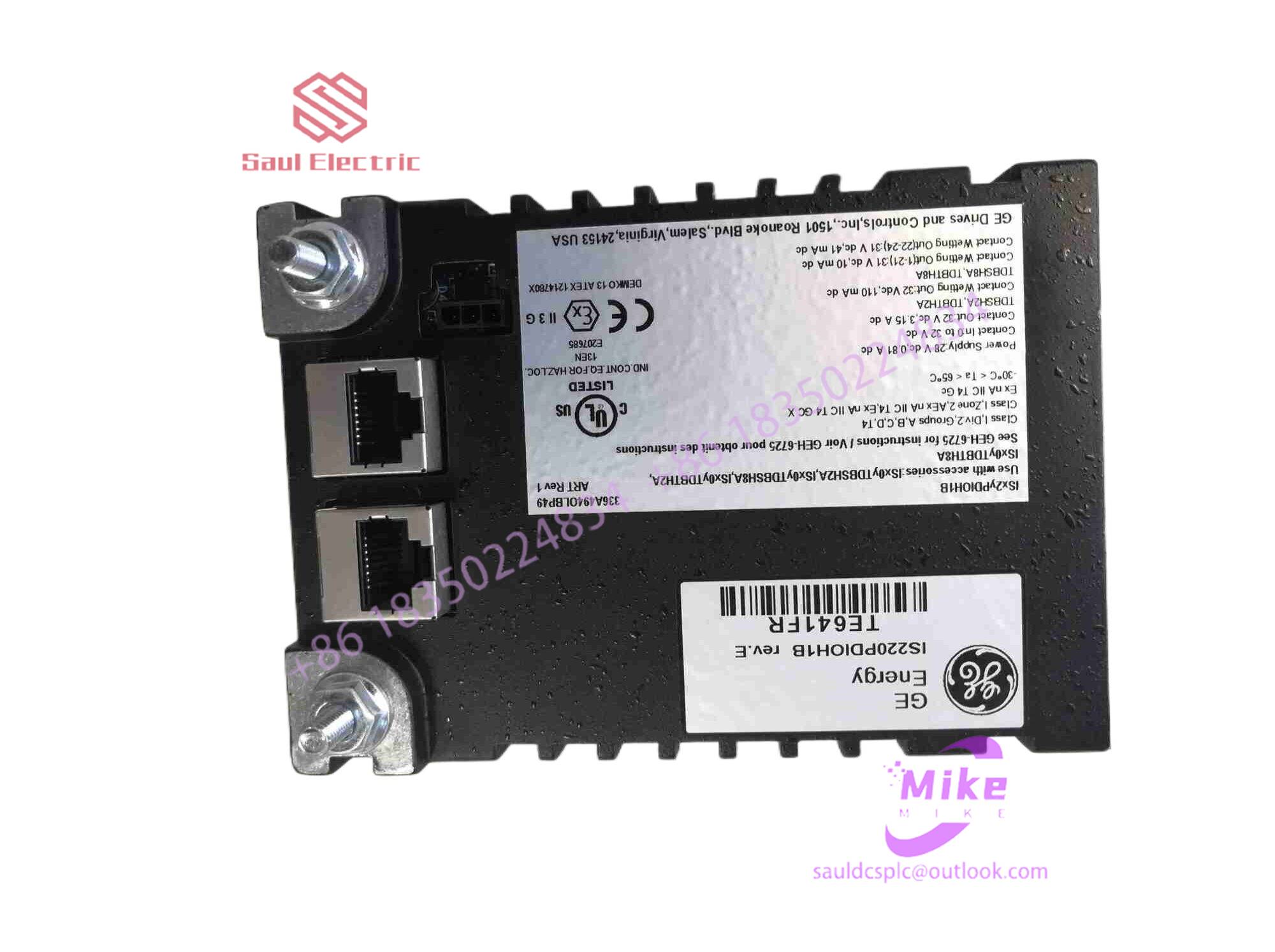

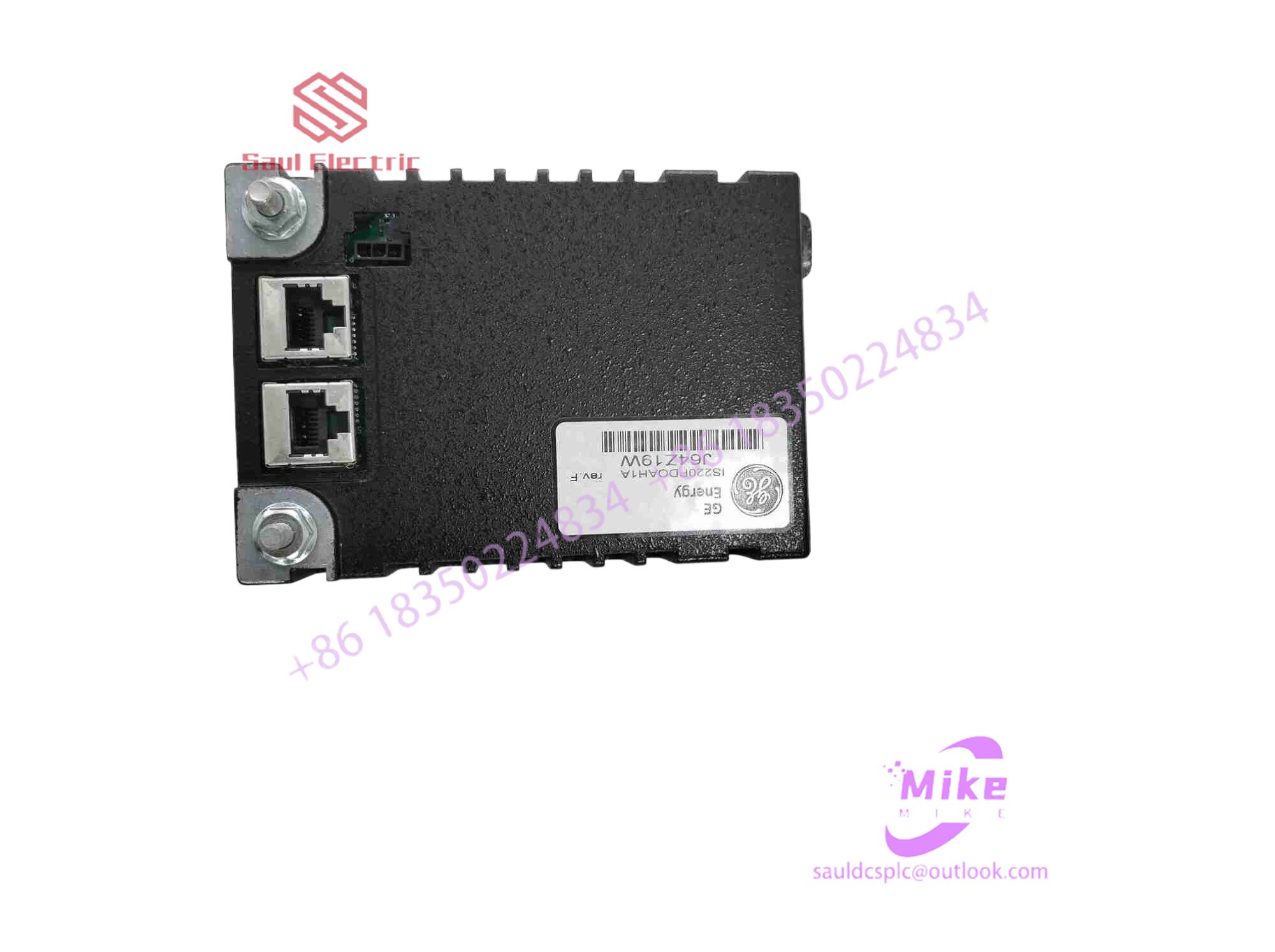
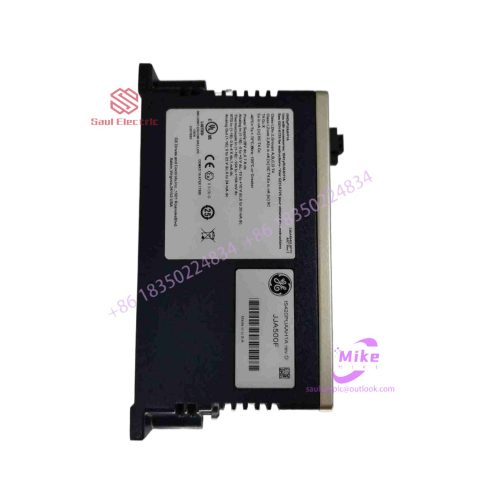
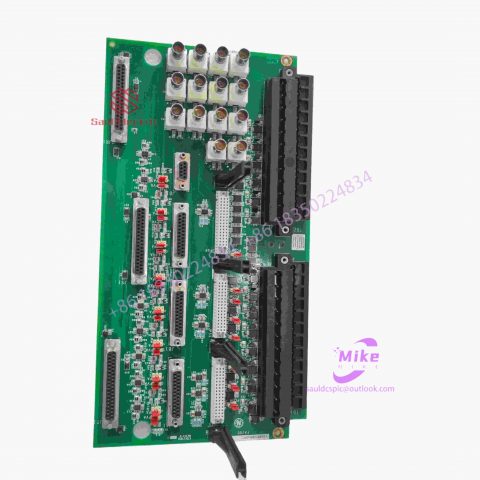
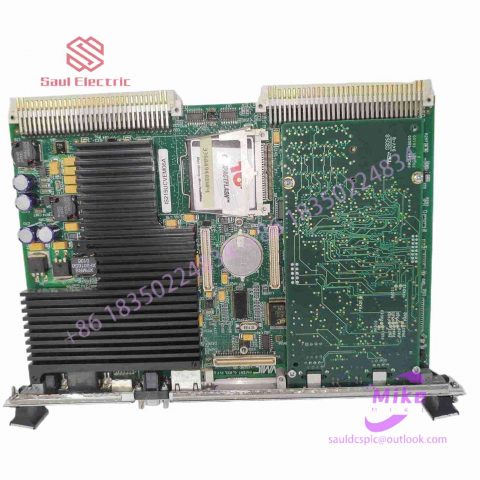
DS200MBHAG2A integrated circuit board
DS200MBHAG2A Product Introduction
Basic Information
Brand: GE (General Electric)
Model:DS200MBHAG2A
Part Number: DS200MBHAG2A
Series: Mark VIe Speedtronic Turbine Control System I/O Pack
Country of Origin: United States
Product Type: Discrete Input Module (Contact Input Module), also known as PDIA I/O Pack
contacts: Mike
+86 18350224834 (WeChat/WhatsApp)
Email:Mike18350224834@gmail.com
 Functional Overview
The DS200MBHAG2A is a 24-channel discrete (digital) input module in the GE Mark VIe control system. Its primary function is to collect discrete signals (contact open/close signals) generated by field devices such as sensors,
switches, and relays, convert them into digital signals that can be recognized and processed by the PLC or control system CPU,
and transmit the processed data to the GE Speedtronic turbine control system or other control equipment, enabling automated control and monitoring. Key Technical Specifications
Rated Voltage: 24.0 VDC (Nominal)
Maximum Rated Voltage: 28.6 VDC
Maximum Rated Contact Input Voltage: 32 VDC
Number of Input Channels: 24 Discrete Inputs
Operating Temperature Range: -30°C to +65°C
Environmental Adaptability: Passes rigorous environmental testing, capable of long-term stable operation in harsh industrial environments Compatible Terminal Boards
The DS200MBHAG2A can be paired with a variety of GE terminal boards, including but not limited to:
IS200STCIH1A / IS200STCIH2A
IS200STCIH8A
IS200TBCIH2C / IS200TBCIH4C
IS400STCIH1A / IS400STCIH2A / IS400STCIH8A
IS400TBCIH2C Certifications and Safety
This module is UL certified and can be used in both hazardous and non-hazardous locations. The UL certification covers various classes and divisions, and relevant UL mark documents are available for reference.
There is no doubt that power system is a very traditional major in electrical engineering. After graduation, you are more likely to enter power companies at all levels affiliated to the State Grid or China Southern Power Grid Co., Ltd. Have you seen that there are many people in this forum who talk about electricity? The salary is high, so it can be regarded as an iron rice bowl with guaranteed income regardless of drought or flood; while power electronics and power transmission are a brand-new major, which is an interdisciplinary subject of electricity, electronics and control theory, involving circuit topology, automatic theory, analogue, digital and electrical synthesis. Knowledge, practical ability and practical experience determine the success or failure of the project to some extent. After graduation, students majoring in power electronics generally enter companies or research institutes, such as the world’s top power electronics companies, such as Emerson, GE, Simens, ABB, Philips, Oslang, etc., and of course a bunch of domestic companies, generally engaged in switching power supplies and UPS. , frequency converter, reactive power compensation, and active filtering, etc. To sum up, if you want to have a good iron job at least for now, study power systems; if you want to engage in a cutting-edge and challenging sunrise industry, and are not afraid of hardship, I hope you can study power electronics and electric transmission after all the hardships. If you don’t get an official position in a power company after three or five years after studying power systems, your salary at that time may not be as good as that of students who work in power electronics. Power electronics and electric transmission are a brand-new subject. Most of the teachers in China have a background in electrical machinery and may not be able to provide practical guidance. However, the importance of a mentor is to provide you with broad research resources and lead you into the door of this subject. There are still some domestic institutions with strong strengths in this subject: the first is undeniably Zhejiang University, with professors Xu Dehong, Qian Zhaoming, Lu Zhengyu, etc.; the second is Xi’an Jiaotong University, with the highly respected teacher Wang Zhaoan and his two disciples Liu Jin Jin, Yang Xu; the last one is Yan Yangguang from Nanjing University of Aeronautics and Astronautics and his student Professor Ruan Xinbo. Of course, the most awesome school in the world is the National Power Electronics Systems Research Center at Virginia Tech in the United States, where the most awesome Professor Fred.C.Lee Zeyuan Li is located; Of course, the University of Colorado at Boulder in the United States is not weak either, especially in the direction of digital control of power electronics. Erickson and Maksimovic, authors of the famous power electronics textbook Fundamental of Power Electronics, are leading figures here. Students who are interested in engaging in power electronics research abroad can apply to these two schools. In addition, the FREEDM Research Center of North Carolina State University is also conducting research on power electronics and power electronic devices. There is Professor Alex Q. Huang [1], the first domestic IGBT manufacturer, and IGBT experts. Inventor Jayant Baliga. However, it is a pity that power electronics is currently only a technology and cannot be called a scientific subject. That is because a complete and accurate theoretical basis has not yet been formed. Because if there is no profound theoretical foundation, it cannot be called science. This discipline is currently mainly engaged in the research of circuit topology and application technology. The current theoretical basis is linear control method and circuit engineering. However, power electronics should not be regarded as a linear system, because power devices work in a switching state, which is a strongly pathological nonlinear system. Therefore, it can be said that the current power electronic system based on linear control theory is completely insufficient and can even lead to some wrong conclusions in some cases. There are currently several research directions in power electronics technology: High-frequency switching power supply

There are no reviews yet.