
 HONG KONG SAUL

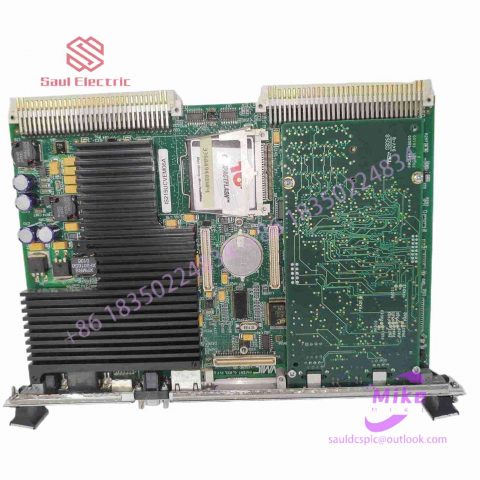
DS200PLIBG1A Turbine Control System
DS200PLIBG1A Product Introduction
Basic Information
Brand: GE (General Electric)
Model:DS200PLIBG1A
Part Number: DS200PLIBG1A
Series: Mark VIe Speedtronic Turbine Control System I/O Pack
Country of Origin: United States
Product Type: Discrete Input Module (Contact Input Module), also known as PDIA I/O Pack
contacts: Mike
+86 18350224834 (WeChat/WhatsApp)
Email:Mike18350224834@gmail.com
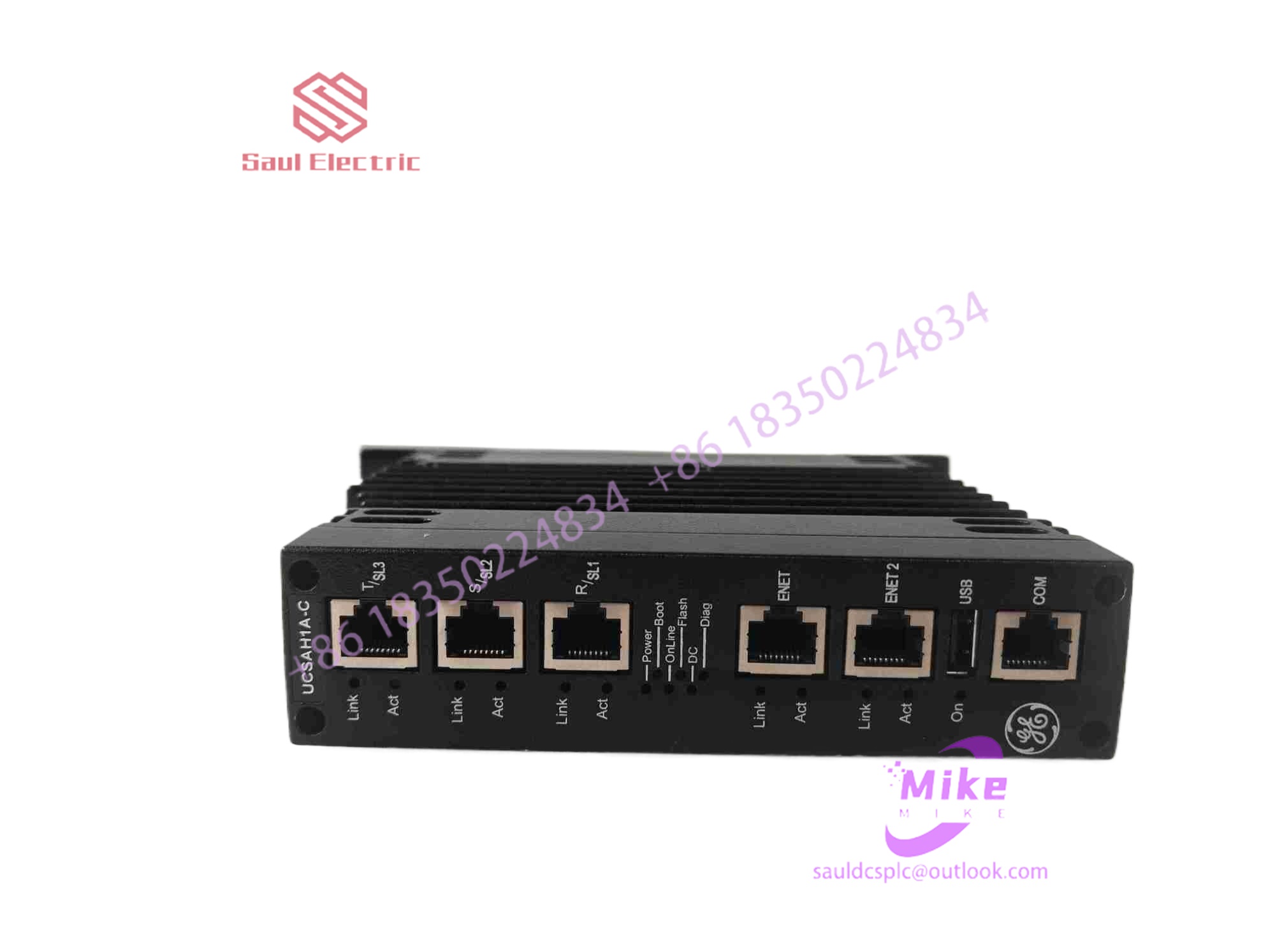 Functional Overview
The DS200PLIBG1A is a 24-channel discrete (digital) input module in the GE Mark VIe control system. Its primary function is to collect discrete signals (contact open/close signals) generated by field devices such as sensors,
switches, and relays, convert them into digital signals that can be recognized and processed by the PLC or control system CPU,
and transmit the processed data to the GE Speedtronic turbine control system or other control equipment, enabling automated control and monitoring. Key Technical Specifications
Rated Voltage: 24.0 VDC (Nominal)
Maximum Rated Voltage: 28.6 VDC
Maximum Rated Contact Input Voltage: 32 VDC
Number of Input Channels: 24 Discrete Inputs
Operating Temperature Range: -30°C to +65°C
Environmental Adaptability: Passes rigorous environmental testing, capable of long-term stable operation in harsh industrial environments Compatible Terminal Boards
The DS200PLIBG1A can be paired with a variety of GE terminal boards, including but not limited to:
IS200STCIH1A / IS200STCIH2A
IS200STCIH8A
IS200TBCIH2C / IS200TBCIH4C
IS400STCIH1A / IS400STCIH2A / IS400STCIH8A
IS400TBCIH2C Certifications and Safety
This module is UL certified and can be used in both hazardous and non-hazardous locations. The UL certification covers various classes and divisions, and relevant UL mark documents are available for reference.
High-profit core components are basically monopolized by foreign-funded enterprises
At this stage, there are more than 100,000 auto parts industries in China’s north and south, and there are about 13,000 medium-sized and above enterprises. According to statistics last year, the industrial output value of national auto parts companies was approximately 3.8 trillion yuan, and the main business income reached 3.5 trillion yuan. The average profit margin of the entire industry was 6% to 8%, which was only about half of that of foreign-funded enterprises. This shows that With the same investment cost, the net profit obtained by foreign-funded enterprises is more than double that of domestic-funded enterprises. Although China has a relatively large base of auto parts companies, high-profit key core parts are basically monopolized by foreign-funded companies, and some high-precision auto parts still rely on imports, especially in recent years as my country has become increasingly strict in vehicle emission requirements and emissions. With the continuous upgrading of standards, the dependence on foreign investment in post-processing electronic control has reached almost 100%.
High-profit core components are basically monopolized by foreign-funded enterprises
Our country once fantasized about introducing foreign-funded auto parts companies and joint ventures with Chinese auto parts independent companies through the method of “market-for-technology”. Although we did learn some management experience and technology from it, when foreign-funded companies monopolized core technologies, the exchange and The high-tech skills learned are minimal. From its own perspective, this is due to the characteristics of domestic auto parts companies that are “dispersed, small, poor, and slow”, especially the lack of key core technologies, inherent shortcomings in the industrial chain, lack of comprehensive strength of enterprises, upstream and downstream This is due to a series of comprehensive factors such as insufficient support and poor brand premium ability.
Although the scale of my country’s auto parts industry has continued to expand since the reform and opening up, domestic independent parts companies are far lower than foreign-funded companies, and most of them are homogeneous vicious competition, price competition and insufficient investment in corporate innovation. The core product competition Weak. In addition, in addition to the factors of low R&D investment, due to the blockade of foreign technical barriers, foreign-funded enterprises are still the leading suppliers of some key components, otherwise they cannot be installed in cars. For example, in general products such as engine power components, automatic transmissions, electronic appliances, and electrical systems, as well as in the fields of key, high-precision, high value-added, and high-profit parts products such as fuel supply systems, ignition systems, and energy-specific components. , are basically in the blank, all are supplied by foreign capital, and almost all rely on imports. The practical dilemma of relying on imports of core components has distorted and squeezed the profit space of the overall automobile industry and parts companies to the minimum.
For example, the supply chain of gasoline and diesel engines for light vehicles is monopolized by Japan’s Mitsubishi and Isuzu. Japan’s Mitsubishi almost monopolizes the supply of gasoline engines for all self-branded cars that cannot produce their own engines. In addition, almost all diesel engines used in pickup trucks, light trucks, and light buses in China are purchased from Isuzu or produced using Isuzu technology; heavy-duty diesel engines are monopolized by the American Cummins Company. Germany’s Bosch, the United States’ Delphi, and Japan’s Denso, a subsidiary of Toyota, basically monopolize all China’s EFI market share. Every time a Chinese consumer buys a car, he or she will contribute thousands or tens of thousands of yuan in net profit to the three foreign companies mentioned above.
The American Cummins Company monopolizes China’s high-end heavy-duty diesel engine market. Federal-Mogul and Cummins have become the recipients of ignition system orders from most domestic engine companies such as Xichai, Yuchai, Weichai and Sinotruk. Two companies, Eaton of the United States and ZF of Germany, have almost monopolized China’s heavy-duty transmission market. The Bosch diesel common rail system and after-treatment system have almost monopolized the Chinese commercial vehicle market. At the same time, multinational parts giants represented by Delphi of the United States, Visteon (former Ford Auto Parts Division), and Faurecia of France design and manufacture interior and exterior parts for almost all domestic passenger car manufacturers. . Aisin, a company controlled by Toyota, also almost monopolizes half of my country’s passenger car and some commercial vehicle markets.
Especially in recent years, as the nationwide large-scale toxic haze weather has become increasingly serious, and under the pressure of environmental protection, energy and emission regulations, my country’s fuel limits and emission regulations have become increasingly strict. In order to meet the requirements of National IV, National V and soon to be implemented National VI emission standards, product upgrades have forced commercial vehicles to take the high-end route. High-end is not only reflected in key components such as engines, but also requires other components to match them. match. Therefore, independent commercial vehicle brands, which have gradually become high-end products, are increasingly equipped with “high, large, high-quality, and precise” foreign

There are no reviews yet.