
 HONG KONG SAUL

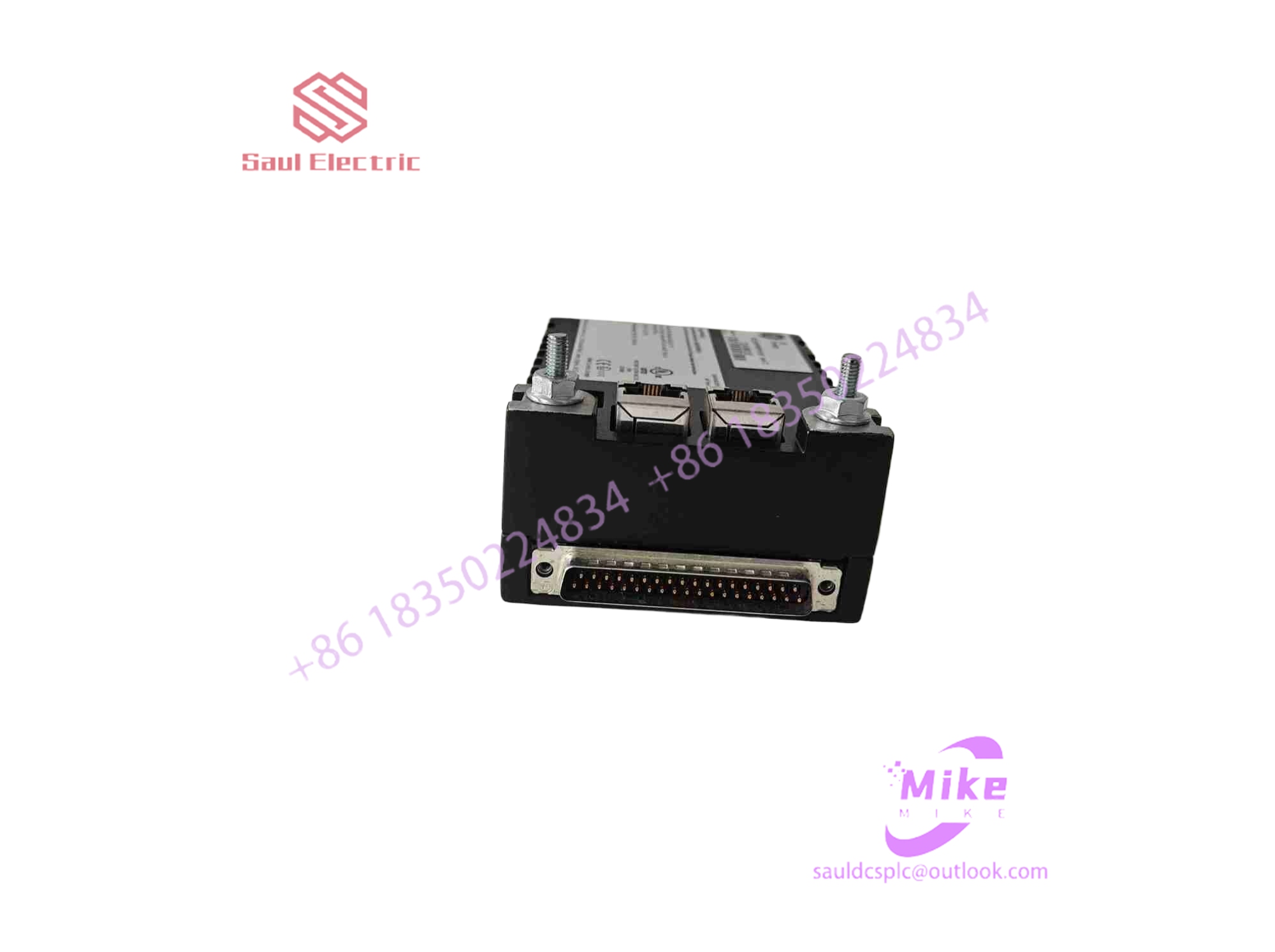
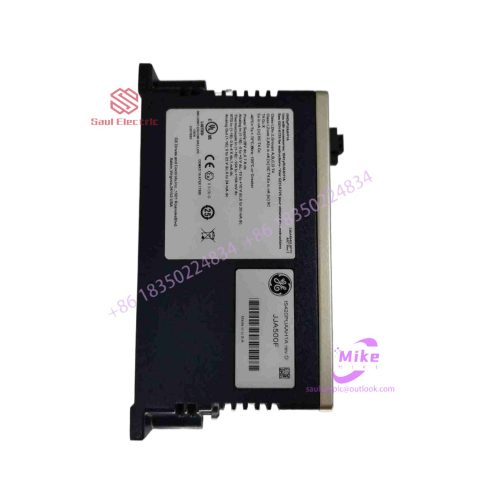
DS200SDCCF1AFD 24 channel output module
DS200SDCCF1AFD Product Introduction
Basic Information
Brand: GE (General Electric)
Model:DS200SDCCF1AFD
Part Number: DS200SDCCF1AFD
Series: Mark VIe Speedtronic Turbine Control System I/O Pack
Country of Origin: United States
Product Type: Discrete Input Module (Contact Input Module), also known as PDIA I/O Pack
 Functional Overview
The DS200SDCCF1AFD is a 24-channel discrete (digital) input module in the GE Mark VIe control system. Its primary function is to collect discrete signals (contact open/close signals) generated by field devices such as sensors,
switches, and relays, convert them into digital signals that can be recognized and processed by the PLC or control system CPU,
and transmit the processed data to the GE Speedtronic turbine control system or other control equipment, enabling automated control and monitoring. Key Technical Specifications
Rated Voltage: 24.0 VDC (Nominal)
Maximum Rated Voltage: 28.6 VDC
Maximum Rated Contact Input Voltage: 32 VDC
Number of Input Channels: 24 Discrete Inputs
Operating Temperature Range: -30°C to +65°C
Environmental Adaptability: Passes rigorous environmental testing, capable of long-term stable operation in harsh industrial environments Compatible Terminal Boards
The DS200SDCCF1AFD can be paired with a variety of GE terminal boards, including but not limited to:
IS200STCIH1A / IS200STCIH2A
IS200STCIH8A
IS200TBCIH2C / IS200TBCIH4C
IS400STCIH1A / IS400STCIH2A / IS400STCIH8A
IS400TBCIH2C Certifications and Safety
This module is UL certified and can be used in both hazardous and non-hazardous locations. The UL certification covers various classes and divisions, and relevant UL mark documents are available for reference.
(2) Data collection and traceability issues. Data collection issues often occur, and many assembly lines lack “end-to-end traceability.” In other words, there are often no unique identifiers associated with the parts and processing steps being produced. One workaround is to use a timestamp instead of an identifier. Another situation involves an incomplete data set. In this case, omit incomplete information parts or instances from the forecast and analysis, or use some estimation method (after consulting with manufacturing experts).
(3) A large number of features. Different from the data sets in traditional data mining, the features observed in manufacturing analysis may be thousands. Care must therefore be taken to avoid that machine learning algorithms can only work with reduced datasets (i.e. datasets with a small number of features).
(4) Multicollinearity, when products pass through the assembly line, different measurement methods are taken at different stations in the production process. Some of these measurements can be highly correlated, however many machine learning and data mining algorithm properties are independent of each other, and multicollinearity issues should be carefully studied for the proposed analysis method.
(5) Classification imbalance problem, where there is a huge imbalance between good and bad parts (or scrap, that is, parts that do not pass quality control testing). Ratios may range from 9:1 to even lower than 99,000,000:1. It is difficult to distinguish good parts from scrap using standard classification techniques, so several methods for handling class imbalance have been proposed and applied to manufacturing analysis [8].
(6) Non-stationary data, the underlying manufacturing process may change due to various factors such as changes in suppliers or operators and calibration deviations in machines. There is therefore a need to apply more robust methods to the non-stationary nature of the data. (7) Models can be difficult to interpret, and production and quality control engineers need to understand the analytical solutions that inform process or design changes. Otherwise the generated recommendations and decisions may be ignored.

There are no reviews yet.