
 HONG KONG SAUL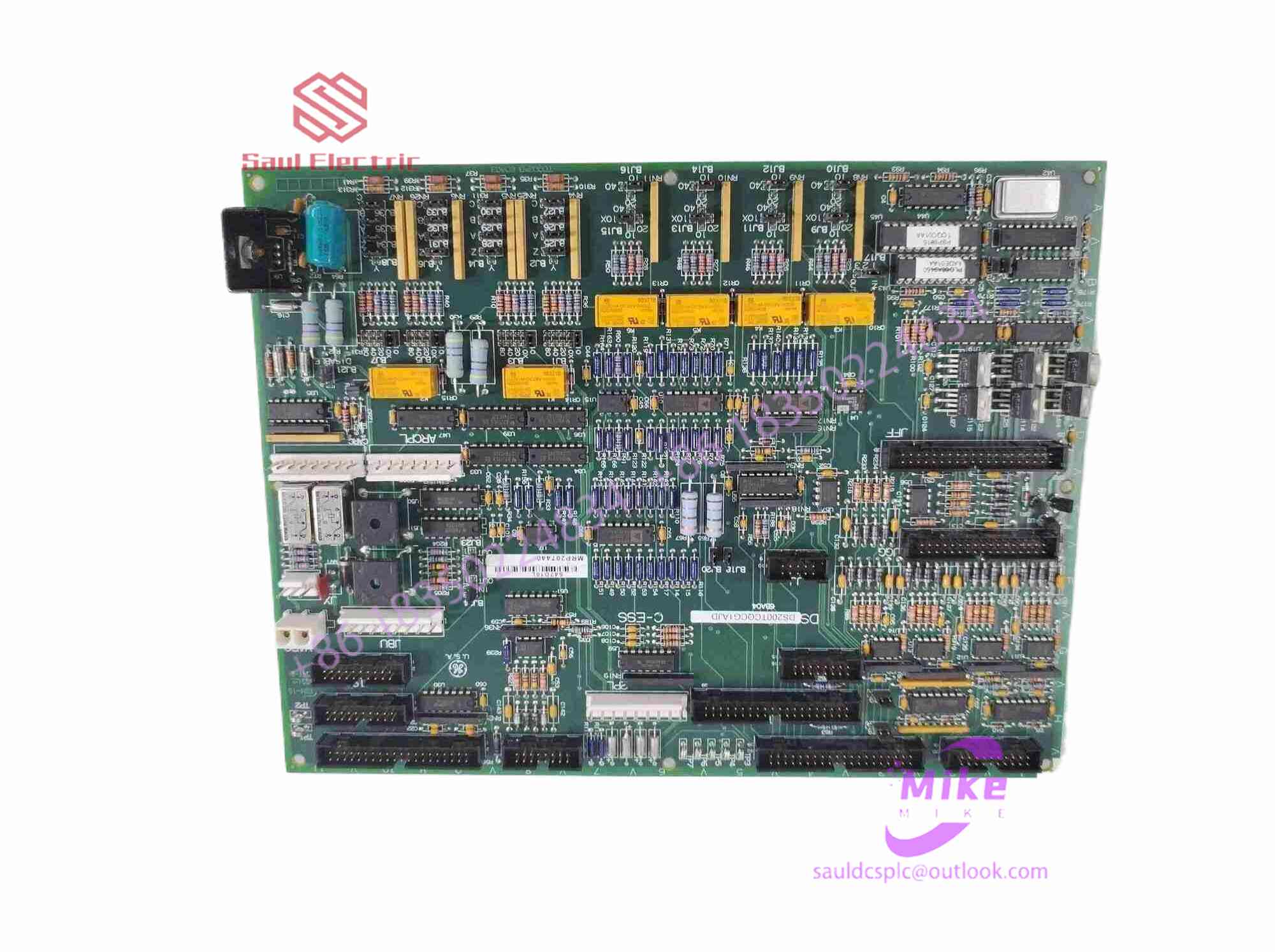
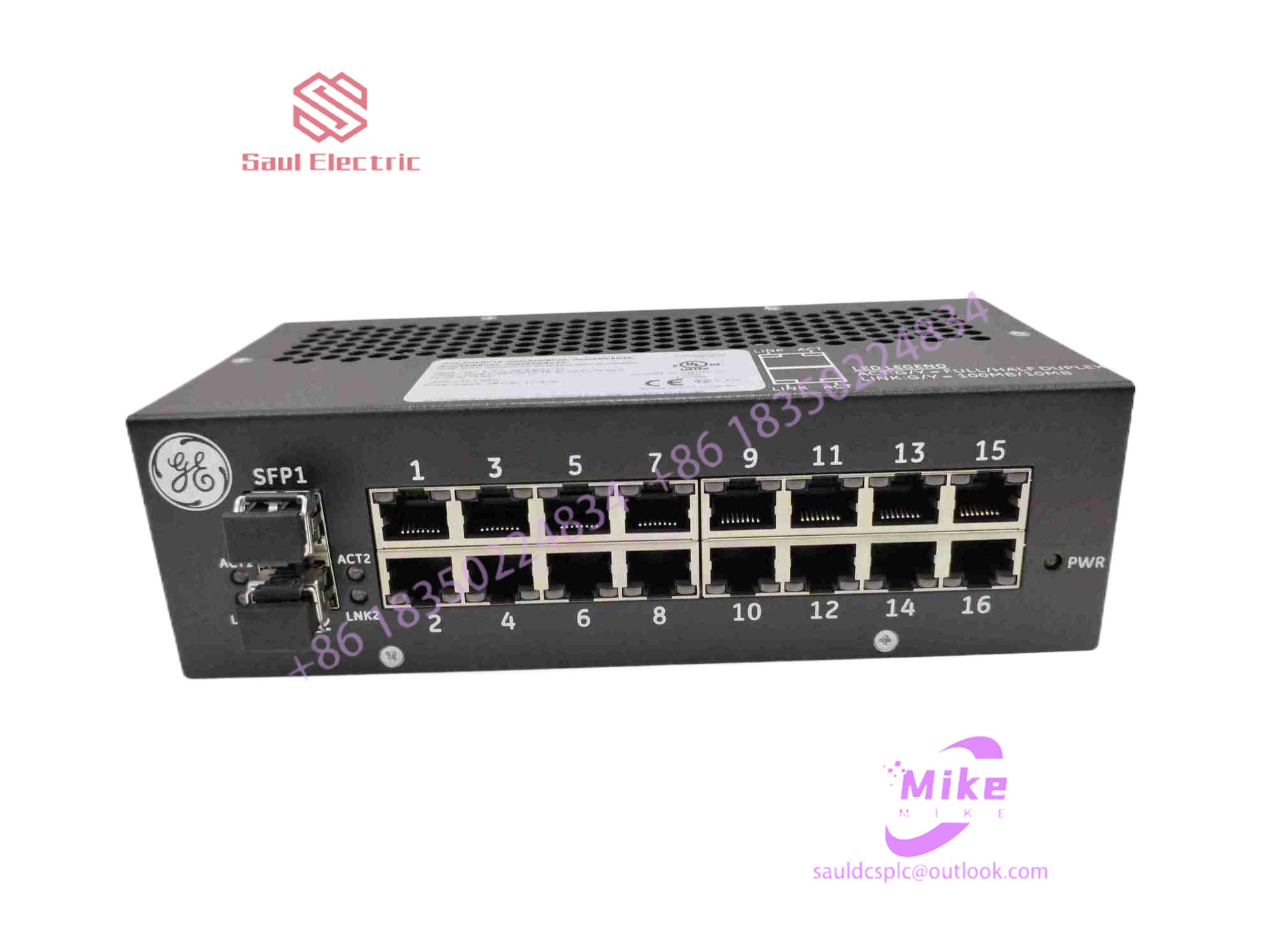
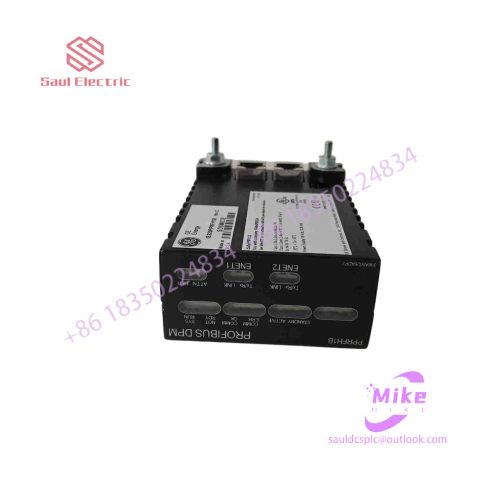
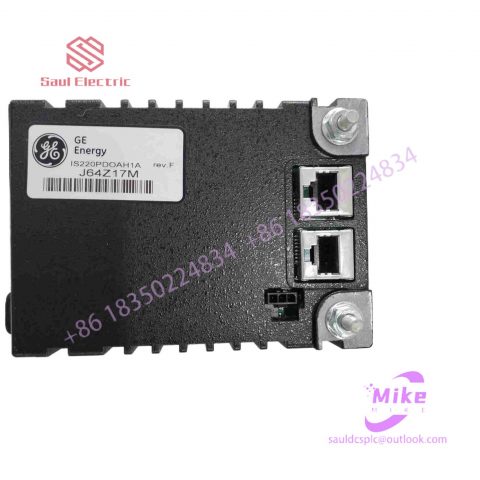
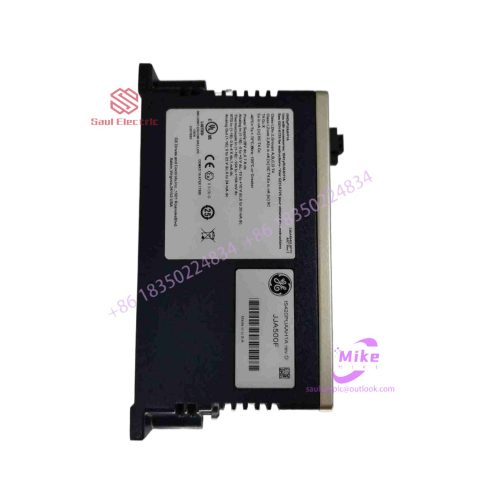
DS200SHCBG1ABC Turbine Control System
DS200SHCBG1ABC Product Introduction
Basic Information
Brand: GE (General Electric)
Model:DS200SHCBG1ABC
Part Number: DS200SHCBG1ABC
Series: Mark VIe Speedtronic Turbine Control System I/O Pack
Country of Origin: United States
Product Type: Discrete Input Module (Contact Input Module), also known as PDIA I/O Pack
 Functional Overview
The DS200SHCBG1ABC is a 24-channel discrete (digital) input module in the GE Mark VIe control system. Its primary function is to collect discrete signals (contact open/close signals) generated by field devices such as sensors,
switches, and relays, convert them into digital signals that can be recognized and processed by the PLC or control system CPU,
and transmit the processed data to the GE Speedtronic turbine control system or other control equipment, enabling automated control and monitoring. Key Technical Specifications
Rated Voltage: 24.0 VDC (Nominal)
Maximum Rated Voltage: 28.6 VDC
Maximum Rated Contact Input Voltage: 32 VDC
Number of Input Channels: 24 Discrete Inputs
Operating Temperature Range: -30°C to +65°C
Environmental Adaptability: Passes rigorous environmental testing, capable of long-term stable operation in harsh industrial environments Compatible Terminal Boards
The DS200SHCBG1ABC can be paired with a variety of GE terminal boards, including but not limited to:
IS200STCIH1A / IS200STCIH2A
IS200STCIH8A
IS200TBCIH2C / IS200TBCIH4C
IS400STCIH1A / IS400STCIH2A / IS400STCIH8A
IS400TBCIH2C Certifications and Safety
This module is UL certified and can be used in both hazardous and non-hazardous locations. The UL certification covers various classes and divisions, and relevant UL mark documents are available for reference.
infrared camera
The four-wire touch screen does not consider the parasitic resistance of the electrode tap leads and the circuit that drives the electrode. This resistance is not included in the ITO resistance, and the resistance fluctuates due to the influence of ambient temperature, which is likely to affect the accuracy of the calculation. Therefore, eight Wire resistive touch screen concept.
The advantage of the four-wire/eight-wire resistive touch screen is that it can not only calculate the horizontal X and Y coordinates, but also measure the longitudinal Z coordinate, that is, the pressure of the finger, through a series of methods. This is obtained by measuring the longitudinal contact resistance Rtouch. Because when contact occurs, the contact resistance is inversely proportional to the pressure. The greater the pressure, the smaller the contact resistance. The measured value of this resistance can be used to quantify the contact pressure.
The disadvantage of the four-wire/eight-wire resistive touch screen is that it is not durable enough. Long-term touch and pressure will cause damage to the device. Because the upper PET and ITO will deform every time it is touched, and the ITO material is brittle and easily damaged when deformation occurs frequently. Once the ITO layer breaks, the uniformity of conduction is destroyed, and the proportional equivalence when deriving the coordinates above no longer exists. This kind of breakage is very likely to occur when frequent
The area that was touched, such as the location of the “Confirm” key. Another disadvantage is that the ITO attached to the PET movable substrate will not be fully oxidized. Once exposed to moisture or heat, oxidation will cause the resistance to rise, which will also destroy the conductive uniformity and cause errors in coordinate calculations, that is, “drift” Phenomenon. This gave rise to the concept of five-wire resistive screens. Short Message Service Center
3. Five-wire resistive touch screen
In view of the shortcomings of the four-wire resistive touch screen, the structure of the five-wire resistive touch screen is that the X and Y electrodes are made on the ITO layer attached to the glass substrate, and the upper ITO only serves as the active electrode. The X and Y electrodes of the bottom ITO lead out UL, UR, LL, and LR from the four corners, plus the upper movable electrode, so there are five lines in total.
The advantage is that the glass substrate is relatively strong and not easily deformed, and can fully oxidize the ITO attached to it. The glass material does not absorb water, and its expansion coefficient is very close to that of ITO, so the resulting deformation will not cause damage to ITO. The upper ITO is only used as the lead-out electrode, and no current flows, so uniform conductivity is not required. Even if it is damaged due to deformation, the resistive screen will not “drift”.
The electrodes of the five-wire resistive touch screen cannot be led from the four sides by conductive strips like the four-wire resistive screen, which will cause a short circuit. The electrodes are dispersed into many resistive patterns distributed around the touch screen, and then drawn out from the four corners. The function of these patterns is to make the voltage gradient in the X and Y directions of the touch screen linear, which facilitates the measurement of coordinates.
Camel outdoor hiking bag
4. Six-wire resistive touch screen
Toshiba’s withdrawal from the notebook business is based on the five-wire resistive touch screen. The six-wire resistive touch screen adds a grounded conductive layer on the back of the glass substrate to isolate signal crosstalk from the back of the glass substrate.
win7 graphics card driver>Liu Chuanzhi’s daughter
5. Seven-wire resistive touch screen
Like the four-wire resistive touch screen, the five-wire resistive touch screen does not consider the parasitic resistance of the electrode tap lead and the circuit that drives the electrode. This part of the resistance is not included in the ITO resistance and is likely to affect the accuracy of the calculation. Therefore, seven The wire resistive touch screen is based on the five-wire resistive touch screen. A wire is drawn from both ends of UL and LR to sense the actual touch screen terminal voltage, which are recorded as Vmax and Vmin respectively. The working principle is the same as the five-wire resistive touch screen.

There are no reviews yet.