
 HONG KONG SAUL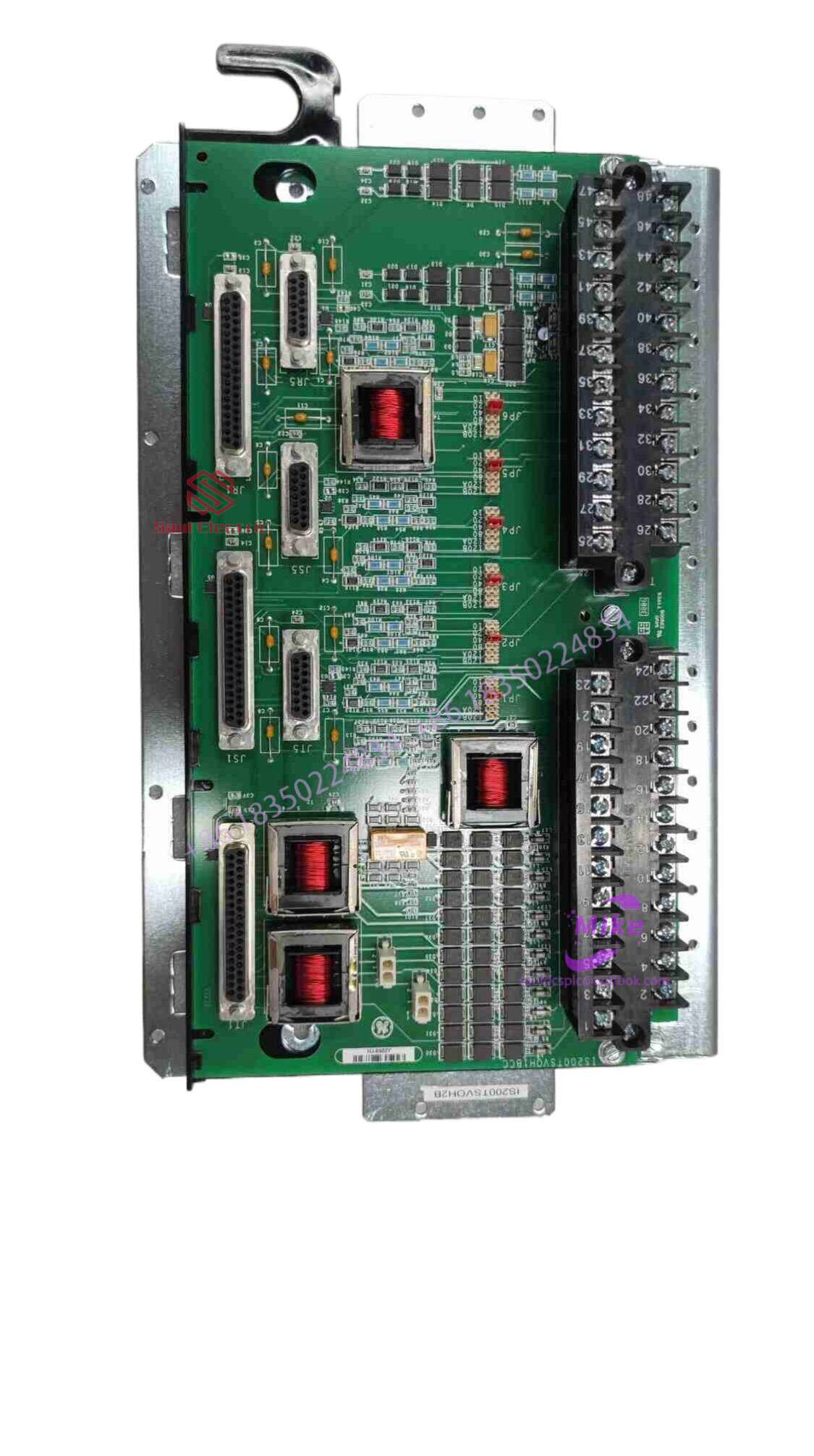

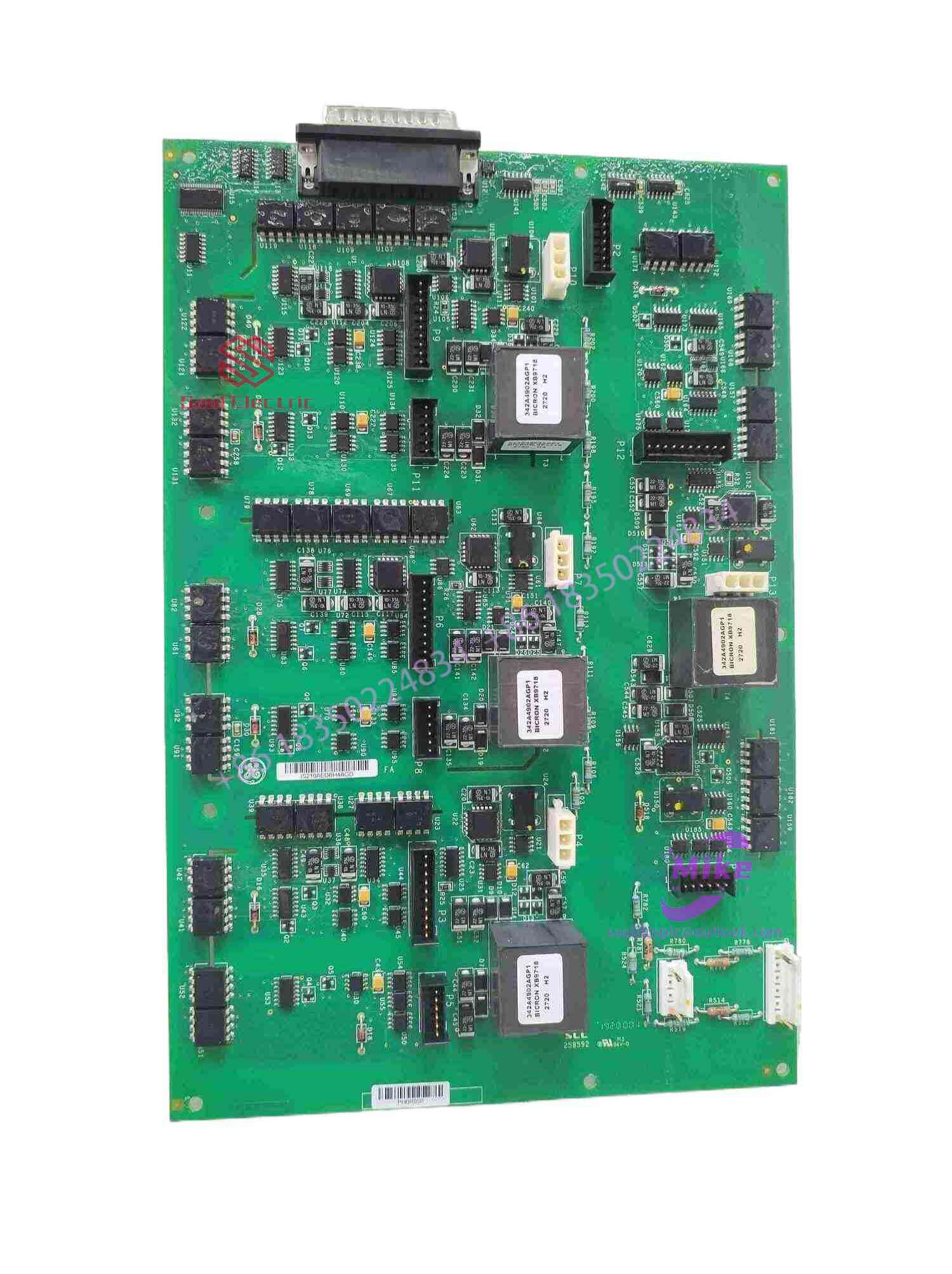
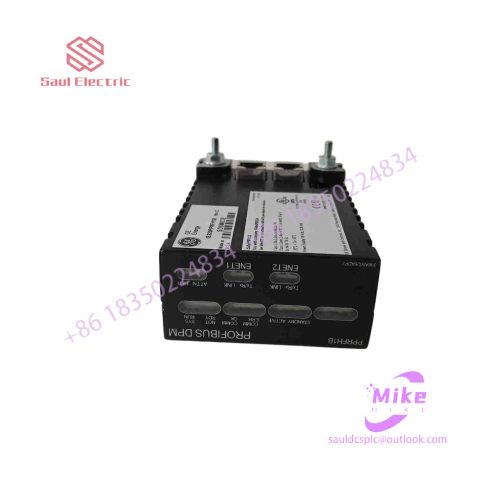
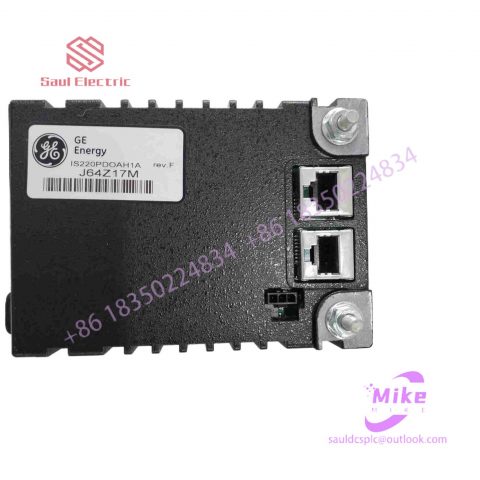
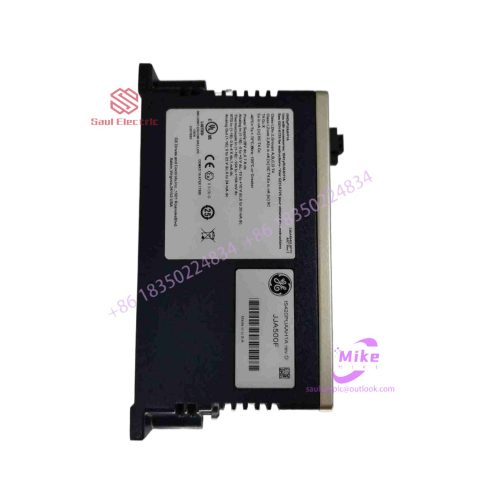
DS200SSBAG1ARP 24 channel output module
DS200SSBAG1ARP Product Introduction
Basic Information
Brand: GE (General Electric)
Model:DS200SSBAG1ARP
Part Number: DS200SSBAG1ARP
Series: Mark VIe Speedtronic Turbine Control System I/O Pack
Country of Origin: United States
Product Type: Discrete Input Module (Contact Input Module), also known as PDIA I/O Pack
 Functional Overview
The DS200SSBAG1ARP is a 24-channel discrete (digital) input module in the GE Mark VIe control system. Its primary function is to collect discrete signals (contact open/close signals) generated by field devices such as sensors,
switches, and relays, convert them into digital signals that can be recognized and processed by the PLC or control system CPU,
and transmit the processed data to the GE Speedtronic turbine control system or other control equipment, enabling automated control and monitoring. Key Technical Specifications
Rated Voltage: 24.0 VDC (Nominal)
Maximum Rated Voltage: 28.6 VDC
Maximum Rated Contact Input Voltage: 32 VDC
Number of Input Channels: 24 Discrete Inputs
Operating Temperature Range: -30°C to +65°C
Environmental Adaptability: Passes rigorous environmental testing, capable of long-term stable operation in harsh industrial environments Compatible Terminal Boards
The DS200SSBAG1ARP can be paired with a variety of GE terminal boards, including but not limited to:
IS200STCIH1A / IS200STCIH2A
IS200STCIH8A
IS200TBCIH2C / IS200TBCIH4C
IS400STCIH1A / IS400STCIH2A / IS400STCIH8A
IS400TBCIH2C Certifications and Safety
This module is UL certified and can be used in both hazardous and non-hazardous locations. The UL certification covers various classes and divisions, and relevant UL mark documents are available for reference.
Figure 2: China and the United States cooperate to develop EVs
The United States will provide approximately US$37.5 million in financial support to the “China-US Clean Energy Research Center” over five years.
1 2 3
25 cities were selected for the Ten Cities Thousand Vehicles Project
The three focuses of China’s electric vehicle development are HEV, EV and FCV. The issues in components are strengthening motors, inverters and rechargeable batteries. In the past 10 years, more than 100 private enterprises have participated in research on more than 500 projects. In the Outline of the Medium- and Long-term Science and Technology Development Plan (2006-2020) announced by the Chinese government in 2006, it was clearly stated that EV development should be strengthened.
In 2009, the Chinese government also launched the Ten Cities Thousand Vehicles Project to implement field trials of new energy vehicles in many Chinese cities. Ten cities, one thousand vehicles means introducing 1,000 new energy vehicles in 10 cities respectively.
Initially, the experiment was launched in 13 cities and regions including Beijing, Shanghai, Chongqing, Changchun, Dalian, Hangzhou, Jinan, Wuhan, Shenzhen, Hefei, Changsha-Zhuzhou-Tanzhou area, Kunming and Nanchang. In 2010, Tianjin, Haikou, Zhengzhou, Xiamen, Suzhou, Tangshan, Guangzhou, Chengdu, Shenyang, Nantong, Xiangfan and Hohhot were added, so currently a total of 25 cities and regions have joined this project (Figure 3).
Figure 3: The “Ten Cities Thousand Vehicles” project implemented in 25 cities
Implement new energy vehicle trials in 25 cities. Focusing on public transportation vehicles, six cities will also introduce new energy vehicles for personal use.
Electric vehicles will first be promoted mainly on public service vehicles such as EV buses, HEV buses, EV sanitation trucks and taxis. At the same time, the introduction of electric vehicles for personal use will be encouraged in six cities.
After the implementation of the Ten Cities Thousand Vehicles Project, as of March 2011, a total of 217 types of new energy vehicles had been introduced in 25 cities, about 10,000 new energy vehicles. The target number of introductions in 2012 is the total number shown in Table 1, totaling 52,623 vehicles, the largest in the world. Moreover, China’s goal is to introduce a total of 1 million new energy vehicles by 2015 and a total of 10 million new energy vehicles by 2020.
Among the 25 cities mentioned above, Shenzhen has the largest planned penetration (2009-2012), with a total of 9,000 vehicles. Followed by 5,000 vehicles in Beijing, 4,157 vehicles in Shanghai, 4,000 vehicles in Changzhou-Zhuzhou-Tanzhou area, and 3,000 vehicles in Hangzhou.
Judging from the details of the planned popularization volume, there are 18,046 buses and 10,590 taxis, with buses accounting for the majority. Among them, if we compare EV buses and HEV buses in terms of public numbers, there are 1,180 EV buses and 3,970 HEV buses, with the latter being more than the former.
Uses motors and inverters from Eaton Corporation of the United States
In Japan, Nissan Motor and Mitsubishi Motors are promoting the commercialization of electric passenger cars. China, on the other hand, is giving priority to the development of large vehicles such as buses. It is estimated that the reason is that the vehicles that can be mass-produced are limited to large vehicles with technology imported from the United States and other countries. For example, the electric bus exhibited by Beiqi Foton Motor Company at the Shanghai Auto Show and used at the Beijing Olympics uses motors and inverters produced by the American company Eaton (Figure 4).
Figure 4: Beiqi Foton Motor’s electric bus
(a) Beiqi Foton Motor’s battery-replaceable electric bus. (b) Lithium-ion rechargeable batteries are produced by CITIC Guoan MGL (MGL) Company. The positive electrode is made of iron phosphate material and uses a square unit with a current capacity of 90Ah.
Eaton also provides HEV systems to China and is said to have sold 1,000 units in the Asia-Pacific region. In addition to technology, China’s domestic charging infrastructure has not been developed. This is probably one of the reasons why the development of electric buses and taxis is prioritized.
Beiqi Foton Motor’s electric buses feature replaceable lithium-ion rechargeable batteries. The replacement time is 10 minutes. Several battery replacement stations have been built in the city, and 5 more are currently under construction. According to reports, there are 50 such buses with a total of 8,000 battery packs. As of February 2011, a total of 4 million kilometers have been traveled.
The Chinese government has established three subsidy standards for the introduction of EVs, among which subsidies for pure electric buses are the highest. Buses with a length of more than 10 meters are roughly divided into six types according to the mode of use and fuel efficiency improvement rate. Pure electric buses can receive a subsidy of 500,000 yuan (Table 2).
In addition, official vehicles and small commercial vehicles are divided into 7 types, which are further subdivided into 4 grades according to the proportion of motor output power in the driving force. EVs with a 100% electrification rate receive a subsidy of 60,000 yuan, while models equipped with an idling stop mechanism receive a subsidy of 4,000&n

There are no reviews yet.