
 HONG KONG SAUL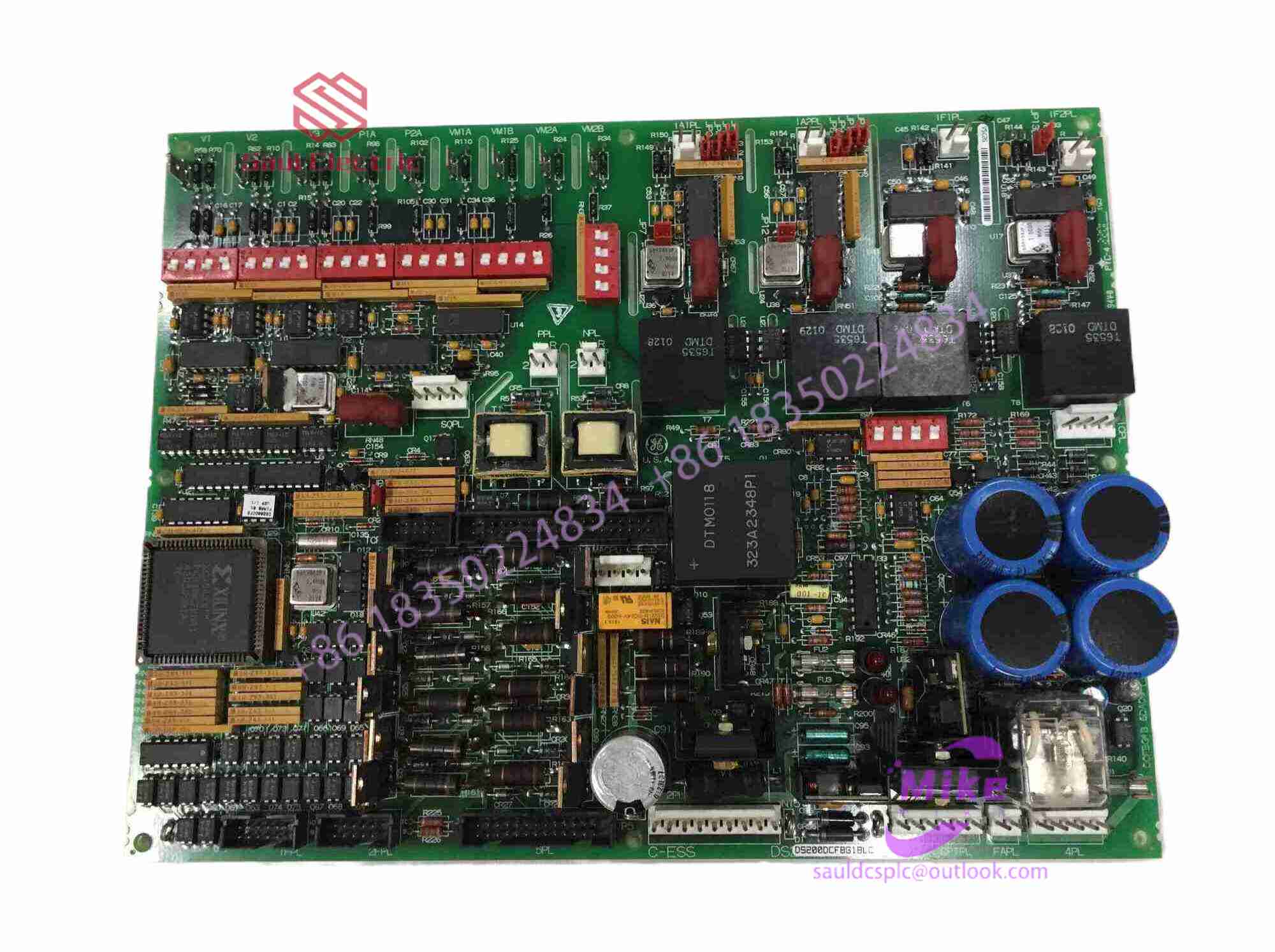

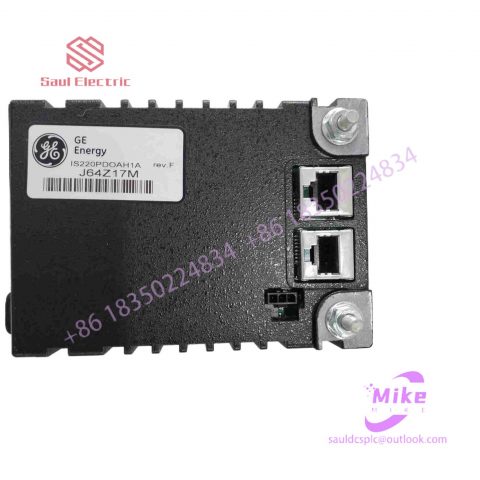
DS200TCDAF1ACM 24 channel output module
DS200TCDAF1ACM Product Introduction
Basic Information
Brand: GE (General Electric)
Model:DS200TCDAF1ACM
Part Number: DS200TCDAF1ACM
Series: Mark VIe Speedtronic Turbine Control System I/O Pack
Country of Origin: United States
Product Type: Discrete Input Module (Contact Input Module), also known as PDIA I/O Pack
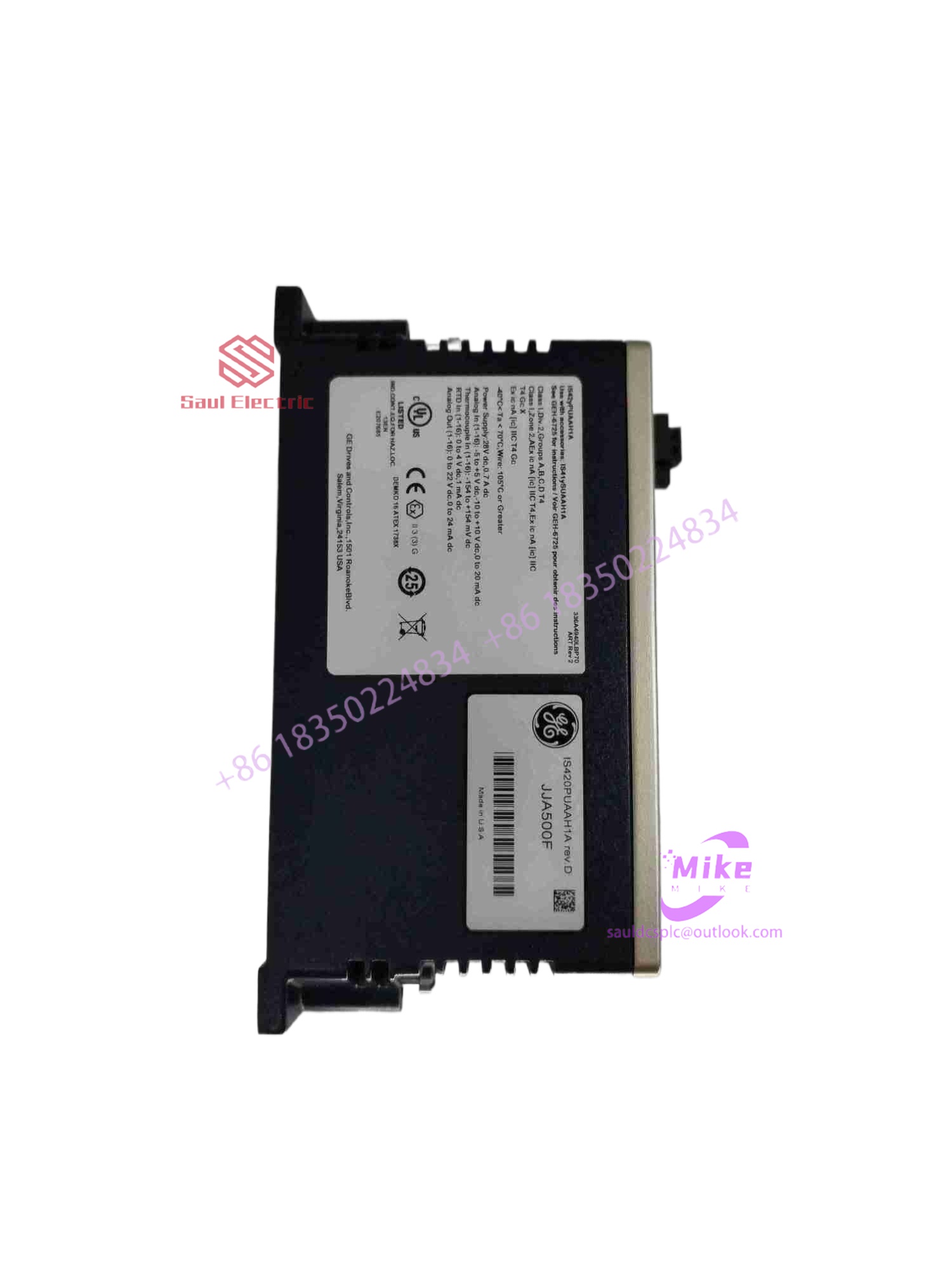 Functional Overview
The DS200TCDAF1ACM is a 24-channel discrete (digital) input module in the GE Mark VIe control system. Its primary function is to collect discrete signals (contact open/close signals) generated by field devices such as sensors,
switches, and relays, convert them into digital signals that can be recognized and processed by the PLC or control system CPU,
and transmit the processed data to the GE Speedtronic turbine control system or other control equipment, enabling automated control and monitoring. Key Technical Specifications
Rated Voltage: 24.0 VDC (Nominal)
Maximum Rated Voltage: 28.6 VDC
Maximum Rated Contact Input Voltage: 32 VDC
Number of Input Channels: 24 Discrete Inputs
Operating Temperature Range: -30°C to +65°C
Environmental Adaptability: Passes rigorous environmental testing, capable of long-term stable operation in harsh industrial environments Compatible Terminal Boards
The DS200TCDAF1ACM can be paired with a variety of GE terminal boards, including but not limited to:
IS200STCIH1A / IS200STCIH2A
IS200STCIH8A
IS200TBCIH2C / IS200TBCIH4C
IS400STCIH1A / IS400STCIH2A / IS400STCIH8A
IS400TBCIH2C Certifications and Safety
This module is UL certified and can be used in both hazardous and non-hazardous locations. The UL certification covers various classes and divisions, and relevant UL mark documents are available for reference.
Introduction to the development of touch screen technology
The application of touch screens has become more and more common with the development of the information society. Currently, touch screen products have begun to form an industry in China. This article introduces the relevant basic technical knowledge about touch screens for the reference of users and industry players.
With the increasing number of multimedia information inquiries, people are talking more and more about touch screens, because as the latest computer input device, touch screens are currently the simplest, most convenient, natural and suitable for China’s multimedia information inquiry national conditions. Equipment, touch screen has many advantages such as durability, fast response, space saving, easy communication and so on. Using this technology, our users can operate the host by simply touching the icons or text on the computer display with their fingers, making human-computer interaction more straightforward. This technology greatly facilitates those who do not understand Computer operating users. This kind of human-computer interaction. It gives multimedia a new look and is a very attractive new multimedia interactive device. The application range of touch screens in our country is very broad, mainly including public information inquiries, such as business inquiries in telecommunications bureaus, tax bureaus, banks, electric power and other departments; information inquiries on urban streets; in addition, it can also be widely used in leadership offices, industrial control, Military command, electronic games, ordering songs and dishes, multimedia teaching, real estate pre-sales, etc. In the future, touch screens will also enter homes. As cities develop toward informatization and computer networks penetrate into daily life, information queries will appear in the form of touch screens that display content that can be touched. This article provides some basic technical knowledge about touch screens. I hope this content will be useful to the majority of users.
basic techniques
1. Working principle of touch screen
For operational convenience, people use touch screens instead of mice or keyboards. When working, we must first touch the touch screen installed on the front of the monitor with our fingers or other objects, and then the system locates and selects information input based on the location of the icon or menu touched by the finger. The touch screen consists of a touch detection component and a touch screen controller; the touch detection component is installed in front of the display screen to detect the user’s touch position, and then sends it to the touch screen controller; and the main function of the touch screen controller is to receive touches from the touch point detection device information, convert it into contact coordinates, and then send it to the CPU. It can also receive commands from the CPU and execute them.
2. Main types of touch screens
To distinguish touch screens from the technical principles, they can be divided into five basic categories: vector pressure sensing technology touch screen, resistive technology touch screen, capacitive technology touch screen, infrared technology touch screen, and surface acoustic wave technology touch screen. Among them, the vector pressure sensing technology touch screen has withdrawn from the stage of history. The touch screen infrared screen is cheap, but its frame is fragile and prone to light interference and distortion on curved surfaces; the capacitive screen design theory is good, but its image distortion problem is difficult to fundamentally solve; the resistive screen has accurate positioning, but its price It’s quite high, and it’s afraid of being scratched and easily damaged. The surface acoustic wave touch screen solves various defects of previous touch screens. It is clear and anti-violence and suitable for various occasions. The disadvantage is that water droplets and dust on the surface of the screen can make the touch screen dull or even stop working. According to the working principle of the touch screen and the medium for transmitting information, we divide the touch screen into four types, which are resistive type, infrared type, capacitive induction type and surface acoustic wave type. Below, the author will briefly introduce the various types of touch screens mentioned above. :
1. Resistive touch screen
The screen part of the resistive touch screen is a multi-layer composite film that is very suitable for the display surface. It is composed of a layer of glass or organic glass as the base layer, and the surface is coated with a transparent conductive layer (OTI , indium oxide), and then covered with a layer of The outer surface of the hardened, smooth and scratch-resistant plastic layer is also coated with a layer of OTI on the inner surface. There are many small (less than one thousandth of an inch) transparent isolation points between the two conductive layers to separate them and insulate them. When a finger touches the screen, a contact point appears between the two OTI conductive layers. Because one of the conductive layers is connected to a 5V uniform voltage field in the Y-axis direction, the voltage of the detection layer changes from zero to non-zero. The controller detects this After it is turned on, perform A/D conversion and compare the obtained voltage value with 5V to obtain the Y-axis coordinate of the touch point. Similarly, the X-axis coordinate can be obtained. This is the most basic principle common to resistive technology&nb

There are no reviews yet.