
 HONG KONG SAUL

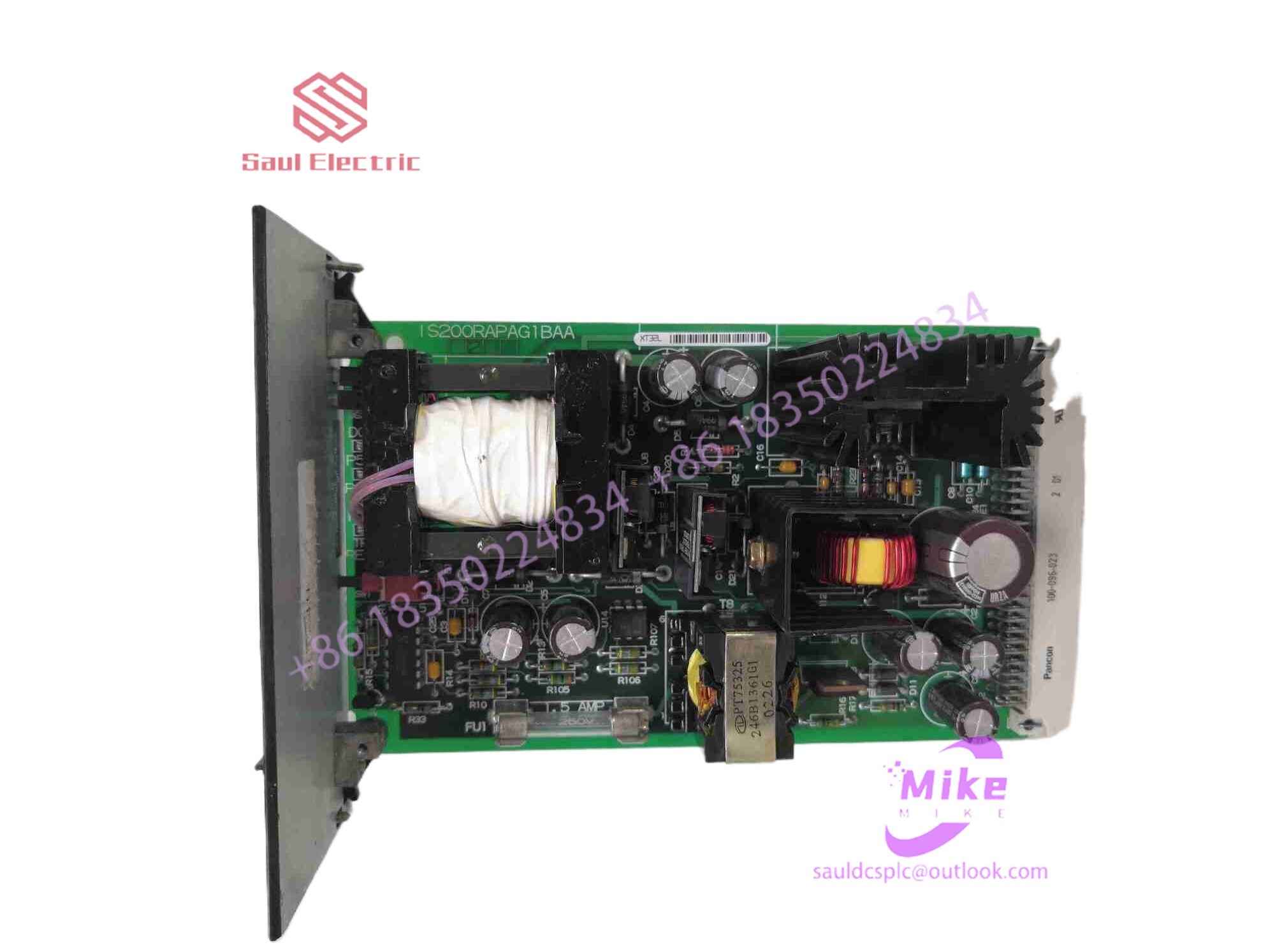
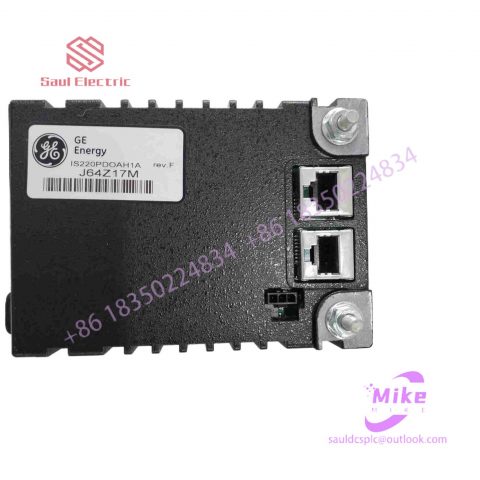
DS2020FEANRP020A Mark VIe Speedtronic
DS2020FEANRP020A Product Introduction
Basic Information
Brand: GE (General Electric)
Model:DS2020FEANRP020A
Part Number: DS2020FEANRP020A
Series: Mark VIe Speedtronic Turbine Control System I/O Pack
Country of Origin: United States
Product Type: Discrete Input Module (Contact Input Module), also known as PDIA I/O Pack
 Functional Overview
The DS2020FEANRP020A is a 24-channel discrete (digital) input module in the GE Mark VIe control system. Its primary function is to collect discrete signals (contact open/close signals) generated by field devices such as sensors,
switches, and relays, convert them into digital signals that can be recognized and processed by the PLC or control system CPU,
and transmit the processed data to the GE Speedtronic turbine control system or other control equipment, enabling automated control and monitoring. Key Technical Specifications
Rated Voltage: 24.0 VDC (Nominal)
Maximum Rated Voltage: 28.6 VDC
Maximum Rated Contact Input Voltage: 32 VDC
Number of Input Channels: 24 Discrete Inputs
Operating Temperature Range: -30°C to +65°C
Environmental Adaptability: Passes rigorous environmental testing, capable of long-term stable operation in harsh industrial environments Compatible Terminal Boards
The DS2020FEANRP020A can be paired with a variety of GE terminal boards, including but not limited to:
IS200STCIH1A / IS200STCIH2A
IS200STCIH8A
IS200TBCIH2C / IS200TBCIH4C
IS400STCIH1A / IS400STCIH2A / IS400STCIH8A
IS400TBCIH2C Certifications and Safety
This module is UL certified and can be used in both hazardous and non-hazardous locations. The UL certification covers various classes and divisions, and relevant UL mark documents are available for reference.
In June 2018, Yaskawa (China) Robot Co., Ltd. held a completion ceremony for its third factory in Changzhou. In October, Japan’s FANUC Robotics Chongqing base project started construction and is expected to be completed in the first half of 2019. After reaching capacity, it will achieve an annual output value of more than 200 million yuan. Local areas compete for new opportunities in high-end manufacturing
From government procurement and local industrial policies, we can see that all regions are competing for new opportunities in digital and intelligent transformation, and high-end manufacturing, represented by robots, has become the focus of local efforts.
At the CIIE, robot companies received intensive orders. Analysts from the 21st Century Economic Research Institute found that high-end manufacturing, smart and high-end equipment, new energy vehicles, etc. have become the focus of procurement in the procurement lists of multiple provincial trading groups.
Official data shows that of the US$57.83 billion in intended turnover at the CIIE, the smart and high-end equipment exhibition area had the highest turnover, reaching US$16.46 billion. Some exhibitors at the exhibition said that they had never received so many large customers from state-owned enterprises and local governments in one day, and the total order volume far exceeded expectations.
The representative city that focuses on high-end manufacturing is Shanghai, where the service industry accounts for more than 70%. In the “Thirteenth Five-Year Plan for the Transformation and Upgrading of Shanghai’s Manufacturing Industry” released at the end of 2016, high-end manufacturing is regarded as an important breakthrough for industrial transformation.
In the past two years, Shanghai’s investment promotion in the field of high-end manufacturing has also been fruitful. A number of major projects such as robots, new energy vehicles, large aircraft, and integrated circuits have been launched one after another. Take robots as an example. As a carrier of intelligent manufacturing, Shanghai has gathered domestic and foreign leading robot companies including ABB, KUKA, SIASUN and Xinstar. Currently, robot output accounts for more than 20% of the country’s total.
In the first half of 2018, Shanghai’s non-state-owned economic and industrial investment increased by 32.9% year-on-year, with major projects distributed in various industries such as auto parts, clothing, and robots. High-end manufacturing projects introduced in Shanghai this year include the Tesla Gigafactory, which plans to produce 500,000 pure electric vehicles per year , and the ABB Robotics Gigafactory, which plans to produce 100,000 robots per year. The latter will realize “making robots with robots”. After being put into production in 2020, the total output of high-end industrial robots made in Shanghai will double.
As a manufacturing hub in the central and western regions, Chongqing is also making continuous efforts in high-end manufacturing. In 2018, Chongqing held the first China Smart Expo, focusing on smart manufacturing and hoping to build a project exchange and docking platform in the field of smart manufacturing. In November, Chongqing released “Nine Policy Measures to Reduce the Cost of Manufacturing Enterprises”, which will reduce the cost of manufacturing enterprises by more than 30 billion yuan each year. Chongqing also supports key enterprises to increase their efforts in intelligent transformation of equipment, with a maximum subsidy of 5 million yuan for a single project.
In terms of project investment, three of the four major robot families have settled in Chongqing to invest, including ABB from Switzerland, KUKA from Germany, and FANUC from Japan. At present, there are more than 300 robot companies in Chongqing, and the number of industrial robot companies has exceeded 120.
A mature robot market should have 70 robots per 10,000 jobs. Countries with relatively developed robot applications, such as South Korea, Germany, Japan, etc., already have 300 robots per 10,000 people, while China is far lower than the previous one. numbers, let alone compared to developed countries. In 2016, China’s “Robot Industry Development Plan (2016-2020)” proposed that the density of industrial robots (the number of industrial robots used per 10,000 workers) should reach more than 150 by 2020.
How to support high-end industries locally
Analysts from the 21st Century Economic Research Institute combed through the high-end manufacturing support policies in Shanghai, Chongqing, Shandong and other places and found that most of them focus on industrial land, fiscal and tax support, etc.
Shanghai has proposed seven safeguard measures: reforming the industrial system and mechanism, coordinating industrial land use, increasing fiscal and taxation support, promoting the integration of industry and finance, building a talent system, implementing an open development strategy, and improving the planning and implementation system. Jiangsu implements a high-end equipment research and development catch-up project, focusing on the development of 13 fields such as electronic industry equipment and intelligent complete sets of equipment. Zhejiang implements special projects for equipment with major shortcomings, focusing on ten major fields such as rail transit, robots and intelligent manufacturing equipment.

There are no reviews yet.