
 HONG KONG SAUL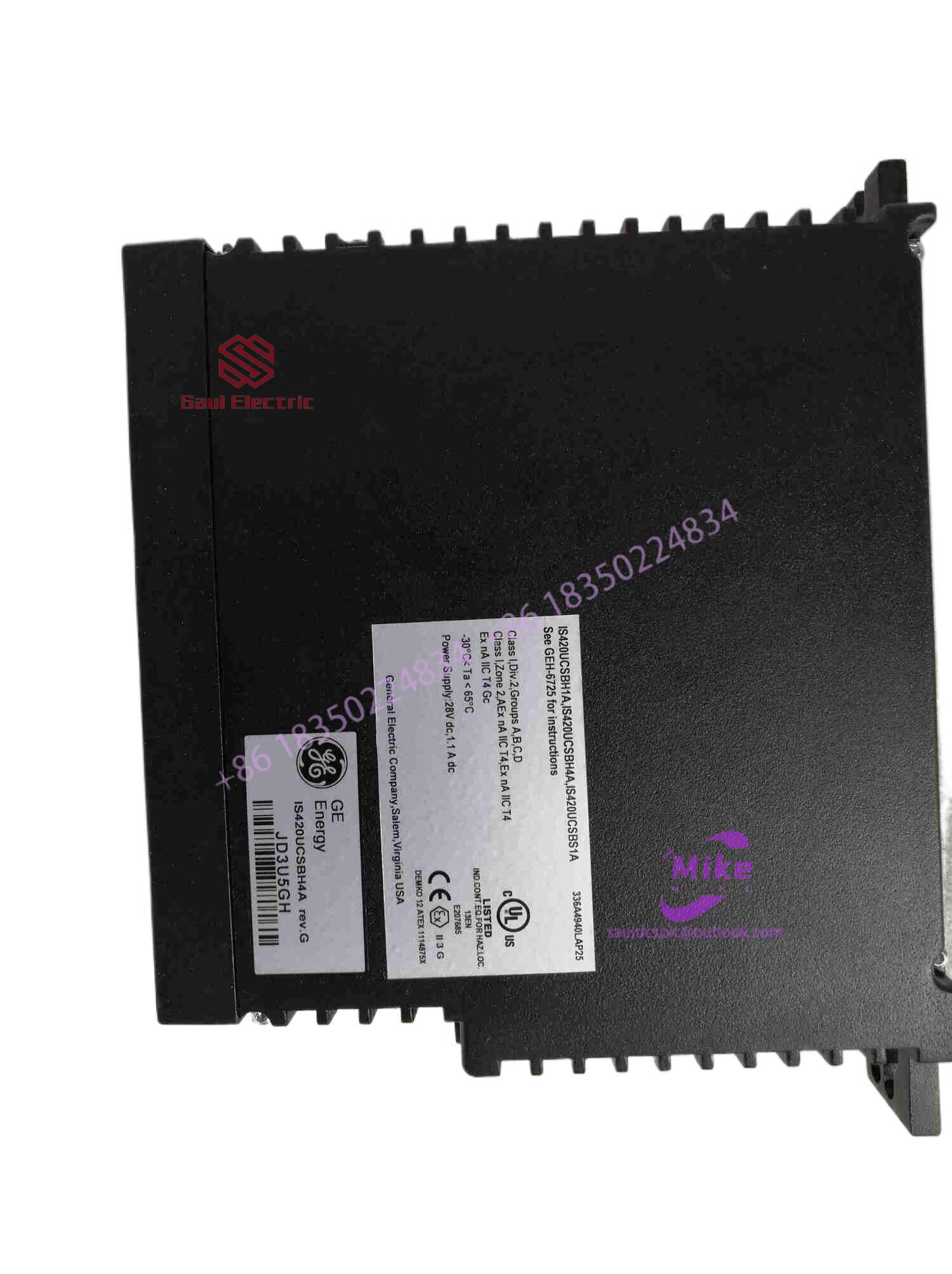

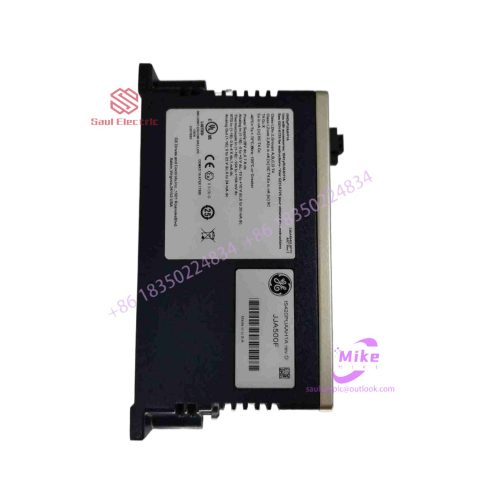
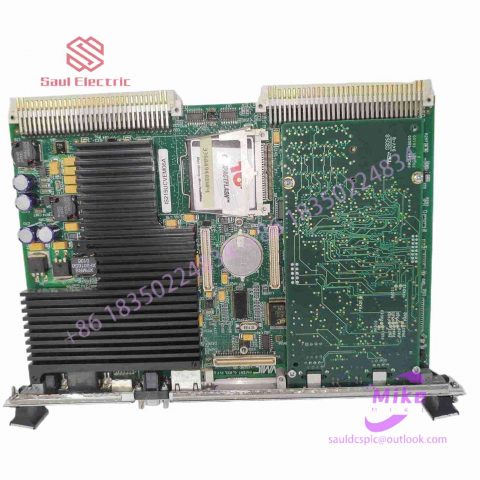
DS2020FECNRP010A integrated circuit board
DS2020FECNRP010A Product Introduction
Basic Information
Brand: GE (General Electric)
Model:DS2020FECNRP010A
Part Number: DS2020FECNRP010A
Series: Mark VIe Speedtronic Turbine Control System I/O Pack
Country of Origin: United States
Product Type: Discrete Input Module (Contact Input Module), also known as PDIA I/O Pack
contacts: Mike
+86 18350224834 (WeChat/WhatsApp)
Email:Mike18350224834@gmail.com
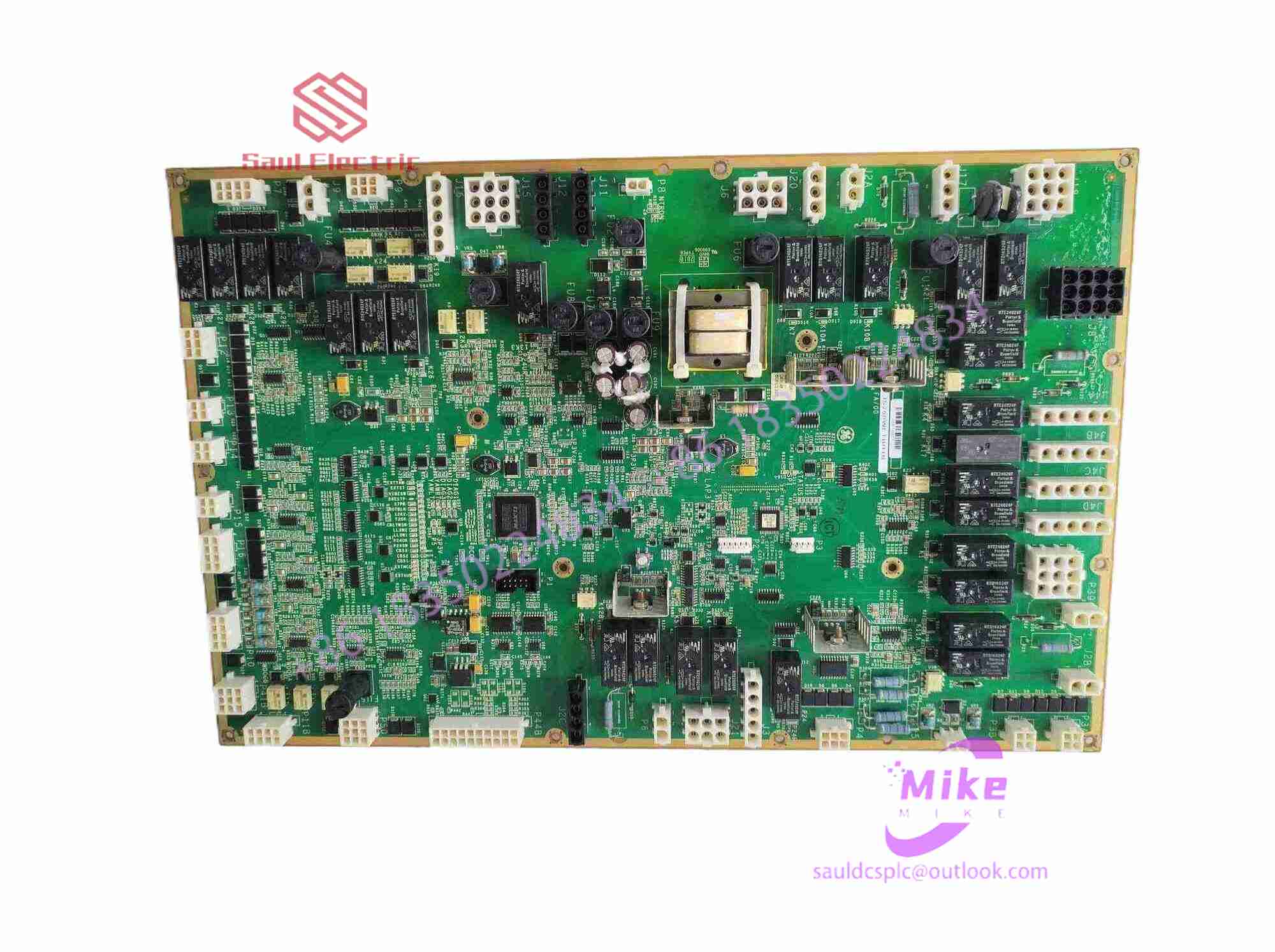 Functional Overview
The DS2020FECNRP010A is a 24-channel discrete (digital) input module in the GE Mark VIe control system. Its primary function is to collect discrete signals (contact open/close signals) generated by field devices such as sensors,
switches, and relays, convert them into digital signals that can be recognized and processed by the PLC or control system CPU,
and transmit the processed data to the GE Speedtronic turbine control system or other control equipment, enabling automated control and monitoring. Key Technical Specifications
Rated Voltage: 24.0 VDC (Nominal)
Maximum Rated Voltage: 28.6 VDC
Maximum Rated Contact Input Voltage: 32 VDC
Number of Input Channels: 24 Discrete Inputs
Operating Temperature Range: -30°C to +65°C
Environmental Adaptability: Passes rigorous environmental testing, capable of long-term stable operation in harsh industrial environments Compatible Terminal Boards
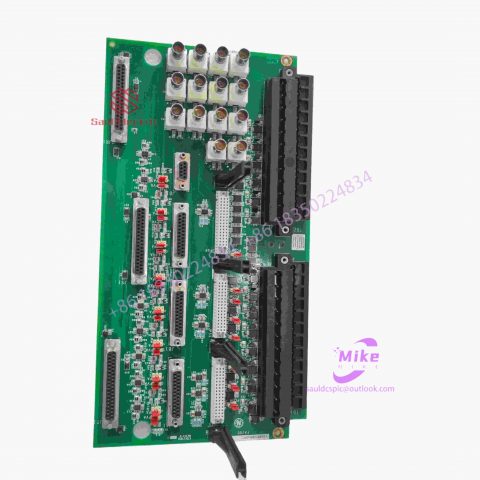
The DS2020FECNRP010A can be paired with a variety of GE terminal boards, including but not limited to:
IS200STCIH1A / IS200STCIH2A
IS200STCIH8A
IS200TBCIH2C / IS200TBCIH4C
IS400STCIH1A / IS400STCIH2A / IS400STCIH8A
IS400TBCIH2C Certifications and Safety
This module is UL certified and can be used in both hazardous and non-hazardous locations. The UL certification covers various classes and divisions, and relevant UL mark documents are available for reference.
When German Chancellor Mucker inserted an index finger into the mechanical tongs at the Hannover Messe and insisted on personally testing the intelligence of the robot “Corn”, almost all the audience present held their breath and sweated in their hearts. But his pliers immediately stayed in place, and everyone breathed a sigh of relief.
Since the establishment of ABB China Research Institute in 2005, ABB China R&D personnel have developed the world’s fastest and most accurate six-axis robot – the “Dragon” IRB 120, and officially launched the world’s first true robot to the market at the Hannover Industrial Fair in Germany. YuMi (“Corn”), a dual-arm industrial robot that realizes human-machine collaboration.
On the occasion of the tenth anniversary of the establishment of ABB China Research Institute, Mr. Claes Rytoft, the group’s global chief technology officer, was interviewed by reporters on ABB’s robotics business development and other issues.
Reporter: Is the development of the robot “Corn” targeted at the application needs of specific industries?
Claes Rytoft: Before talking about “corn”, let’s first look at other robots that have been used in industry before. They are basically industrial arms that do some complex repetitive work. But these robot arms are not safe. They must be placed in a cage and separated from people at a distance because they are not safe enough.
So let’s look back at “Corn”, he can collaborate with others, he can stand next to you and participate in the work together. In the process of your human-machine collaboration, if you accidentally touch it with your arm, it will immediately slow down or even stop. This collaborative robot is an innovation in the entire field of robotics.
Let me tell you a tidbit. At the Hannover Industrial Fair in Germany last week, ABB’s robot “Corn” became the focus, and it was almost one of the most attractive booths at the expo. At that time, German Chancellor Mucker insisted on personally testing the safety and intelligence of “Corn”, so he inserted his index finger into the mechanical tongs on “Corn”‘s arm. At that time, almost all the spectators present held their breath and were sweating in their hearts, fearing that something would go wrong and Mucker would be injured. But as soon as Mukeer put his fingers in, his pliers immediately stopped in place, and everyone breathed a sigh of relief.
This example also shows that “Corn” is a true human-machine collaborative robot, and the users it targets are users who need human-machine collaborative work.
“Corn” can be used in many assembly and manufacturing industries. In terms of human-machine collaboration, there is no compromise in the accuracy of its operation, and it can accurately reach an accuracy of 0.02 mm, which is equivalent to the smallest gap that can be felt by the human hand. To put it figuratively, you can use “corn” to “thread the needle”.
Reporter: What is the development direction of ABB Robotics in China? What is the driving force for development?
Claes Rytoft: ABB’s robot business first started in the automotive industry. In the era of mass production in the 1950s and 1960s, robots were used to perform complex and dangerous operations, such as spraying and welding.
Take welding as an example. To ensure that welding meets standards, it must be operated by very skilled technical workers, and robots can also meet standards after being programmed. This is why the first robot was born at ABB’s Swedish research institute and was quickly promoted to worldwide.
There is always room for development in this industry, and saturation is relative. China has now become a production base for electronic consumer products, and most of the production factories still rely on manual labor. Therefore, when ABB established a robot R&D and manufacturing base in Shanghai in 2005, it began to study which manufacturing industries robots should serve, and finally believed that it could replace Labor in these factories is also a new development direction. This depends more on the Chinese team.
In 2009, Dr. Gu Chunyuan, chairman and president of ABB (China) Co., Ltd., led a local team to successfully develop the IRB 120 robot, which is specifically designed for small parts assembly in the automotive industry.
As for the driving force of development, it is cost. In 2005, Dr. Gu Chunyuan went to a labor-intensive equipment company in China for research. At that time, he imagined that if the robot designed by ABB could complete all the operations of human hands on this production line, it would be able to relieve these young people from these heavy and intensive tasks. Freed from extremely boring and highly repetitive labor to do other things. This is why ABB Robotics has determined such a development direction in China.

There are no reviews yet.