
 HONG KONG SAUL
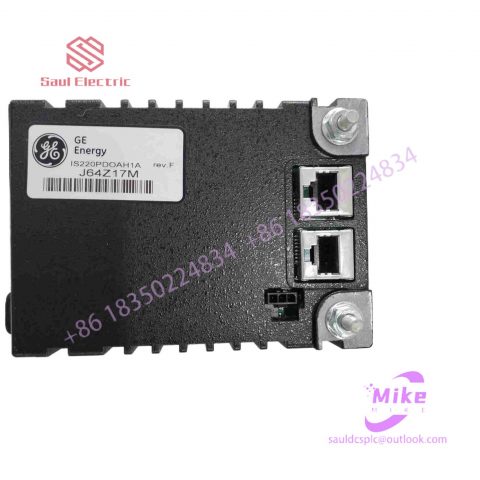
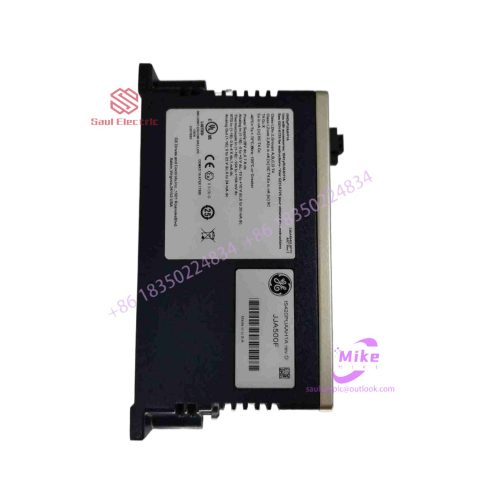
IS200AEADH1A Mark VIe Control System
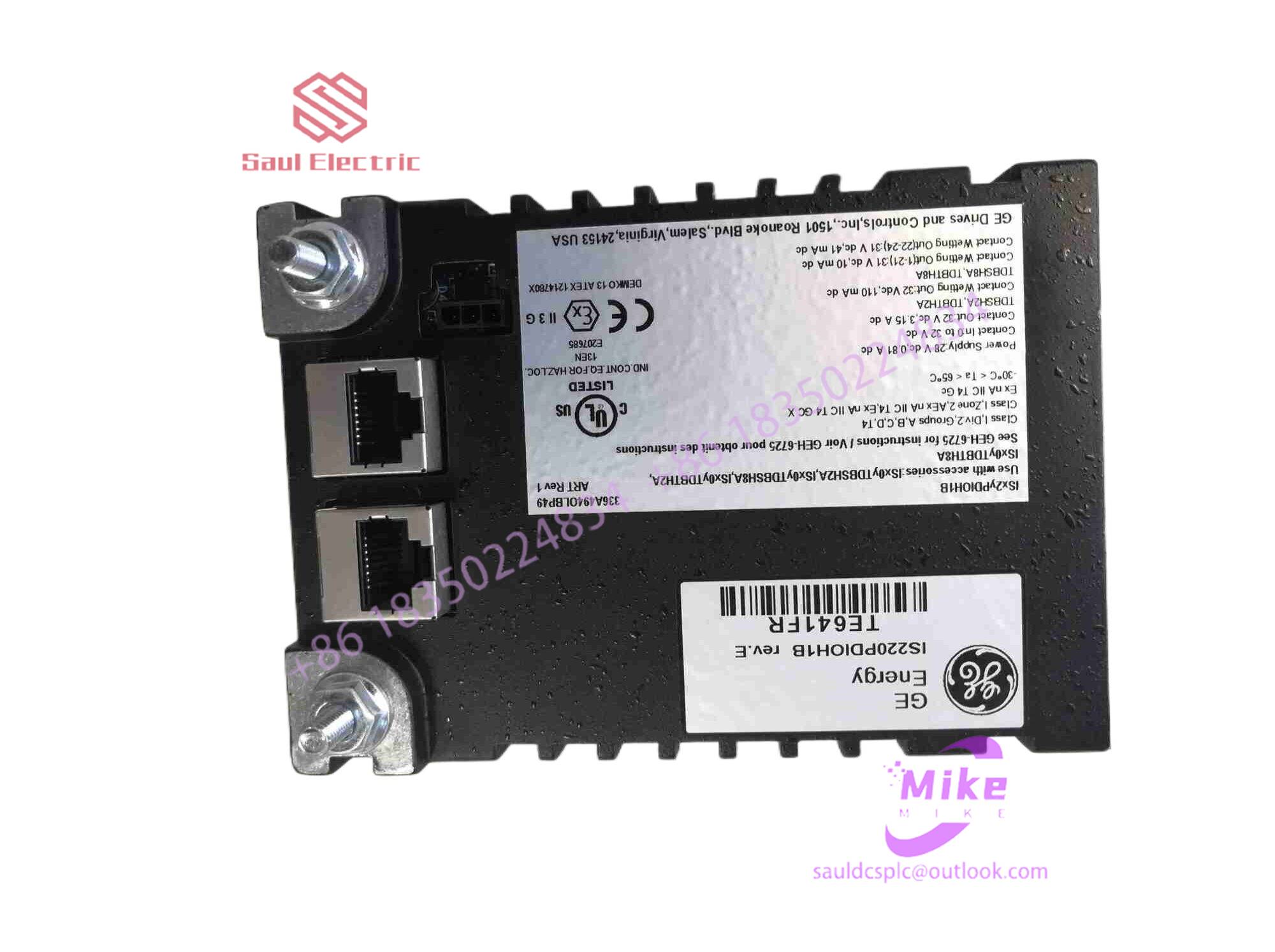
IS200AEADH1A Product Introduction
Basic Information
Brand: GE (General Electric)
Model:IS200AEADH1A
Part Number: IS200AEADH1A
Series: Mark VIe Speedtronic Turbine Control System I/O Pack
Country of Origin: United States
Product Type: Discrete Input Module (Contact Input Module), also known as PDIA I/O Pack
 Functional Overview
The IS200AEADH1A is a 24-channel discrete (digital) input module in the GE Mark VIe control system. Its primary function is to collect discrete signals (contact open/close signals) generated by field devices such as sensors,
switches, and relays, convert them into digital signals that can be recognized and processed by the PLC or control system CPU,
and transmit the processed data to the GE Speedtronic turbine control system or other control equipment, enabling automated control and monitoring. Key Technical Specifications
Rated Voltage: 24.0 VDC (Nominal)
Maximum Rated Voltage: 28.6 VDC
Maximum Rated Contact Input Voltage: 32 VDC
Number of Input Channels: 24 Discrete Inputs
Operating Temperature Range: -30°C to +65°C
Environmental Adaptability: Passes rigorous environmental testing, capable of long-term stable operation in harsh industrial environments Compatible Terminal Boards
The IS200AEADH1A can be paired with a variety of GE terminal boards, including but not limited to:
IS200STCIH1A / IS200STCIH2A
IS200STCIH8A
IS200TBCIH2C / IS200TBCIH4C
IS400STCIH1A / IS400STCIH2A / IS400STCIH8A
IS400TBCIH2C Certifications and Safety
This module is UL certified and can be used in both hazardous and non-hazardous locations. The UL certification covers various classes and divisions, and relevant UL mark documents are available for reference.
Design challenge nine
How to overcome the noise from low-end chargers is the ninth challenge in multi-point capacitive touch screen design. Especially in the Chinese market, a large number of low-end chargers are chosen by users. There are two special differences between the noise generated by this type of charger and other noises: First, its noise does not appear when there is no finger touch, it only appears when it is touched and is very strong, making an effective The touch becomes very unstable and becomes invalid; secondly, this noise is a common mode noise that comes from the charger and is transmitted to the touch screen system through the ground wire. It is difficult to filter out through ordinary hardware filtering. Commonly used digital filtering Its filtering effect is not ideal either. Therefore, there must be an advanced filtering method to deal with the noise of this low-end charger .
Design Challenge 10
Signal consistency (SD). Many multi-point capacitive touch screen designers will encounter such a problem. When their design is completed, the strength of the sample test finger touch signal meets the requirements. When they assemble the touch screen into the complete machine, or even prepare for mass production, a small problem will suddenly appear in front of them: a handheld device using a multi-point capacitive touch screen operates normally when held in the hand, but when it is placed On a desk, the touch functionality just doesn’t work. This is the problem of signal consistency, or what we call signal inconsistency (Signal Disparity), or SD for short. It is caused by the inconsistency between the amplitude of the finger signal when the touch screen is tested or when it is held in the hand and the amplitude of the finger touch signal when it is placed on the table. The amplitude of the finger touch signal when it is placed on the table will be smaller than the amplitude of the finger signal when testing or when it is held in the hand. When the amplitude difference between the two is large enough, the amplitude of the finger touch signal on the table cannot reach and exceed the finger signal threshold from time to time, and a valid touch cannot be captured. This signal inconsistency becomes severe in the case of multiple and large fingers. How to solve the problem of signal inconsistency is the tenth challenge in the design of multi-point capacitive touch screens.
Although the ten challenges in the design of multi-point capacitive touch screens are listed above, in fact, in order to meet the increasingly higher requirements of customers, the design of multi-point capacitive touch screens is not limited to these ten challenges. For example, in order to obtain a thinner touch screen, a lamination technology that directly coats an ITO sensing layer on the top glass (referred to as Sensor On Lens) has been and is being implemented. This screen is tightly attached to the LCD screen, making the LCD The impact of on-screen noise is greatest on touch screens. This makes the design of multi-point capacitive touch screens face more severe challenges. In addition, the inability to use a stylus on a capacitive touch screen has been a pity in the design of capacitive touch screens for a long time, and it has also been resented by the majority of capacitive touch screen users. Because the tip of the stylus is too small, it is difficult to generate a large enough coupling capacitance on the capacitive screen like that generated when a finger touches it. This has become the biggest inherent shortcoming compared with resistive screens. Is it really impossible to use a stylus on a capacitive touch screen? Are the designers of multi-point capacitive touch screens really helpless and powerless about this? It not only challenges the technical level of designers of multi-point capacitive touch screens, but also more What is challenging is their courage and wisdom! In addition, the design of multi-point capacitive touch screens also has to face the detailed problems that may occur during the use of the touch screen, such as the donut effect of big fingers; the face of the touch screen on the mobile phone when making a call Proximity and proximity detection. Of course, single chip, small size, and minimal peripheral components are also the performance that must be pursued in multi-point capacitive touch screen design solutions. As multi-point capacitive touch screens develop towards large-size screens, the design of multi-point capacitive touch screens will face more new challenges…

There are no reviews yet.