
 HONG KONG SAUL

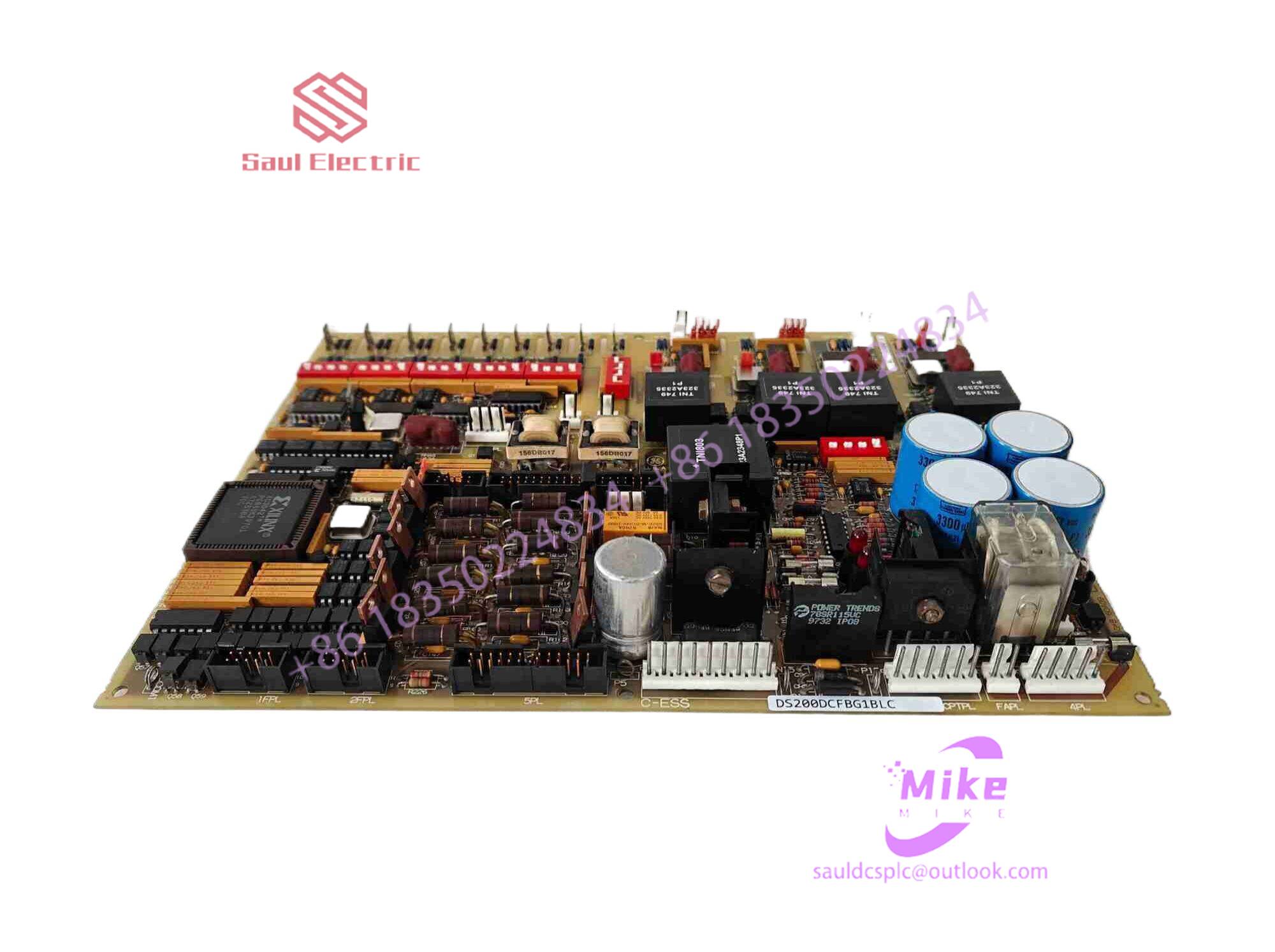
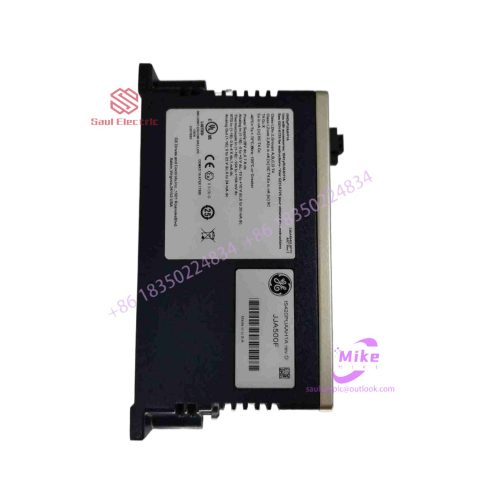
IS200EGPAG1B Mark VIe Control System
IS200EGPAG1B Product Introduction
Basic Information
Brand: GE (General Electric)
Model:IS200EGPAG1B
Part Number: IS200EGPAG1B
Series: Mark VIe Speedtronic Turbine Control System I/O Pack
Country of Origin: United States
Product Type: Discrete Input Module (Contact Input Module), also known as PDIA I/O Pack
 Functional Overview
The IS200EGPAG1B is a 24-channel discrete (digital) input module in the GE Mark VIe control system. Its primary function is to collect discrete signals (contact open/close signals) generated by field devices such as sensors,
switches, and relays, convert them into digital signals that can be recognized and processed by the PLC or control system CPU,
and transmit the processed data to the GE Speedtronic turbine control system or other control equipment, enabling automated control and monitoring. Key Technical Specifications
Rated Voltage: 24.0 VDC (Nominal)
Maximum Rated Voltage: 28.6 VDC
Maximum Rated Contact Input Voltage: 32 VDC
Number of Input Channels: 24 Discrete Inputs
Operating Temperature Range: -30°C to +65°C
Environmental Adaptability: Passes rigorous environmental testing, capable of long-term stable operation in harsh industrial environments Compatible Terminal Boards
The IS200EGPAG1B can be paired with a variety of GE terminal boards, including but not limited to:
IS200STCIH1A / IS200STCIH2A
IS200STCIH8A
IS200TBCIH2C / IS200TBCIH4C
IS400STCIH1A / IS400STCIH2A / IS400STCIH8A
IS400TBCIH2C Certifications and Safety
This module is UL certified and can be used in both hazardous and non-hazardous locations. The UL certification covers various classes and divisions, and relevant UL mark documents are available for reference.
2. Surface acoustic wave touch screen
The working principle of the surface acoustic wave touch screen is mainly based on the principle of mechanical waves propagating on the surface of a certain medium. This type of touch screen emits sound waves through sound wave generators attached to the three corners of the screen surface, and receives them through sound wave receivers. The sound wave is then responsible for transmitting signals to the touch screen through the sound wave reflector. The sound wave generator can send a high-frequency sound wave across the screen surface. When the finger touches the screen, the sound wave on the contact point is blocked, and the received signal is converted into coordinates. value, thereby determining the coordinate position of the specific touch point. The controller can measure the size of the touch screen pressure by absorbing the sound wave energy, and at the same time returns a coordinate value that reflects the size of the touch pressure. On the surface of the surface acoustic wave touch screen, sound wave emitters and sound wave receivers in the X and Y directions are pasted, and 45-degree stripes reflecting sound waves are engraved around the glass screen. The controller generates a 5.53MHZ signal and transmits it to the transmitting transducer through the cable. The piezoelectric transmitting transducer converts it into ultrasonic energy and sends it out. After two reflections from the reflection stripes, it propagates to the receiving transducer and is converted into an electrical signal and transmitted to the controller. Since the surface acoustic wave touch screen is composed of a touch screen, a sound wave generator, a reflector and a sound wave receiver, especially the sound wave sensor is not affected by environmental factors such as temperature and humidity, and has extremely high resolution, excellent scratch resistance and long life; It has high light transmittance and can maintain clear and translucent image quality; there is no drift and only needs one correction during installation; it has a third-axis (i.e., pressure axis) response, which is most suitable for use in public places.
3. Capacitive touch screen
The capacitive touch screen is a transparent special metal conductive substance affixed to the glass surface. This inductive touch screen consists of five layers. The first layer is the bottom layer of glass, the second layer is the conductive layer, the third layer is the glass sensing layer, the fourth layer is the anti-reflective matte or glossy surface layer, and the fifth layer is the anti-noise protective layer. When a finger touches the surface of the capacitive touch screen, the induction method is that the voltage is connected to the four corners of the glass layer. The voltage is spread across the glass layer through the electrodes and a constant voltage electric field is established. At the same time, the capacitance of the contact will change. The frequency of the oscillator connected to it changes. By measuring the frequency change, the touch position can be determined to obtain information. Because the capacitance changes with temperature, humidity or grounding conditions, its stability is poor and drift often occurs. In addition, when the surface layer is touched, the current flows from the four corners of the glass layer, and the controller calculates the distance from where the current travels to the finger position, thereby determining the exact location of the touch.

There are no reviews yet.