
 HONG KONG SAUL

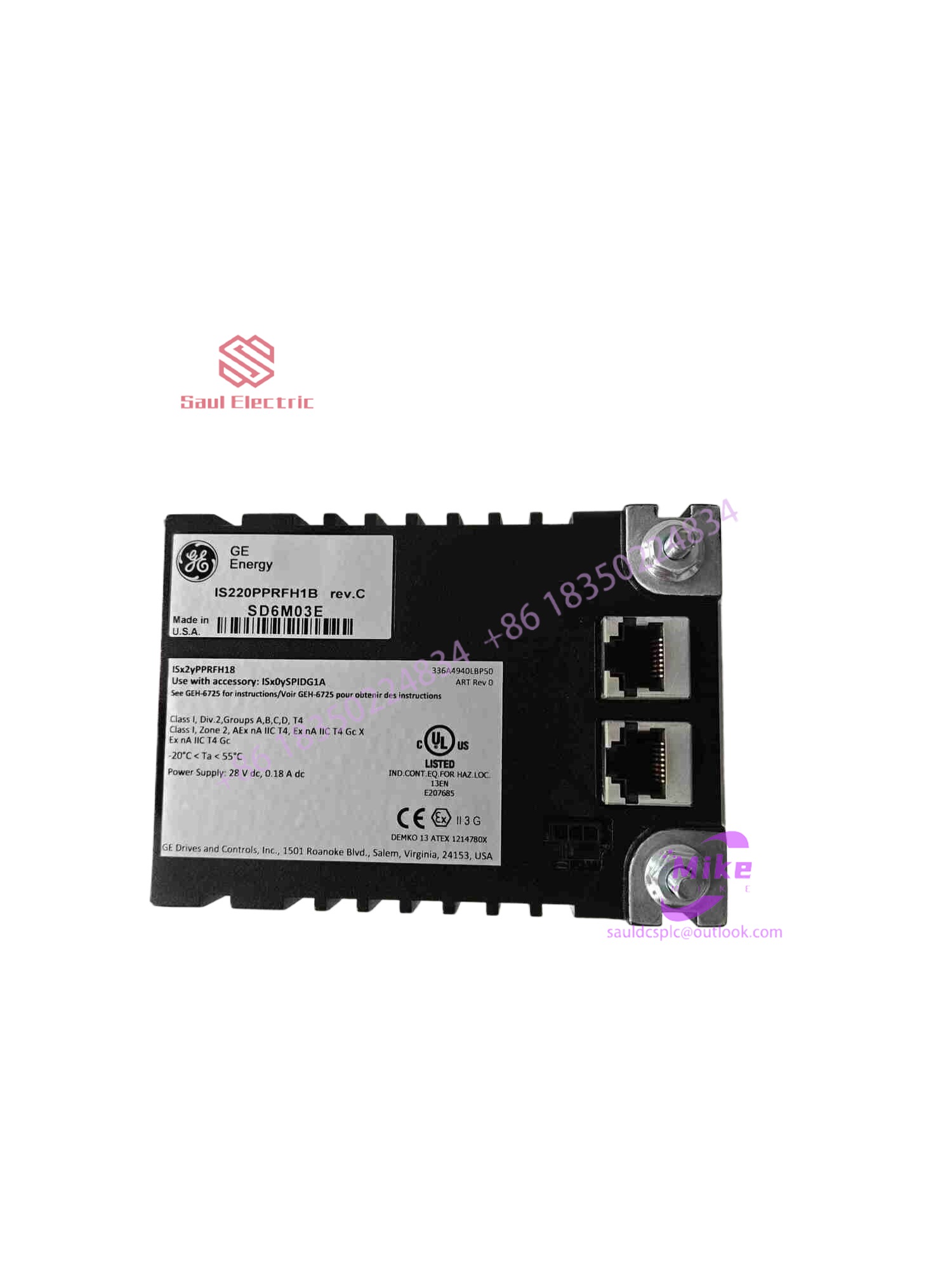
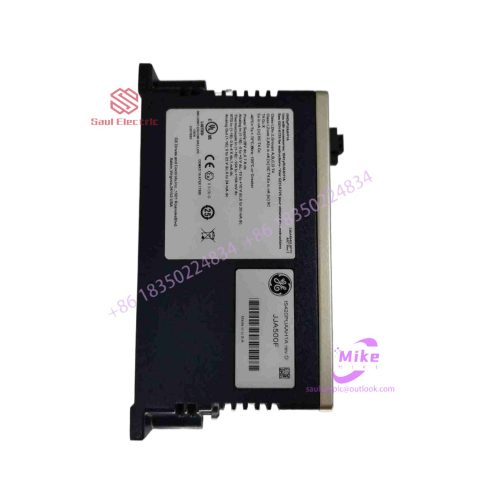
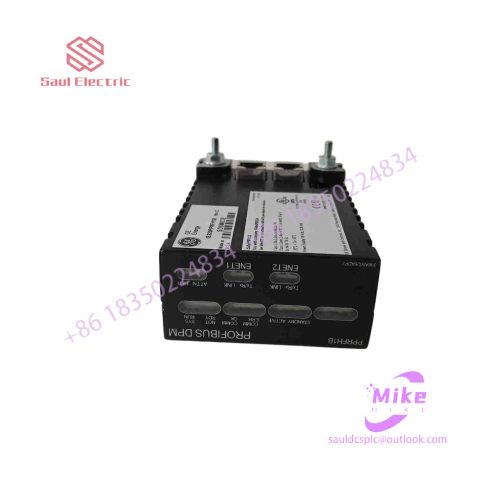
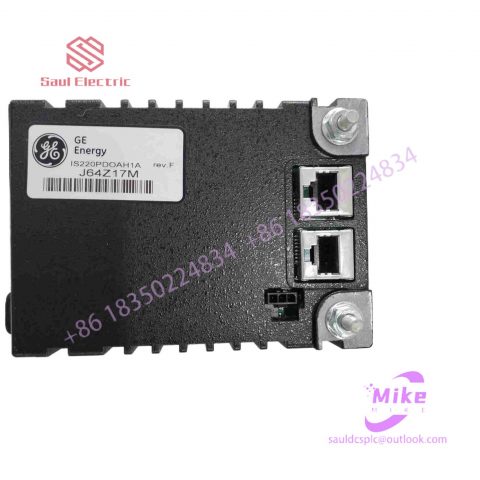
IS200GDDDG1ABA Turbine Control System
IS200GDDDG1ABA Product Introduction
Basic Information
Brand: GE (General Electric)
Model:IS200GDDDG1ABA
Part Number: IS200GDDDG1ABA
Series: Mark VIe Speedtronic Turbine Control System I/O Pack
Country of Origin: United States
Product Type: Discrete Input Module (Contact Input Module), also known as PDIA I/O Pack
 Functional Overview
The IS200GDDDG1ABA is a 24-channel discrete (digital) input module in the GE Mark VIe control system. Its primary function is to collect discrete signals (contact open/close signals) generated by field devices such as sensors,
switches, and relays, convert them into digital signals that can be recognized and processed by the PLC or control system CPU,
and transmit the processed data to the GE Speedtronic turbine control system or other control equipment, enabling automated control and monitoring. Key Technical Specifications
Rated Voltage: 24.0 VDC (Nominal)
Maximum Rated Voltage: 28.6 VDC
Maximum Rated Contact Input Voltage: 32 VDC
Number of Input Channels: 24 Discrete Inputs
Operating Temperature Range: -30°C to +65°C
Environmental Adaptability: Passes rigorous environmental testing, capable of long-term stable operation in harsh industrial environments Compatible Terminal Boards
The IS200GDDDG1ABA can be paired with a variety of GE terminal boards, including but not limited to:
IS200STCIH1A / IS200STCIH2A
IS200STCIH8A
IS200TBCIH2C / IS200TBCIH4C
IS400STCIH1A / IS400STCIH2A / IS400STCIH8A
IS400TBCIH2C Certifications and Safety
This module is UL certified and can be used in both hazardous and non-hazardous locations. The UL certification covers various classes and divisions, and relevant UL mark documents are available for reference.
Caijing: Can we say that ABB is part of Made in China 2025?
Spiesshofer: Of course, we are a very important part. We were involved in coming up with this idea and we will be deeply involved in making it happen. Now we have about 18,000 employees in China, with many manufacturing plants and large R&D centers. We also have a software center in China to develop artificial intelligence technology used on robots. At present, China not only has a market for ABB, but also has an excellent team that I am very proud of.
Caijing: The current problem is that Made in China 2025 has posed a challenge to Europe and the United States. They believe that they need to pay close attention to it. The current trade policy of the United States is also very targeted at Made in China 2025. How do you view this criticism?
Spiesshofer: I don’t want to comment too much on policy. China’s competitiveness has grown significantly over the past few decades, but the rest of the world has not stood still. Take Europe’s technological development, for example. Europe is playing a leading role in the fourth industrial revolution.
I want to have a level playing field and give everyone a chance. It is true that China is an economic power, and there are other economic powers in the world. The world is big enough to accommodate the friendly coexistence of all these forces.
The Industrial Internet is inseparable from industrial control
Caijing: Regarding digitization, there are two questions. Why digitization? How to digitize?
Spiesshofer: People have been benefiting from technologies that improve productivity. Through digitalization, we can improve productivity very well. We introduce a closed loop of “perception, analysis, and action” to sense through digital technologies such as sensors , communication devices, and connected devices. We learn the operation status of assets through sensor technology, upload it to the cloud, and summarize the information. After we have the information, we need to analyze the information. AI technology plays an important role in this process, that is, intelligent algorithms for analyzing data. Then comes the action part, where you need to get into the control loop of an industrial process or maintenance plan to make it work. Like AI, we should not be afraid of digitalization, but rather see it as an opportunity to create prosperity and wealth.
Caijing: Regarding the Industrial Internet, GE, which proposed this concept, has changed its CEO and its performance is poor. Does this mean that its development is not going smoothly? How do you see the future of the Industrial Internet?
Spiesshofer: If used well, the industrial Internet can be very effective. To review what I said: perception, analysis and action are required. Our strategy is different from GE’s strategy. They stop after sensing and analyzing, while we still have an action phase. Through our control system, the Industrial Internet is connected to the control loop through intelligent algorithms, which can create a lot of value for customers.
ABB is one of the two major industrial control technology companies in the world. Siemens is the leader in the discrete industry. We are second only to Siemens. In the process industry, ABB ranks first and Siemens second. This is the biggest difference between ABB and GE: GE does not control the circulation or has no control ability. It is like you are a doctor. You only diagnose high fever and give the patient your suggestions, but ABB not only gives suggestions, but also helps patients implement the suggestions. .
Caijing: You also mentioned the concept of global energy internet. Is this a future concept or something that is already happening? What is its value?
Spiesshofer: The energy challenge facing people today is how to provide predictable, high-quality, low-carbon baseload energy. There are different ways to achieve this, bringing together different renewable and conventional energy sources, plus nuclear power. All of the previously mentioned energy sources can also be connected together through a globally interconnected power grid. We must also incorporate active demand-side management and intelligent demand-side optimization to achieve peak-cutting effects through demand-side model optimization.
Overall, there will be a globally interconnected power system in the future that will operate completely differently with demand-side dynamics ranging from long distances all the way to local. The roof of your house is equipped with solar energy. It may be a power station in the morning, a power user in the afternoon, and it may be an energy storage power station in the evening because you are charging your electric car. Optimizing all of this is what I call the Internet of Power, and that’s what we’re working on.

There are no reviews yet.