
 HONG KONG SAUL
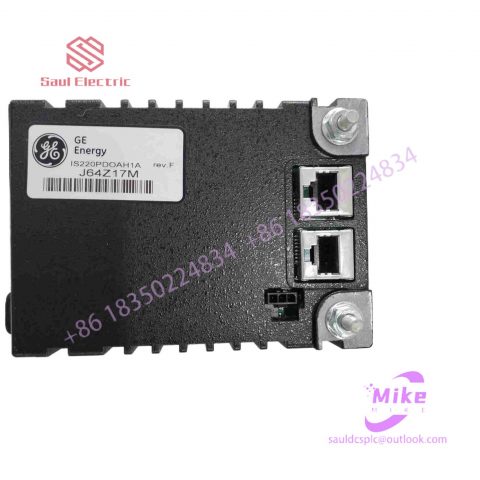
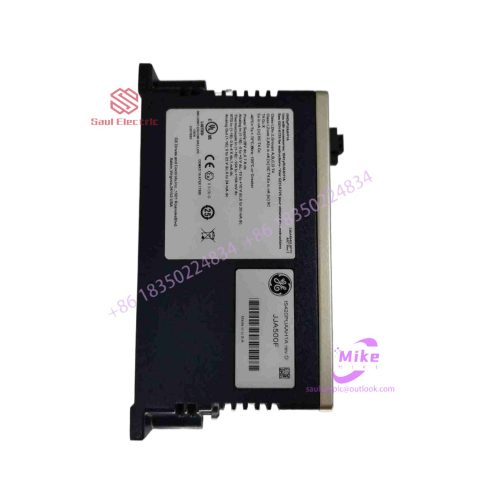
IS200TBCIH1B Mark VIe Control System
IS200TBCIH1B Product Introduction
Basic Information
Brand: GE (General Electric)
Model:IS200TBCIH1B
Part Number: IS200TBCIH1B
Series: Mark VIe Speedtronic Turbine Control System I/O Pack
Country of Origin: United States
Product Type: Discrete Input Module (Contact Input Module), also known as PDIA I/O Pack
 Functional Overview
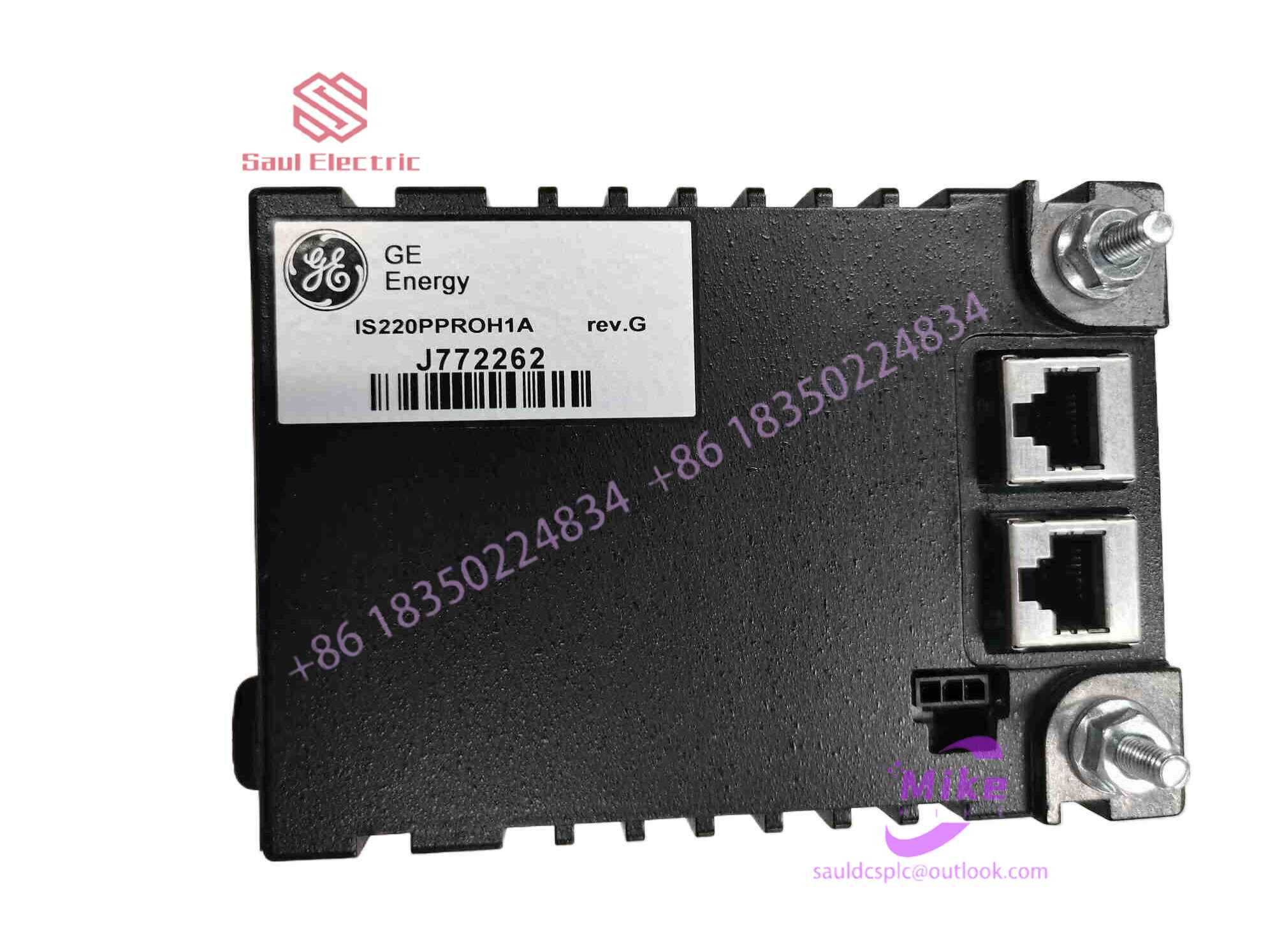
The IS200TBCIH1B is a 24-channel discrete (digital) input module in the GE Mark VIe control system. Its primary function is to collect discrete signals (contact open/close signals) generated by field devices such as sensors,
switches, and relays, convert them into digital signals that can be recognized and processed by the PLC or control system CPU,
and transmit the processed data to the GE Speedtronic turbine control system or other control equipment, enabling automated control and monitoring. Key Technical Specifications
Rated Voltage: 24.0 VDC (Nominal)
Maximum Rated Voltage: 28.6 VDC
Maximum Rated Contact Input Voltage: 32 VDC
Number of Input Channels: 24 Discrete Inputs
Operating Temperature Range: -30°C to +65°C
Environmental Adaptability: Passes rigorous environmental testing, capable of long-term stable operation in harsh industrial environments Compatible Terminal Boards
The IS200TBCIH1B can be paired with a variety of GE terminal boards, including but not limited to:
IS200STCIH1A / IS200STCIH2A
IS200STCIH8A
IS200TBCIH2C / IS200TBCIH4C
IS400STCIH1A / IS400STCIH2A / IS400STCIH8A
IS400TBCIH2C Certifications and Safety
This module is UL certified and can be used in both hazardous and non-hazardous locations. The UL certification covers various classes and divisions, and relevant UL mark documents are available for reference.
3.2 Upgrading of regulators and control systems
For the upgrade of the regulator, the original excitation control system cabinet structure is retained, and the entire system is upgraded by upgrading the board card. Among them, the CoB main board, MUB measurement board, F10 input and output board, and LCP local control panel were replaced with the PEC800 controller, CCM measurement control interface board, CIo comprehensive input and output board, and ECT excitation system control terminal in the Unitrol6800 system respectively.
For the upgrade of the power cabinet, since the power of the excitation system will not change during the transformation, the N-1 redundant configuration of the five UNL3300 rectifier bridges in the original system has not been changed, but the control and measurement parts of the rectifier bridge have been upgraded. And the fan circuit and power control part of the rectifier bridge have been upgraded. Among them, the signal interface board (PsI) was changed to the rectifier bridge signal interface board (CsI), the circuit breaker of the rectifier bridge panel was changed from CDP to CCP, and the rectifier bridge control interface board (CIN) was changed to the rectifier bridge control board (CCI).
For the upgrade of the demagnetization cabinet, the switch control part was mainly upgraded. By adding a CIo board to the switch cabinet and installing a special power distributor and relay to control the demagnetization switch, the original PsI board was removed. Secondly, in the transformation of the current detection part, the Hall element in the Unitrol5000 system was replaced by the current relay of the Unitrol6800 system.
For the upgrade of the excitation current measurement part, the rectifier side Hall element of the rectifier bridge was replaced with an AC side CT. Relying on the linearity of the CT, the current sharing coefficient of the excitation system was increased to 0.98, so that the role of the rectifier bridge can be fully exerted in the system. . For the upgrade of the fan power supply circuit of the rectifier cabinet, each power cabinet can independently control the power supply of the fans in the cabinet to avoid the problem that if the power circuit relay fails in the original system, all the fans will not work.
3.3Unitrol6800 functional logic configuration points
The Unitrol6800 system adds PT slow-blow judgment logic, and defines the actions of PT slow-blow as alarm and channel switching. The system PT slow-blow logic pressure difference is 2% to ensure sufficient sensitivity. Since some external reasons will cause the sequential increase or decrease of magnetic commands, a special increase or decrease magnetic contact adhesion judgment logic has been added to effectively lock out external causes. At the same time, it can avoid the jitter of the relay on the increase or decrease magnetic circuit and ensure the stability of the circuit. The excitation temperature detection is used to alarm in the system, but it cannot control the system tripping. The tripping intermediate relays K291 and K292 use high-power (≥5w) relays to avoid the problem of tripping of the excitation system due to signal interference.
4 Problems discovered during the transformation and their solutions
After upgrading the excitation system from Unitrol5000 to Unitrol6800, since the partition between the regulator cabinets of the original excitation switch cabinet was removed and the mounting backplate of the regulator was moved forward, the hot air from the excitation switch cabinet will enter the excitation regulator cabinet, causing the cabinet to be damaged. The internal temperature rises, and sometimes the temperature can even reach 45°C. In order to avoid problems caused by high temperatures, partitions were added to reduce the temperature inside the switch cabinet and control the temperature to 30°C.
During the maintenance process, if the grounding carbon brush of the generator is removed, it is easy to cause the rotor grounding relay isoLR275 to malfunction. Therefore, during maintenance, the power supply of the grounding relay will be disconnected and the large shaft in the magnetic cabinet will be short-circuited.
5 Conclusion
Through the transformation of the excitation system, our company not only meets the needs of increasing the generator capacity, but also eliminates the safety hazards of ARCnet failure or flat cable damage in the excitation system of the unit. It can find the fault point during maintenance and prevent the unit from non-stop. event. The new board used in the new excitation system has modular characteristics, which can make online maintenance more convenient, and because the boards use trigger pulse generation communication and optical fiber redundant communication, the stability of information transmission is ensured. Avoid communication failures and damage to pulse lines.

There are no reviews yet.