
 HONG KONG SAUL
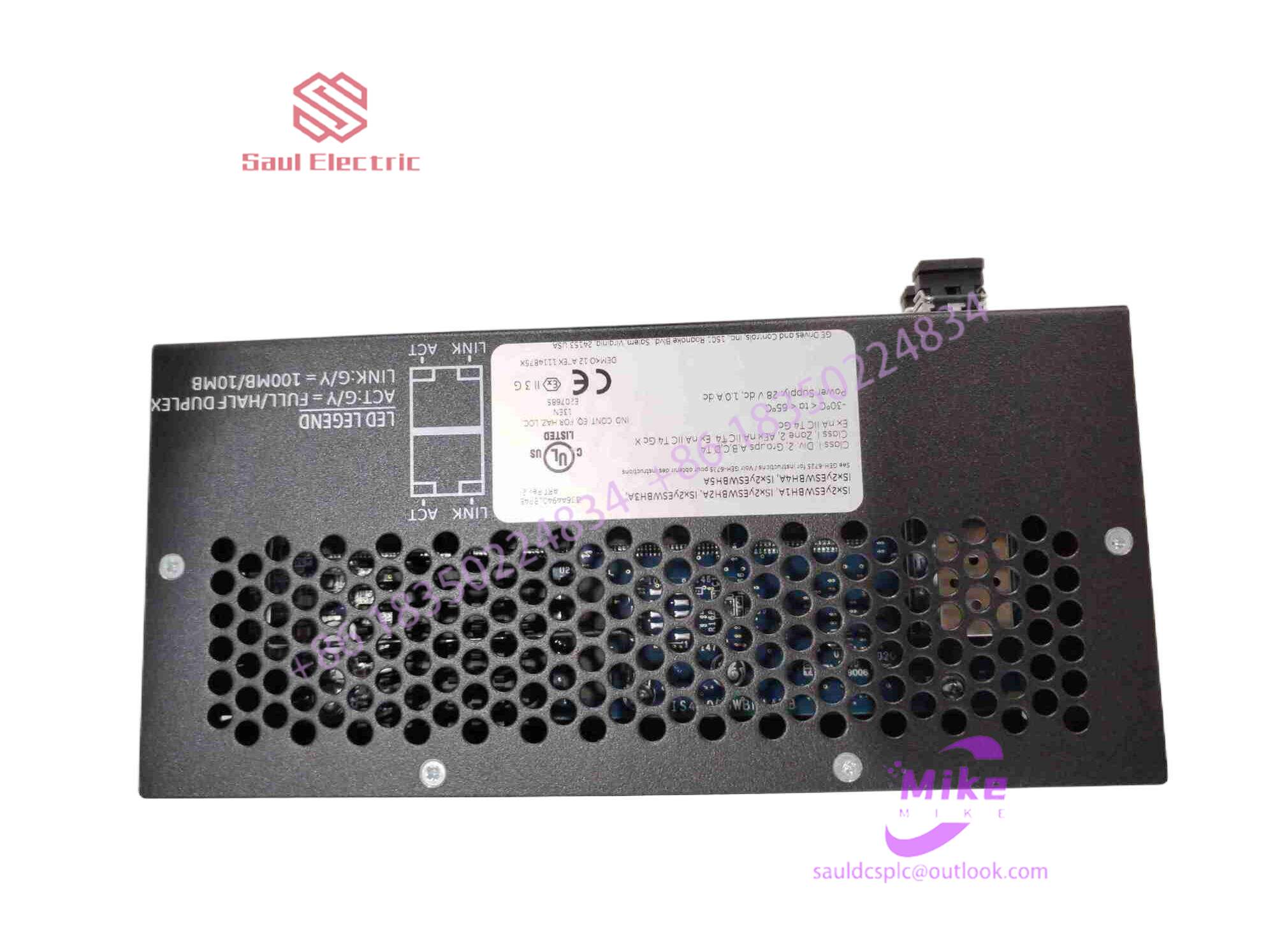
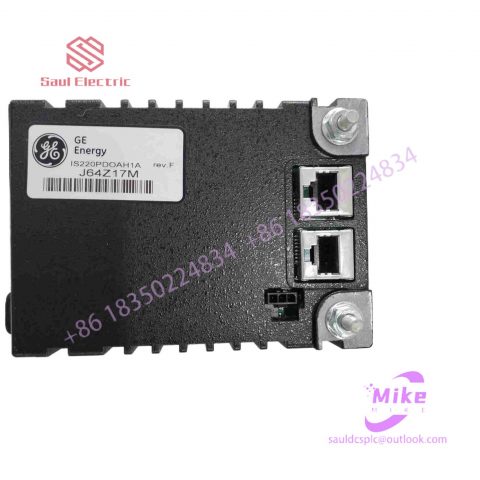
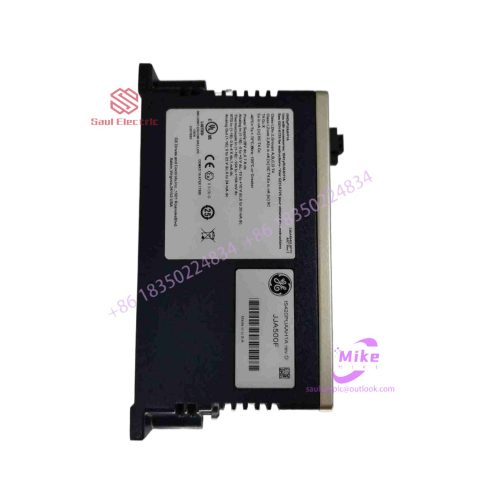
IS210DTRTH1AA 24 channel output module
IS210DTRTH1AA Product Introduction
Basic Information
Brand: GE (General Electric)
Model:IS210DTRTH1AA
Part Number: IS210DTRTH1AA
Series: Mark VIe Speedtronic Turbine Control System I/O Pack
Country of Origin: United States
Product Type: Discrete Input Module (Contact Input Module), also known as PDIA I/O Pack
 Functional Overview
The IS210DTRTH1AA is a 24-channel discrete (digital) input module in the GE Mark VIe control system. Its primary function is to collect discrete signals (contact open/close signals) generated by field devices such as sensors,
switches, and relays, convert them into digital signals that can be recognized and processed by the PLC or control system CPU,
and transmit the processed data to the GE Speedtronic turbine control system or other control equipment, enabling automated control and monitoring. Key Technical Specifications
Rated Voltage: 24.0 VDC (Nominal)
Maximum Rated Voltage: 28.6 VDC
Maximum Rated Contact Input Voltage: 32 VDC
Number of Input Channels: 24 Discrete Inputs
Operating Temperature Range: -30°C to +65°C
Environmental Adaptability: Passes rigorous environmental testing, capable of long-term stable operation in harsh industrial environments Compatible Terminal Boards
The IS210DTRTH1AA can be paired with a variety of GE terminal boards, including but not limited to:
IS200STCIH1A / IS200STCIH2A
IS200STCIH8A
IS200TBCIH2C / IS200TBCIH4C
IS400STCIH1A / IS400STCIH2A / IS400STCIH8A
IS400TBCIH2C Certifications and Safety
This module is UL certified and can be used in both hazardous and non-hazardous locations. The UL certification covers various classes and divisions, and relevant UL mark documents are available for reference.
3. Infrared touch screen
The infrared touch screen uses a dense infrared matrix in the X and Y directions to detect and locate the user’s touch. The infrared touch screen installs a circuit board frame in front of the display . The circuit board arranges infrared transmitting tubes and infrared receiving tubes on the four sides of the screen, corresponding to each other to form a horizontal and vertical infrared matrix. When a user touches the screen, his or her finger will block the horizontal and vertical infrared rays passing through that location, so the location of the touch point on the screen can be determined. Any touching object can change the infrared rays on the contact points to achieve touch screen operation. In early concepts, infrared touch screens had technical limitations such as low resolution, limited touch methods, and susceptibility to environmental interference and malfunction, so they once faded out of the market. Since then, the second generation of infrared screens has partially solved the problem of anti-light interference. The third and fourth generations have also made improvements in resolution and stability, but neither has made a qualitative leap in key indicators or comprehensive performance. However, anyone who knows touch screen technology knows that infrared touch screens are not interfered by current, voltage and static electricity and are suitable for harsh environmental conditions. Infrared technology is the ultimate development trend of touch screen products. Touch screens using acoustic and other materials technologies have their own insurmountable barriers, such as a single sensorDamage, aging, fear of contamination of the touch interface, destructive use, complicated maintenance and other issues. As long as the infrared touch screen truly achieves high stability and high resolution, it will surely replace other technical products and become the mainstream of the touch screen market. In the past, the resolution of infrared touch screens was determined by the number of infrared tubes in the frame, so the resolution was low. The main domestic products on the market were 32×32 and 40×32. In addition, it is said that infrared screens are more sensitive to lighting environmental factors. Sometimes it may be misjudged or even crashed. These are exactly the weaknesses of infrared screens promoted by domestic agents of foreign non-infrared touch screens. The resolution of the latest technology, the fifth-generation infrared screen, depends on the number of infrared tubes, scanning frequency and difference algorithm. The resolution has reached 1000X720. As for the infrared screen being unstable under lighting conditions, the second-generation infrared touch screen has From the beginning, the weakness of resistance to light interference has been well overcome. The fifth-generation infrared touch screen is a new generation of intelligent technology products. It achieves 1000*720 high resolution, multi-level self-adjusting and self-restoring hardware adaptability and highly intelligent identification, and can operate in various harsh environments for a long time. Any use below. And extended functions can be customized for users, such as network control, sound sensing, human body proximity sensing, user software encryption protection, infrared data transmission, etc. Another major shortcoming of the infrared touch screen originally promoted by the media is its poor anti-riot performance. In fact, the infrared screen can use any anti-riot glass that the customer is satisfied with without increasing the cost too much and affecting the performance. This is something that other touch screens cannot imitate.
4. Surface acoustic wave touch screen
4.1 Surface acoustic waves
Surface acoustic wave, a type of ultrasonic wave, is a mechanical energy wave that propagates shallowly on the surface of a medium (such as a rigid material such as glass or metal) . Through the wedge-shaped triangular base (strictly designed according to the wavelength of the surface wave), directional and small-angle surface acoustic wave energy emission can be achieved. Surface acoustic wave has stable performance, is easy to analyze, and has very sharp frequency characteristics in the process of transverse wave transmission. In recent years, its application has developed rapidly in the direction of non-destructive testing, imaging and de-wave devices. Theoretical research on surface acoustic waves, semiconductor materials, acoustic wave Guidance materials, detection technology and other technologies are already quite mature. The touch screen part of the surface acoustic wave touch screen can be a flat, spherical or cylindrical glass plate installed in front of a CRT, LED , LCD or plasma display screen. Vertical and horizontal ultrasonic transmitting transducers are fixed on the upper left and lower right corners of the glass screen, and two corresponding ultrasonic receiving transducers are fixed on the upper right corner. The four peripheries of the glass screen are engraved with very precisely spaced reflection stripes at 45° angles from sparse to dense.

There are no reviews yet.