
 HONG KONG SAUL

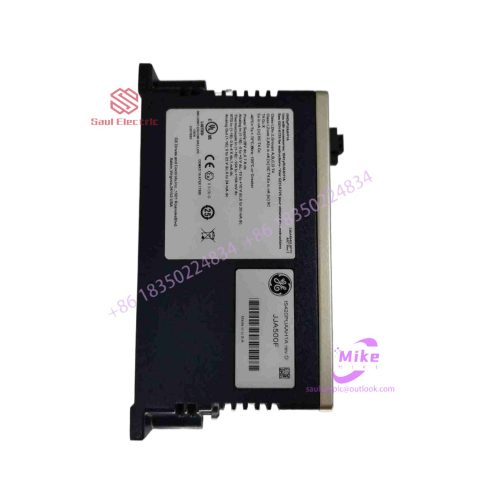
IS215UCVEM09B integrated circuit board
IS215UCVEM09B Product Introduction
Basic Information
Brand: GE (General Electric)
Model:IS215UCVEM09B
Part Number: IS215UCVEM09B
Series: Mark VIe Speedtronic Turbine Control System I/O Pack
Country of Origin: United States
Product Type: Discrete Input Module (Contact Input Module), also known as PDIA I/O Pack
 Functional Overview
The IS215UCVEM09B is a 24-channel discrete (digital) input module in the GE Mark VIe control system. Its primary function is to collect discrete signals (contact open/close signals) generated by field devices such as sensors,
switches, and relays, convert them into digital signals that can be recognized and processed by the PLC or control system CPU,
and transmit the processed data to the GE Speedtronic turbine control system or other control equipment, enabling automated control and monitoring. Key Technical Specifications
Rated Voltage: 24.0 VDC (Nominal)
Maximum Rated Voltage: 28.6 VDC
Maximum Rated Contact Input Voltage: 32 VDC
Number of Input Channels: 24 Discrete Inputs
Operating Temperature Range: -30°C to +65°C
Environmental Adaptability: Passes rigorous environmental testing, capable of long-term stable operation in harsh industrial environments Compatible Terminal Boards
The IS215UCVEM09B can be paired with a variety of GE terminal boards, including but not limited to:
IS200STCIH1A / IS200STCIH2A
IS200STCIH8A
IS200TBCIH2C / IS200TBCIH4C
IS400STCIH1A / IS400STCIH2A / IS400STCIH8A
IS400TBCIH2C Certifications and Safety
This module is UL certified and can be used in both hazardous and non-hazardous locations. The UL certification covers various classes and divisions, and relevant UL mark documents are available for reference.
The size of the ASEAN smart grid market in 2019 was approximately US$1.2488 billion, and the compound annual growth rate will reach 18.76% in 2024
Reportlinker, an international market research organization, recently released a research report on the ASEAN smart grid market, stating that the ASEAN smart grid market size in 2019 was approximately US$1.2488 billion, and is expected to increase to US$2.95 billion by 2024, with a compound annual growth rate of 18.76% during the period.
The growing demand for energy efficiency and the need for transparent energy consumption mechanisms are driving the rapid growth in demand for smart grids in the ASEAN market. Additionally, there is an increasing focus on reducing transmission and distribution losses throughout the supply chain to reduce power outages.
In ASEAN, the increasing share of renewable energy in the energy mix may lead to congestion and complexity within the grid, so smart grids using transmission and distribution automation software, demand response technology and advanced metering infrastructure will alleviate the above problems.
According to the report, “Consumer energy management is becoming one of the important technologies in the ASEAN smart grid market. Consumers in residential households, commercial end-users, and manufacturing
From the perspective of end users, the smart grid market is mainly divided into generation , transmission, distribution and consumption. In 2019, the power distribution segment held the largest share in the market owing to the increasing demand for advanced metering infrastructure. However, the consumer category is expected to show the highest growth during the forecast period owing to the increasing demand for transparent billing mechanisms, depending on consumer usage timing during peak hours.
Trends in the ASEAN smart grid market vary from country to country. Singapore and Malaysia currently hold a significant market share in the ASEAN smart grid market due to continuous product innovation, expansion of automation technology in small-scale production, and favorable government support in terms of initiatives and regulations to promote renewable energy. In 2019, Singapore led the ASEAN smart grid market.
Thailand and Vietnam are expected to become among the most valuable markets for smart grid technology providers during the forecast period, owing to government policies. Moreover, these countries in the ASEAN region have broad market development space due to the increase in urban population and the spread of advanced technologies such as charging infrastructure for electric vehicles and vehicle-to-grid.
From the perspective of smart grid technology providers, General Electric, Itron Corporation, Autogrid Systems, ABB, Siemens , Schneider Electric, Enel X, Eaton Electric, S&C Electric, Tantalus Systems, Eaton Corporation, Landis + Gyr, Honeywell International, Wipro and others will become the leading smart grid technology provider in the ASEAN market.

There are no reviews yet.