
 HONG KONG SAUL

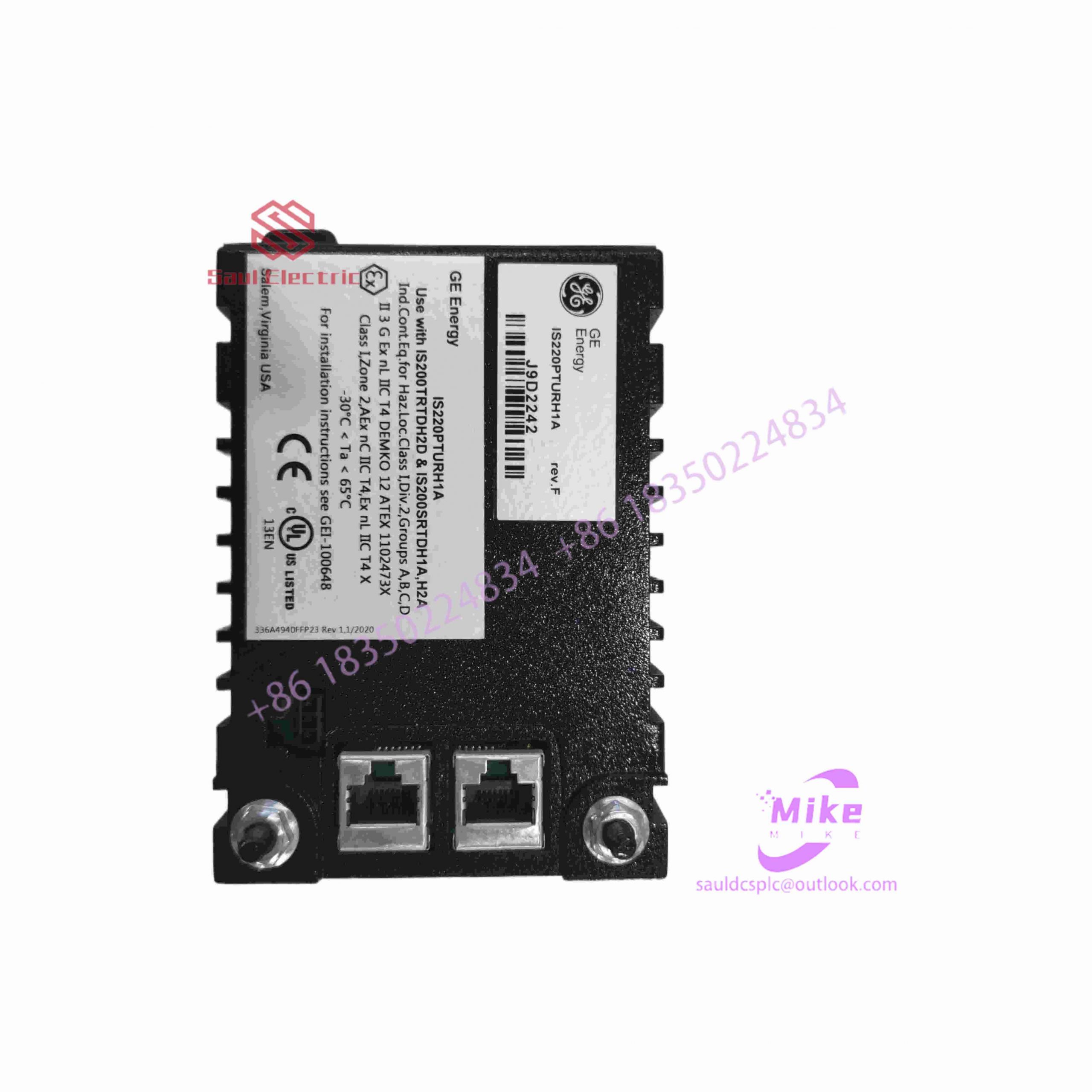
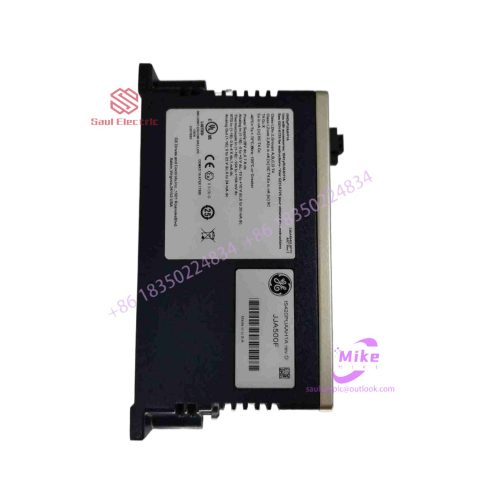
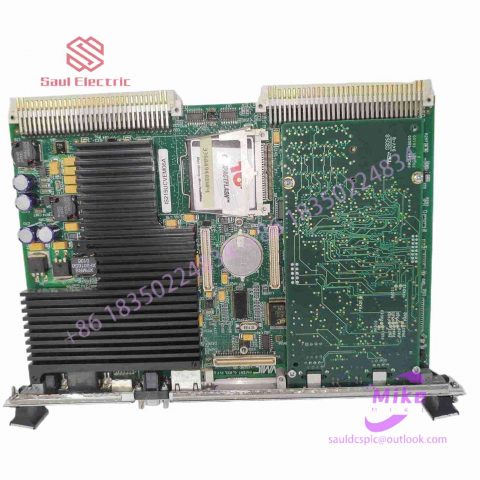
IS220PTURH1BF Turbine Control System
IS220PTURH1BF Product Introduction
Basic Information
Brand: GE (General Electric)
Model:IS220PTURH1BF
Part Number: IS220PTURH1BF
Series: Mark VIe Speedtronic Turbine Control System I/O Pack
Country of Origin: United States
Product Type: Discrete Input Module (Contact Input Module), also known as PDIA I/O Pack
contacts: Mike
+86 18350224834 (WeChat/WhatsApp)
Email:Mike18350224834@gmail.com
 Functional Overview
The IS220PTURH1BF is a 24-channel discrete (digital) input module in the GE Mark VIe control system. Its primary function is to collect discrete signals (contact open/close signals) generated by field devices such as sensors,
switches, and relays, convert them into digital signals that can be recognized and processed by the PLC or control system CPU,
and transmit the processed data to the GE Speedtronic turbine control system or other control equipment, enabling automated control and monitoring. Key Technical Specifications
Rated Voltage: 24.0 VDC (Nominal)
Maximum Rated Voltage: 28.6 VDC
Maximum Rated Contact Input Voltage: 32 VDC
Number of Input Channels: 24 Discrete Inputs
Operating Temperature Range: -30°C to +65°C
Environmental Adaptability: Passes rigorous environmental testing, capable of long-term stable operation in harsh industrial environments Compatible Terminal Boards
The IS220PTURH1BF can be paired with a variety of GE terminal boards, including but not limited to:
IS200STCIH1A / IS200STCIH2A
IS200STCIH8A
IS200TBCIH2C / IS200TBCIH4C
IS400STCIH1A / IS400STCIH2A / IS400STCIH8A
IS400TBCIH2C Certifications and Safety
This module is UL certified and can be used in both hazardous and non-hazardous locations. The UL certification covers various classes and divisions, and relevant UL mark documents are available for reference.
3. Infrared touch screen
The infrared touch screen uses a dense infrared matrix in the X and Y directions to detect and locate the user’s touch. The infrared touch screen installs a circuit board frame in front of the display. The circuit board arranges infrared transmitting tubes and infrared receiving tubes on the four sides of the screen, corresponding to a horizontal and vertical infrared matrix. When a user touches the screen, his or her finger will block the horizontal and vertical infrared rays passing through that location, and based on this, the location of the touch point on the screen can be determined. Infrared touch screens have the advantages of high light transmittance, no interference from current, voltage and static electricity, and high touch stability. However, infrared touch screens will be affected by changes in ambient light, remote controls, high-temperature objects, incandescent lamps and other infrared sources. affect and reduce its accuracy. The early infrared touch screen appeared in 1992, with a resolution of only 32°32. It was susceptible to malfunction due to environmental interference, and required to be used in a certain light-shielding environment.
After 20 years of development, the current advanced infrared touch screen has a service life of more than 7 years under normal working conditions. When tracking finger movements, the accuracy, smoothness and tracking speed can meet the requirements, and the user’s writing can be converted very smoothly. into an image trajectory and fully supports handwriting recognition input. Infrared touch screens are mainly used in various public places, offices and industrial control places that do not require very precise requirements without infrared and strong light interference.
4. Sonic touch screen
surface acoustic wave touch screen
Surface acoustic wave touch screen is a touch technology that uses sound waves to position. At the four corners of the touch screen, sensors for transmitting and receiving sound waves in the X and Y directions are pasted respectively, and 45° reflection stripes are engraved around it. When a finger touches the screen, the finger absorbs part of the sound wave energy, and the controller detects the attenuation of the received signal at a certain moment, thereby calculating the position of the touch point.
Surface acoustic wave technology is very stable and highly accurate. In addition to the X and Y coordinates that general touch screens can respond to, it also responds to its unique third-axis Z-axis coordinate, which is the pressure axis response. With this function, each touch point is not just a digital switch with or without touch, but an analog switch that can sense force: the greater the pressure, the greater the attenuation gap on the received signal waveform. The wider and deeper it is.
Among all types of touch screens, only surface acoustic wave touch screens have the ability to sense touch pressure. The surface acoustic wave touch screen is not affected by environmental factors such as temperature and humidity. It has high clarity (extremely high resolution), good light transmittance, high durability, good scratch resistance, responsive response, long life, and can maintain clear and translucent images. Quality, no drift, only need to be calibrated once during installation, good anti-violence performance, most suitable for public information inquiry and use in offices, government agencies and public places with relatively clean environment.
Curved sonic touch screen
The curved sonic touch screen is based on sound pulse recognition technology. When an object touches the surface of the touch screen, the sensor will detect the frequency of the sound wave and determine the location of the touch point by comparing the frequency with the standard frequency pre-stored in the chip. In this way, clothing, luggage, dust and Misidentification caused by environmental factors such as insects. The sound waves of the surface type touch screen propagate along the surface of the substrate, while the sound waves of the curved type touch screen propagate inside the substrate, so the anti-environmental interference performance of the curved type is better than that of the surface type. Currently, curved touch screens are generally used in information kiosks, financial equipment and vending machines that are larger than 5 inches.
5. Optical imaging touch screen
Optical imaging touch screen is a touch technology that uses light for positioning. Light sources and light capture sensors are set at the four corners of the screen. When an object touches the surface of the touch screen, the light changes, and the touch IC module analyzes the light sensor. The change determines the location of the touch. Optical imaging touch screens have high durability, are suitable for use in complex environments, and support multi-touch. However, they are easily affected by ambient light, dust, insects, etc. and may cause misrecognition. Currently, this technology is only used in desktop monitors above 10 inches, education/training, etc.
6. Electromagnetic induction touch screen
The sensor of the electromagnetic induction touch screen is set behind the display screen. The sensor generates an electromagnetic area on the display surface. When the electronic pen touches the display surface, the sensor can determine the position of the touch point by calculating the electromagnetic change. Compared with other touch screen technologies, electromagnetic induction touch screens have the highest accuracy and resolution, low power consumption, and are thinner and lighter. They

There are no reviews yet.