
 HONG KONG SAUL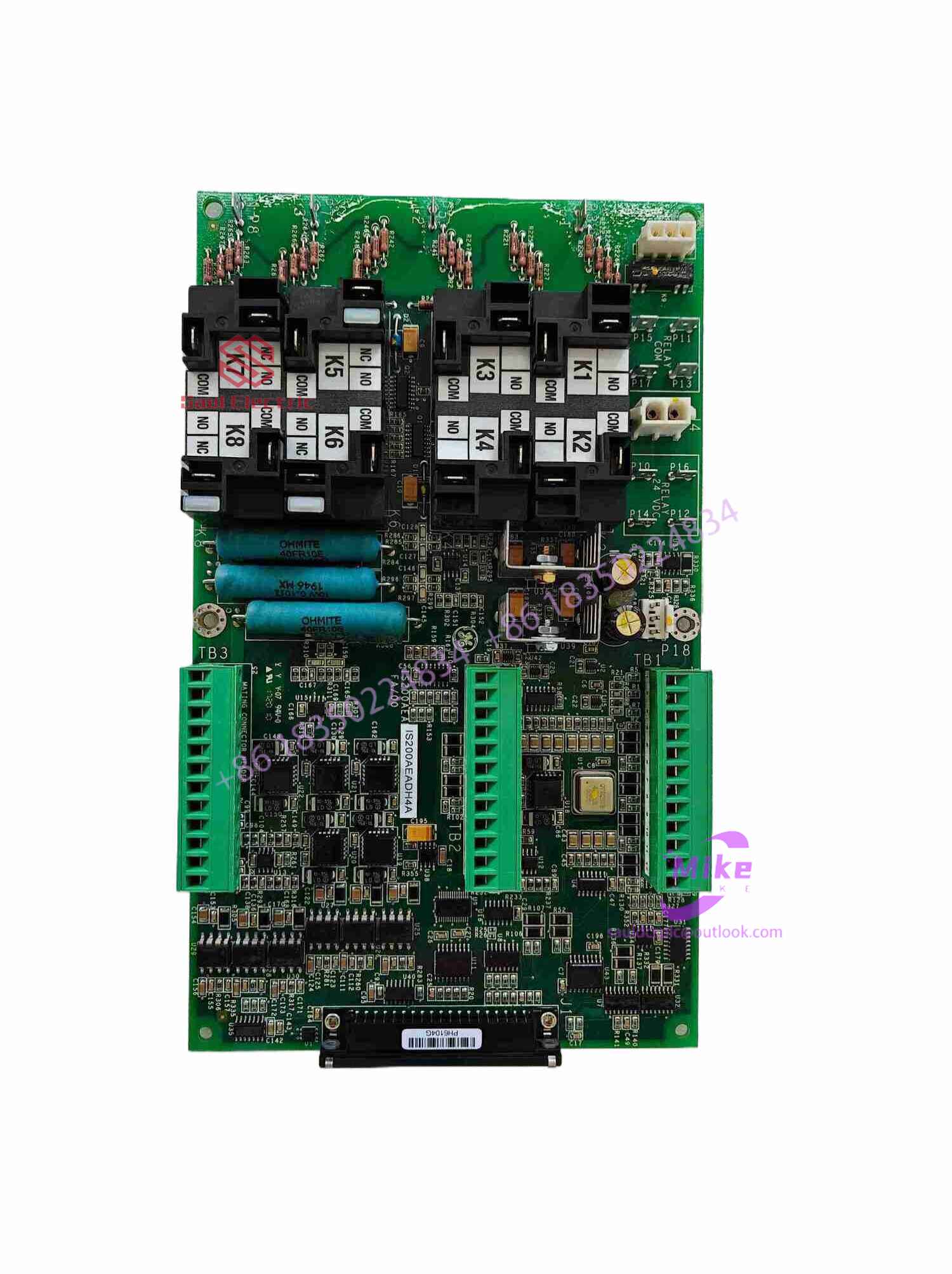

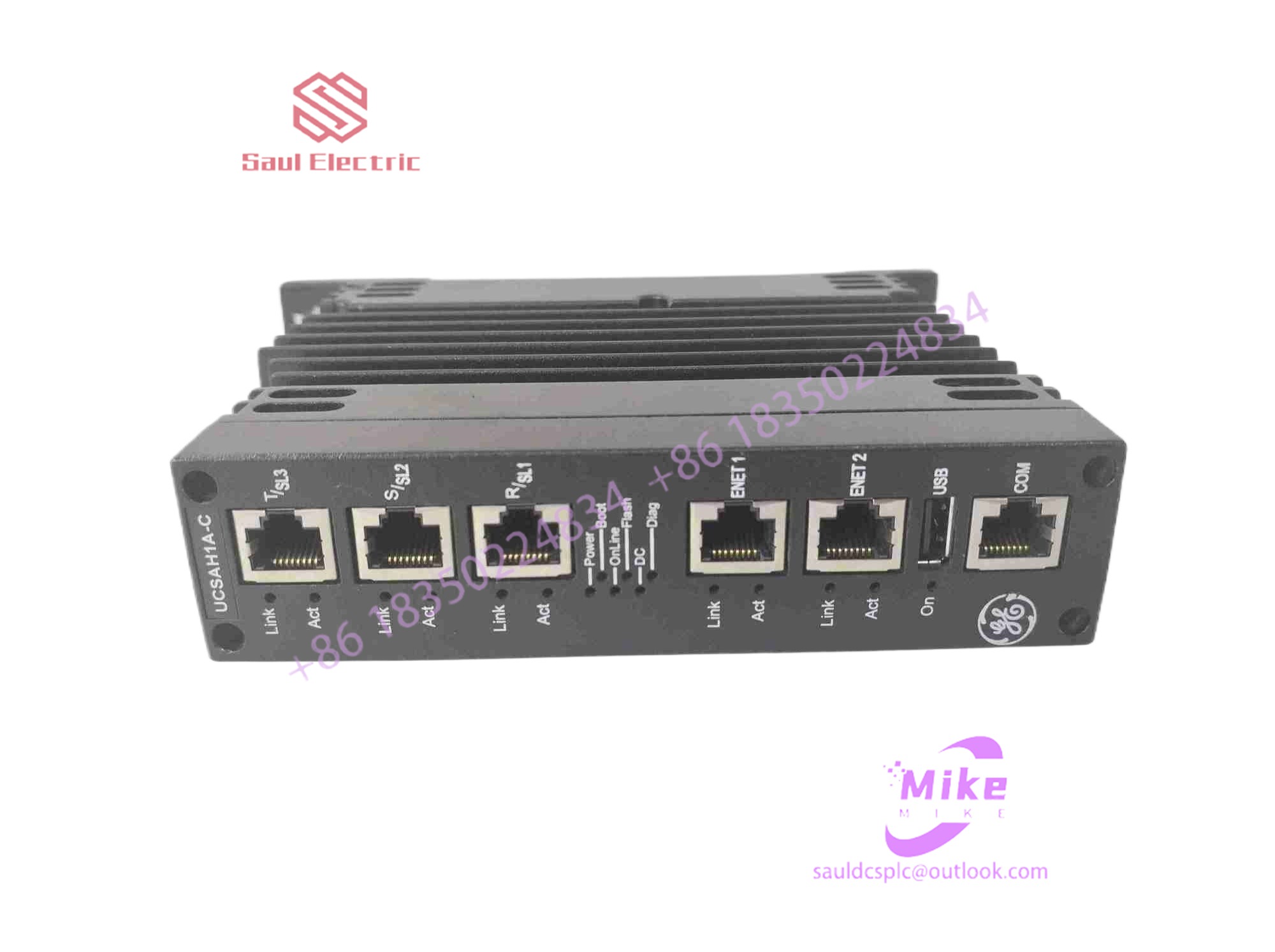
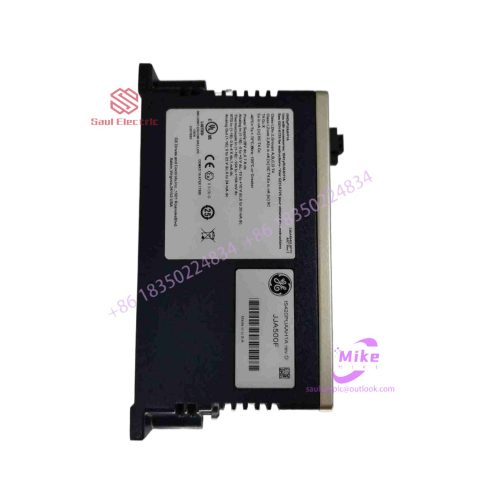
IS220YDOAS1AJ Mark VIe Control System
IS220YDOAS1AJ Product Introduction
Basic Information
Brand: GE (General Electric)
Model:IS220YDOAS1AJ
Part Number: IS220YDOAS1AJ
Series: Mark VIe Speedtronic Turbine Control System I/O Pack
Country of Origin: United States
Product Type: Discrete Input Module (Contact Input Module), also known as PDIA I/O Pack
contacts: Mike
+86 18350224834 (WeChat/WhatsApp)
Email:Mike18350224834@gmail.com
 Functional Overview
The IS220YDOAS1AJ is a 24-channel discrete (digital) input module in the GE Mark VIe control system. Its primary function is to collect discrete signals (contact open/close signals) generated by field devices such as sensors,
switches, and relays, convert them into digital signals that can be recognized and processed by the PLC or control system CPU,
and transmit the processed data to the GE Speedtronic turbine control system or other control equipment, enabling automated control and monitoring. Key Technical Specifications
Rated Voltage: 24.0 VDC (Nominal)
Maximum Rated Voltage: 28.6 VDC
Maximum Rated Contact Input Voltage: 32 VDC
Number of Input Channels: 24 Discrete Inputs
Operating Temperature Range: -30°C to +65°C
Environmental Adaptability: Passes rigorous environmental testing, capable of long-term stable operation in harsh industrial environments Compatible Terminal Boards
The IS220YDOAS1AJ can be paired with a variety of GE terminal boards, including but not limited to:
IS200STCIH1A / IS200STCIH2A
IS200STCIH8A
IS200TBCIH2C / IS200TBCIH4C
IS400STCIH1A / IS400STCIH2A / IS400STCIH8A
IS400TBCIH2C Certifications and Safety
This module is UL certified and can be used in both hazardous and non-hazardous locations. The UL certification covers various classes and divisions, and relevant UL mark documents are available for reference.
Detailed explanation of the design challenges of multi-point capacitive touch screens
Multi- contact capacitive touch screens have and are continuing to change the way people interact with handheld devices and bring many new operating experiences to people. From mobile phones to e-books, electronic writing pads, navigators, electronic game consoles and laptops, all have abandoned the original touch buttons and are competing to choose multi-point capacitive touch screens for human-computer interaction. In particular, the emergence of I-Phone and I-Pad has made multi-point capacitive touch screens deeply rooted in the hearts of the people. However, the design of multi-point capacitive touch screens is not easy and readily available. Strictly speaking, multi-point capacitive touch screen technology is not a fully mature technology. It is still a technology in the development stage and is constantly being developed and improved. For designers of multi-point capacitive touch screens, they still face many design challenges. This article introduces the design challenges of multi-point capacitive touch screen design and how to use TTSP solutions to help designers face these challenges, making multi-point capacitive touch screen design easier than ever.
design challenge
Design challenge one
The first challenge from multi-point capacitive touch screen design is how to convert the small mutual capacitance changes due to finger touch into digital signals with sufficient resolution. We know that, generally speaking, multi-touch is based on the principle of mutual capacitance sensing, and mutual capacitance is the parasitic capacitance at the intersection of the transmitting sensing strip and the receiving sensing strip. This capacitance is very small, usually 0.2~4pF, and The change in mutual capacitance caused by finger touch is even smaller. The detection of such tiny mutual capacitance changes not only requires a hardware detection circuit that is highly sensitive to capacitance changes to convert weak analog power into digital signals, but also requires corresponding software for control and coordination to ensure that the entire touch screen Each point has high enough sensitivity to finger touch signals.
Design challenge two
How to obtain a fast enough scan time is the second challenge in multi-point capacitive touch screen design. For a single-point touch screen with M rows and N columns of sensing strips, using self-capacitance scanning, it only needs to scan M rows and N columns separately to calculate and locate the coordinates of the finger on the touch screen based on the signals of each row and column. . The number of times it scans the sensor strip is M+N times. When you use multi-contact mutual capacitance scanning, since it must be scanned at the intersection of rows and columns, the number of scans is the number of MXN scans at the intersection. For a 3.2-inch screen with 10 rows and 20 columns, self-capacitance scanning only requires 10+20=30 times, while mutual capacitance scanning requires 10X20=200 times. As the size of the touch screen becomes larger and larger, the number of scans increases faster and faster. In order for users to have a better touch experience, it needs to scan the screen at least 50 times per second. This means that the scanning and data processing time of each point must be less than 100us, so as to ensure a fast enough response time. When the size of the touch screen is larger, the number of rows and columns will be larger, and this time will be shorter.

There are no reviews yet.