
 HONG KONG SAUL

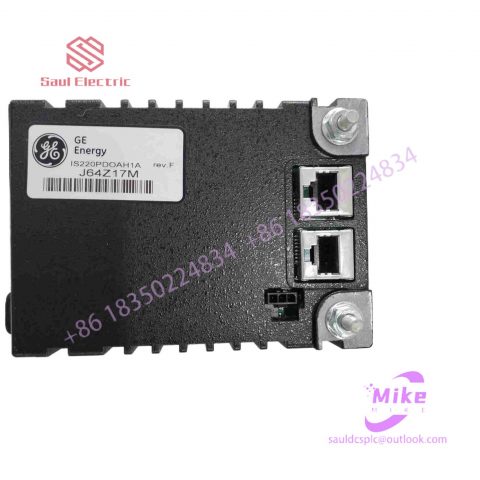
IS400JPDMG1A Mark VIe Speedtronic
IS400JPDMG1A Product Introduction
Basic Information
Brand: GE (General Electric)
Model:IS400JPDMG1A
Part Number: IS400JPDMG1A
Series: Mark VIe Speedtronic Turbine Control System I/O Pack
Country of Origin: United States
Product Type: Discrete Input Module (Contact Input Module), also known as PDIA I/O Pack
contacts: Mike
+86 18350224834 (WeChat/WhatsApp)
Email:Mike18350224834@gmail.com
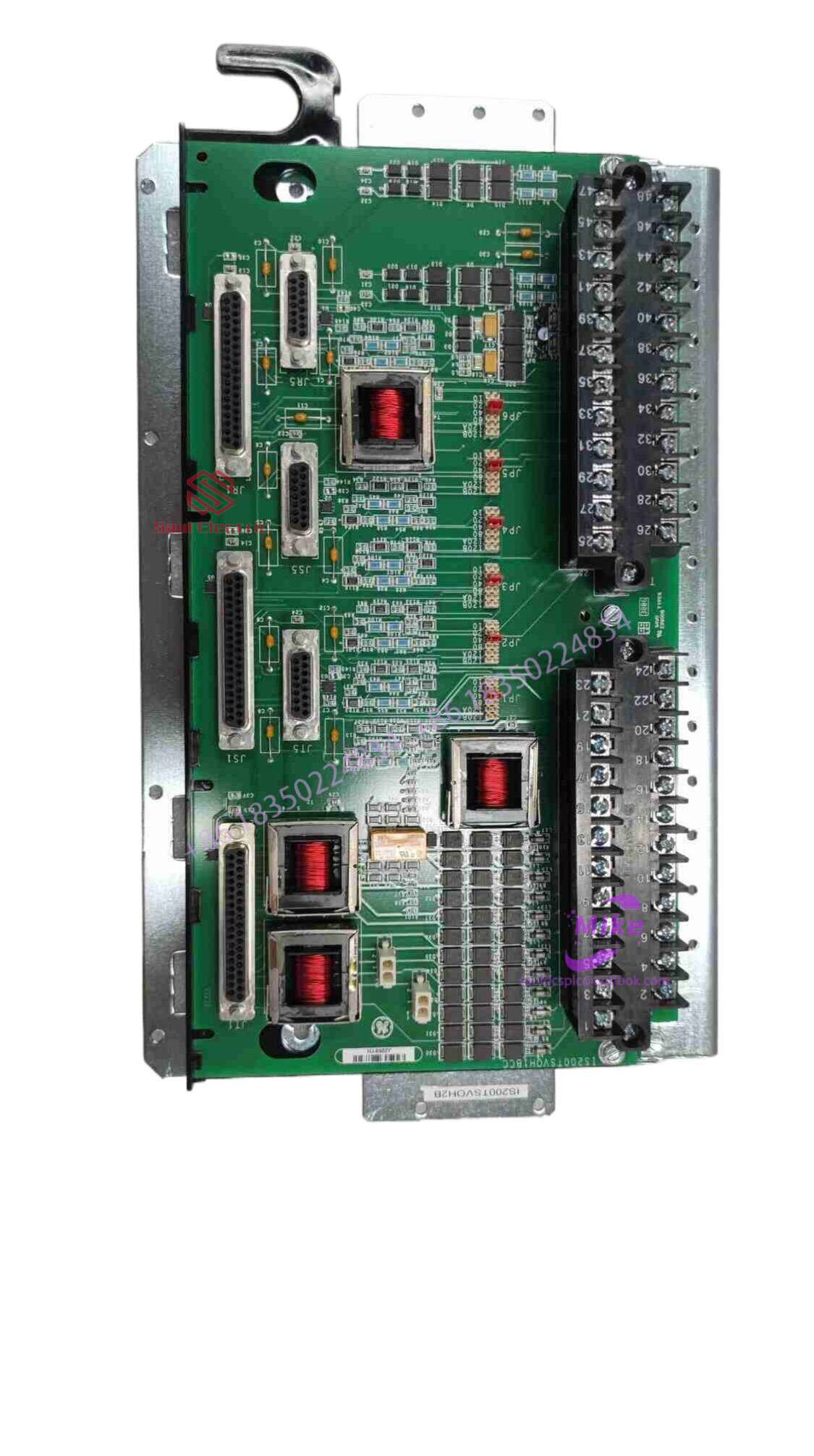 Functional Overview
The IS400JPDMG1A is a 24-channel discrete (digital) input module in the GE Mark VIe control system. Its primary function is to collect discrete signals (contact open/close signals) generated by field devices such as sensors,
switches, and relays, convert them into digital signals that can be recognized and processed by the PLC or control system CPU,
and transmit the processed data to the GE Speedtronic turbine control system or other control equipment, enabling automated control and monitoring. Key Technical Specifications
Rated Voltage: 24.0 VDC (Nominal)
Maximum Rated Voltage: 28.6 VDC
Maximum Rated Contact Input Voltage: 32 VDC
Number of Input Channels: 24 Discrete Inputs
Operating Temperature Range: -30°C to +65°C
Environmental Adaptability: Passes rigorous environmental testing, capable of long-term stable operation in harsh industrial environments Compatible Terminal Boards
The IS400JPDMG1A can be paired with a variety of GE terminal boards, including but not limited to:
IS200STCIH1A / IS200STCIH2A
IS200STCIH8A
IS200TBCIH2C / IS200TBCIH4C
IS400STCIH1A / IS400STCIH2A / IS400STCIH8A
IS400TBCIH2C Certifications and Safety
This module is UL certified and can be used in both hazardous and non-hazardous locations. The UL certification covers various classes and divisions, and relevant UL mark documents are available for reference.
Why is the industrial Internet inseparable from industrial control?
ABB Global CEO Ulrich Spiesshofer recently accepted an exclusive interview with a reporter from Caijing in New York. He believes that the global manufacturing industry is undergoing drastic changes. The era of labor arbitrage is over. Labor costs are no longer the focus of competition. The future of manufacturing lies in In factories that are smaller, closer to consumers, and more agile. Artificial intelligence ( AI ) is the most important technology shaping the future of manufacturing. Currently, AI technology is mainly used in the consumer field, but its large-scale application in the industrial field and among enterprises is more critical.
Digital transformation has been a keyword for global manufacturing giants in the past two years, and the industrial Internet is the implementation form of digital transformation. General Electric (GE), Siemens and ABB are all leaders in this regard . Spiesshofer believes that GE’s industrial Internet only collects data and analyzes but cannot control it. As the world’s two largest industrial automation suppliers, ABB and Siemens have the ability to control equipment, which is a significant difference from GE.
ABB is headquartered in Zurich, Switzerland. Its history can be traced back to the 1880s. It started from the original electrical manufacturing business and has developed into an international manufacturing giant including electrical products, robotics and motion control, industrial automation and power grid. In 2017, ABB’s revenue was US$34.3 billion, ranking 341st among the Fortune 500 companies. Spiesshofer has served as CEO for nearly five years since taking office in September 2013.
Below are the details of the interview.
The era of labor arbitrage is over
Caijing: Is 2018 a good year for the manufacturing industry?
Spiesshofer: From a global perspective, GDP is growing and consumption is also growing. Overall positive.
Caijing: What crucial changes are taking place in the manufacturing industry?
Spiesshofer: The jobs of the future will be different from the jobs of the past. In the Middle Ages, craftsmen moved between villages, taking their tools with them to work where there was demand; later we invented factories, integrated supply and demand, and invented logistics; later people realized that there was labor arbitrage (Labor Arbitrage, Refers to the existence of moving industries that have lost technological advantages and technical barriers to areas with low labor prices to increase profits by reducing labor costs), so we place factories in emerging countries to benefit from labor arbitrage.
Now, with the development of modern automation and robotics, we can break this picture and bring value addition closer to demand. I think the future of manufacturing is in factories that are smaller, closer to consumers, and more agile. I believe that the global logistics chain will also be reduced in the future because we will produce products closer to consumers. The era of labor arbitrage shaping the global manufacturing landscape will be over because we can offset this arbitrage.
Recently we opened a new factory in Germany. Due to the adoption of intelligent automation technology, its unit cost is exactly the same as that of the best factories in China. So I think the local market will be repositioned in the future, and the positioning of competitiveness will also change from just considering costs to focusing more on technology and value.
Caijing: Many people are complaining that automation has caused people to lose their jobs, and artificial intelligence technology has made the complaints louder. But these new technologies are also creating new jobs. How do you see the relationship between the two?
Spiesshofer: In 1990, one-third of the world’s population lived below the extreme poverty line. Today, only 8% rely on technology. In fact, countries with the highest robot densities, such as Germany, South Korea, Singapore, and Japan, also have the lowest unemployment rates. Robots combined with educated people can create prosperity, produce more affordable goods, and lead to economic growth. Government, education and business need to work together to keep up with the changing world.
Clearly, millions of jobs are disappearing, but millions of new ones are being created. Taking our own business as an example, we used to have many employees doing metal casting and forging work, but now these tasks are automated. But now we have more employees working in the service industry, developing apps, and working with customers. So I think we should not be afraid of change, but should lead our employees to manage change and promote change. If we succeed, global employment will eventually grow.

There are no reviews yet.